
 AC repair
 Furnace & heating
 Heat pumps
 Ductless mini splits
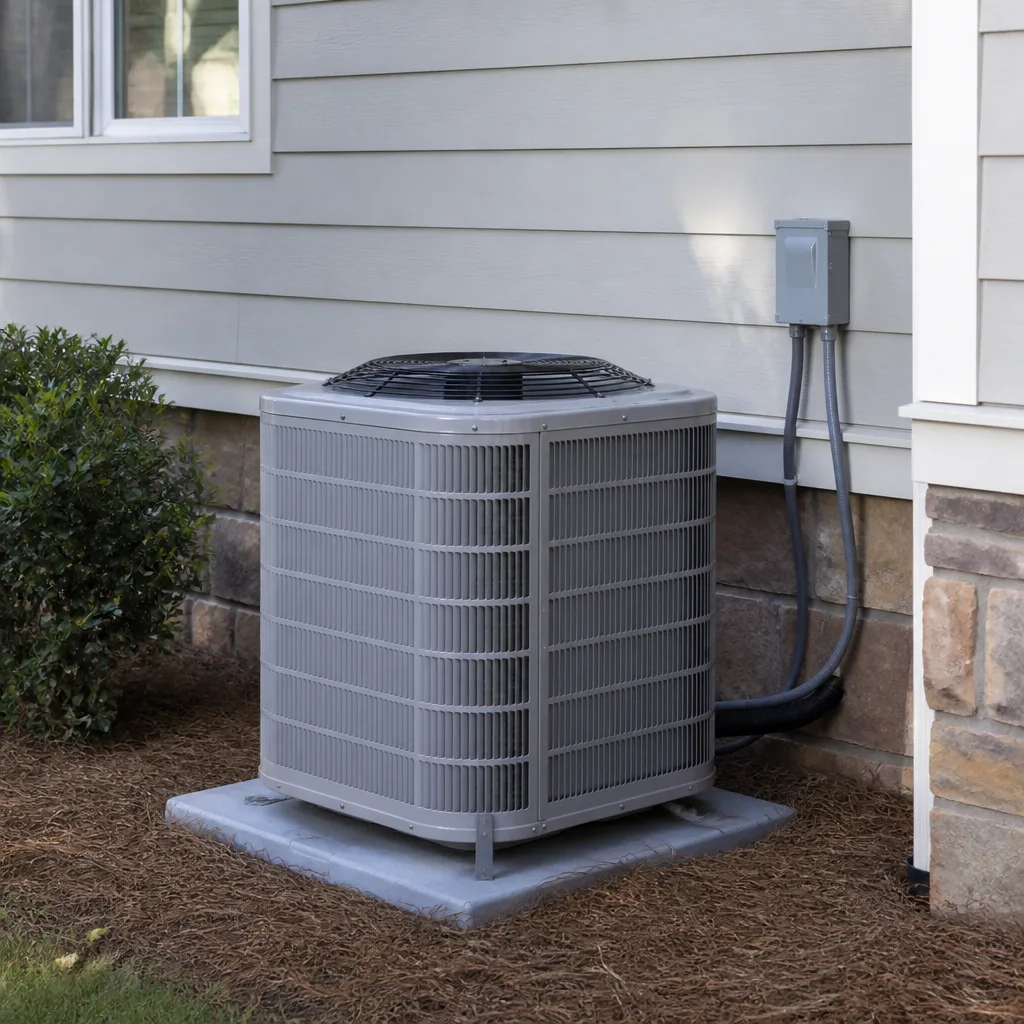 Carrier
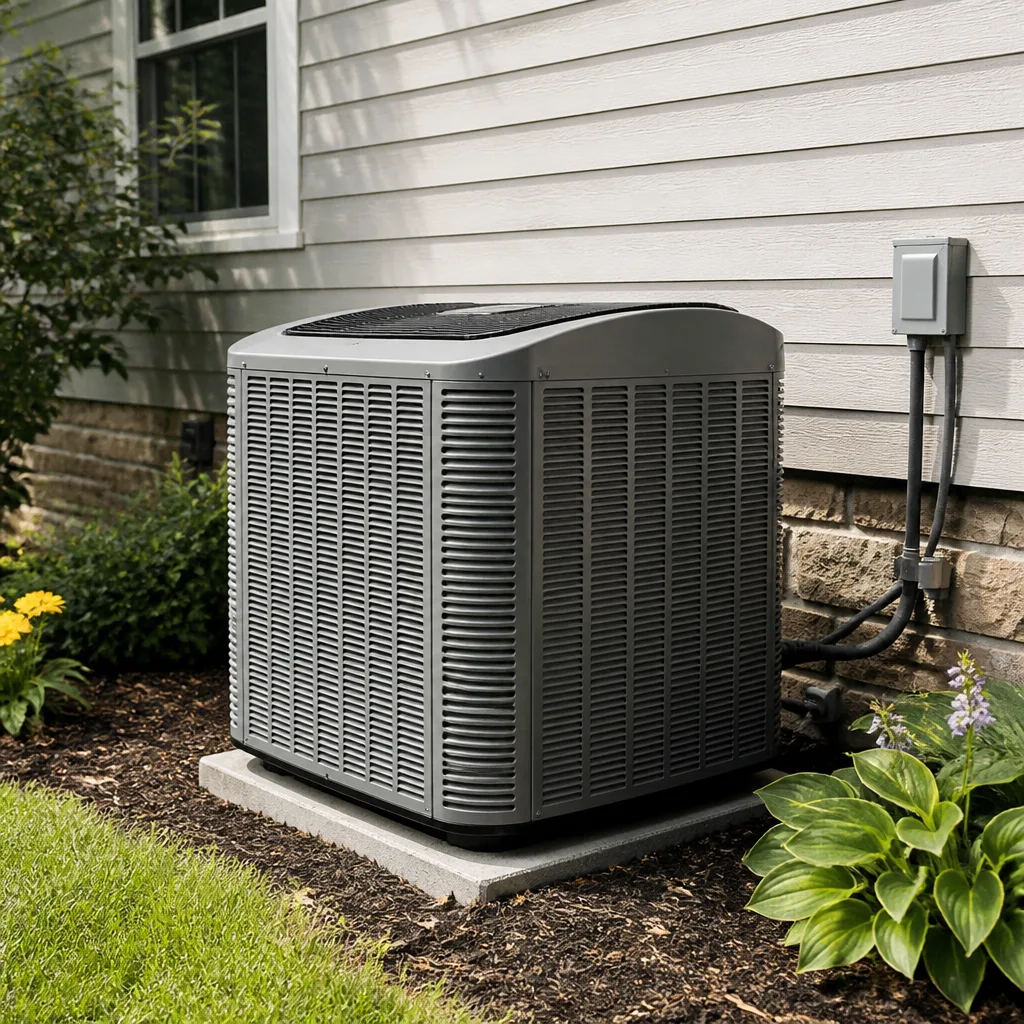 Trane
Trane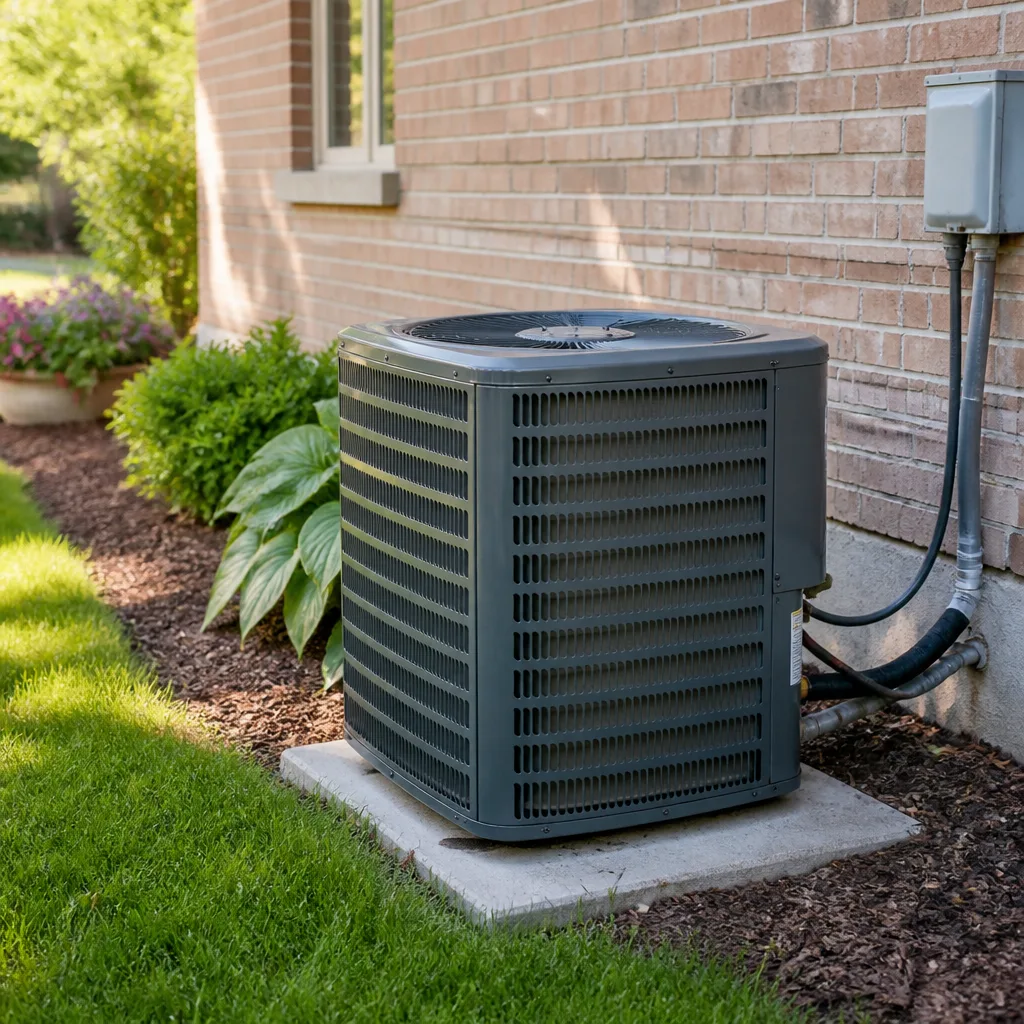 Goodman
Seasonal tune-up and full diagnostic on your Carrier, Trane, or Goodman system - readings shown to you before any repair is proposed
Diagnosis first, numbers second - you approve the repair price before a single part goes in.
Get your free estimateRheem Ductwork Repair: The Fort Worth Owner’s Guide
Rheem ductwork repair in Fort Worth typically runs $150 to $650 installed, depending on how much duct has failed and whether we’re sealing, patching, or replacing a section. We stock Rheem-compatible duct materials on our trucks and can usually handle the repair the same day we diagnose it. Most homeowners find out their ductwork has failed when one room stops cooling while the thermostat says everything is fine, or when the utility bill jumps $60 in a month with no obvious reason.
Ductwork is the circulatory system of your Rheem system. The air handler can be running perfectly, but if the ducts are leaking, kinked, or disconnected, that conditioned air is cooling your attic instead of your living room. In Fort Worth, where the attic can hit 140 degrees in August, a duct leak means your Rheem unit works harder while delivering less. We see this pattern constantly in older homes around Ridglea, Wedgwood, and the neighborhoods off Camp Bowie, where original duct runs from the 1980s and 1990s are finally giving out.
Key Takeaways
- Typical Rheem ductwork repair in Fort Worth: $150 – $650, written before we start
- Same-day repair usually available, since ducts don’t fail on a schedule
- Rheem doesn’t manufacture its own ductwork, so compatibility is about sizing and airflow, not brand-specific parts
- Every repair is covered by our written one-year Done Right Promise
Which Rheem Models This Applies To
Here’s what surprises a lot of Fort Worth homeowners: Rheem doesn’t actually make ductwork. Your Rheem air handler or furnace pushes air, but the ducts themselves are built and sized by the installing contractor using sheet metal, flex duct, and fittings from manufacturers like Snappy, Atco, or Dundas Jafine. So when we talk about “Rheem ductwork repair,” what we mean is ductwork connected to a Rheem system, repaired to match the airflow specifications that Rheem equipment requires.
The compatibility question is about static pressure and CFM, not branding. Rheem air handlers, from the RH1T series up to the RHMV variable-speed units, are designed to move a specific volume of air against a specific resistance. If a duct section is undersized, crushed, or leaking badly, the system can’t hit those numbers. A Rheem variable-speed unit will ramp up and sound like a wind tunnel trying to compensate. A single-stage Rheem will just run longer and cool unevenly.
When we repair ductwork on a Rheem system, we match the replacement section to the existing duct diameter (typically 6″, 8″, 10″, or 12″ round flex for residential), the insulation rating (R-6 minimum in Texas attics, R-8 preferred), and the air handler’s CFM requirement. We do not swap in whatever is on the truck and call it close enough. Undersizing a duct run by two inches might save $30 in material, but it starves the Rheem blower and shortens its life.
OEM vs. Aftermarket for Rheem Ductwork
Since Rheem doesn’t manufacture ducts, there’s no OEM-vs-aftermarket decision the way there is with a control board or a compressor. The decision is about material quality. We use rigid galvanized steel for trunk lines and R-8 insulated flex for branch runs. Cheaper R-4.2 flex is still legal in some installations, but in a Fort Worth attic it loses insulation value faster and tears more easily. We don’t install it. The marginal savings aren’t worth a duct that sweats, sags, and fails again in five years.
Styles & brands we work with
Signs Your Rheem Ductwork Repair Is Failing
- One or two rooms are consistently 8-10 degrees off from the rest of the house. This is the classic disconnected or crushed duct symptom. The air handler is moving air, but somewhere between the plenum and the register, a section has separated at a connection or collapsed under its own weight in the attic heat.
- Dust appears on furniture within days of cleaning. A return-side duct leak pulls unfiltered attic air, insulation fibers, and dust directly into your Rheem system, bypassing the filter entirely. Fort Worth homes with older blown-in attic insulation suffer this badly.
- The utility bill rises with no change in thermostat habits. Leaky ducts in a 140-degree attic means your Rheem unit is conditioning air that never reaches the living space. The system runs longer to satisfy the thermostat, and the bill climbs with it.
- You hear whistling or a soft hiss from the ceiling or walls when the system runs. Air escaping through a failed duct connection under pressure makes noise. If the sound changes when doors open and close, the leak is likely in a wall cavity or soffit chase.
- Flex duct is visibly sagging, kinked, or touching the attic floor in humid summer months. Sweating ducts develop mold and eventually tear at stress points. We see this in Fort Worth homes where original flex hangers have broken and sections are lying on the insulation in the hottest part of the attic.
See the difference
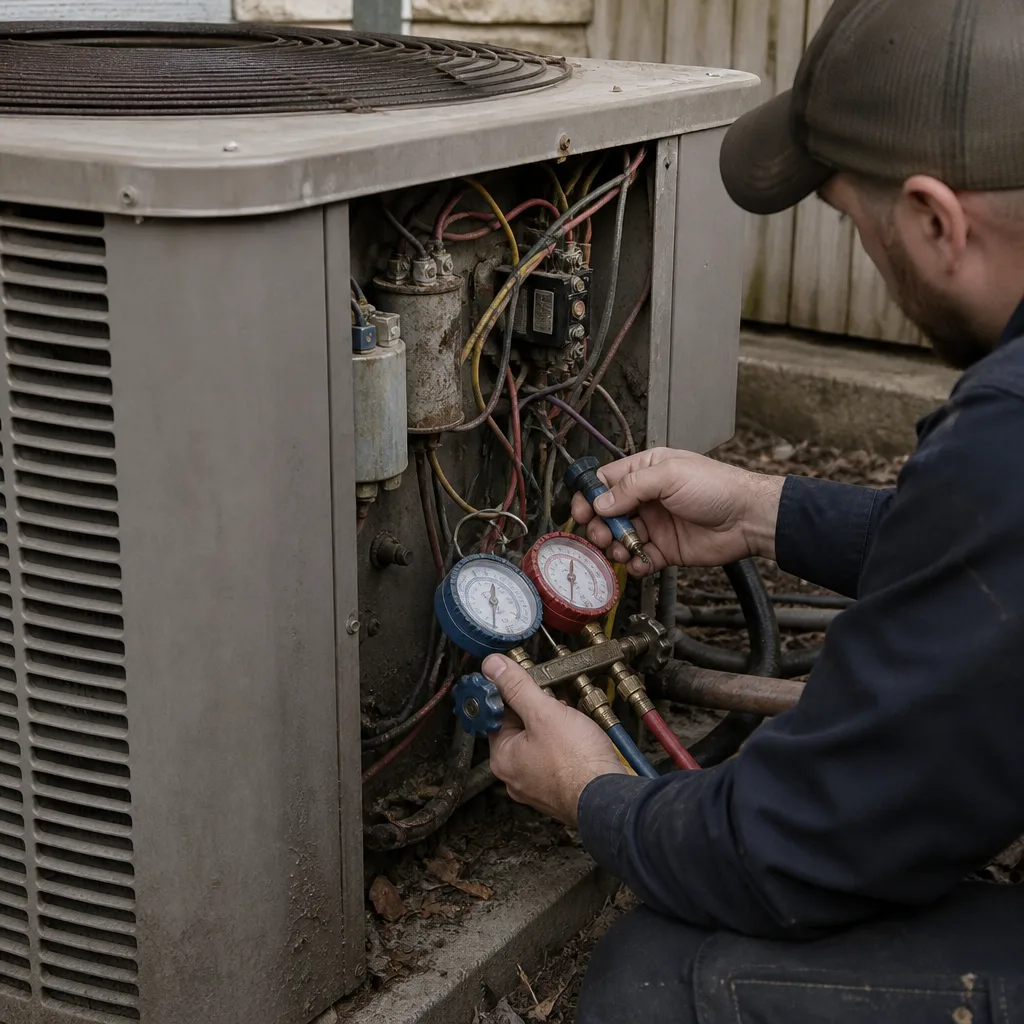 Before
 After
After Before
 After
After Before
 After
AfterReplacement Cost & What’s Included
Ductwork repair on a Rheem system in Fort Worth falls into a few clear price bands, and we give you the exact number in writing before any work starts:
- Duct sealing or small patch (single leak, under 10 feet of duct): $150 – $350. This covers locating the leak, sealing it with mastic and UL-rated tape, and verifying static pressure afterward.
- Section replacement (10 – 25 feet of flex duct, includes new hangers and insulation): $350 – $550. We pull the failed section, mate the new run properly to the Rheem plenum and register boot, insulate the connections, and re-hang with proper support straps every 4 feet.
- Multiple-section repair or trunk-line work: $500 – $650. When several runs have failed or the main trunk is leaking, the repair is more involved and takes most of a day. This includes re-sealing every accessible connection and testing the entire return and supply path.
The range exists because the size of the failure varies. A single popped connection at a register boot is fast and inexpensive. Three crushed runs in a low-clearance attic is a different job. You’ll know your price before we start, and the repair is guaranteed in writing for a full year. If the duct fails again within 365 days, we return at no charge. That’s the Done Right Promise at work.
DIY or Call Us?
Some ductwork issues are safe to investigate yourself. If a register isn’t blowing, remove the grille and look inside. You might see a disconnected flex duct right there, or a damper that was closed by accident. You can also check visible attic ductwork for obvious separations, sagging, or tears, particularly where the flex connects to metal collars. What you’re looking for is information, not a permanent fix.
Doing the repair yourself is where it goes wrong. Attics in Fort Worth hit 140 degrees in July, and a trip-and-fall through a ceiling joist is a real risk. Proper duct sealing requires mastic, not gray tape, and getting the inner liner seated and clamped correctly on the collar matters more than it looks. A poorly seated duct will blow apart under pressure within a season or two. There’s no shock hazard like an electrical repair, but the safety concern in a hot attic plus the likelihood of a failed self-repair makes this a job worth having done right. Call (817) 730-5369 and we’ll send someone who does this every week.
FAQs
In Fort Worth’s attic conditions, typical flex duct lasts 15 to 20 years, while rigid metal duct can last 30-plus years if the joints hold. The failure point is usually the connection, the insulation jacket, or the hangers, not the duct material itself. The single best thing you can do for longevity is have a pro inspect the attic runs every two or three years, because a sagging duct caught early is a $200 fix instead of a $600 replacement. Call (817) 730-5369 and we’ll assess what you have.
Yes, and in most Rheem systems it’s the right call. A failed section can be cut out and replaced, a separated connection can be re-seated and sealed with mastic, and leaky joints can be re-taped and wrapped. Full duct replacement only makes sense if the entire system has failed or if the original installation was badly undersized. We’ll tell you which one you have, and the repair price is in writing before we start.
A single-section Rheem ductwork repair takes two to three hours in most Fort Worth homes, including the time to set up in the attic, remove the failed run, install and seal the new section, and re-check airflow at the affected registers. Multiple sections or trunk-line work can take four to six hours. We’ll give you a time estimate with your written quote, and we arrive inside the stated window.
Yes. Our trucks carry 6-inch through 12-inch round flex duct in R-8 insulation, rigid metal for trunk work, mastic, UL-rated tape, hangers, collars, and register boots, enough to handle the vast majority of Rheem ductwork repairs in a single visit. We also stock repair materials for other major brands we service: Carrier, Trane, and Lennox. If your repair requires a specialty fitting, we source it and return, usually the same day.
Written by Marco Benitez, Owner, Dalton Heating & Air Fort Worth at Dalton Heating & Air Fort Worth, serving Fort Worth and nearby areas.
If your Rheem system isn’t cooling the way it used to and you suspect the ductwork, call (817) 730-5369. We’ll send a background-checked, uniformed technician who will diagnose the problem, put the repair price in writing, and honor the full-year Done Right Promise on the work. No surprise charges. No return-trip fees if the fix doesn’t hold. Just ducts that move air the way the Rheem was designed to.