
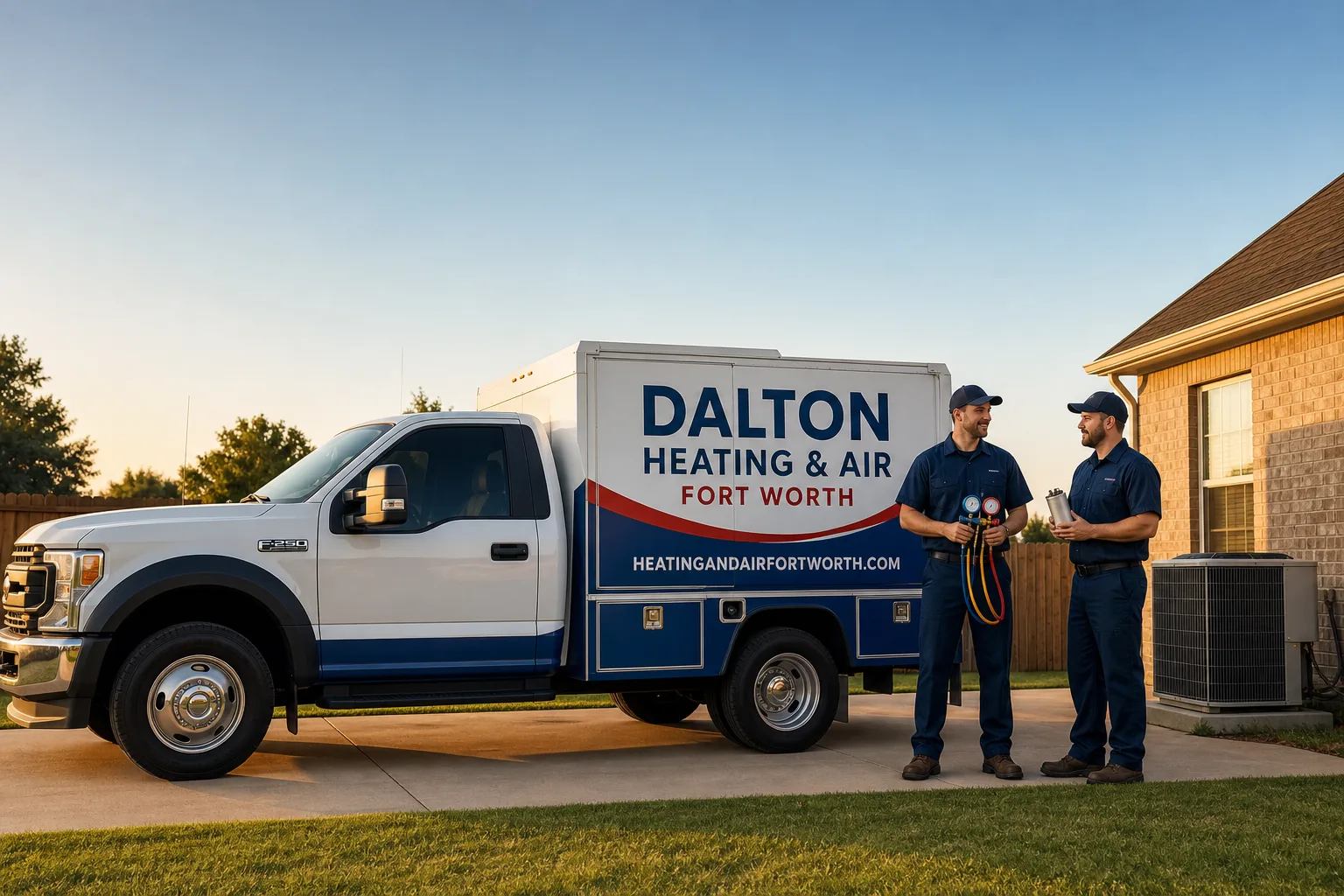
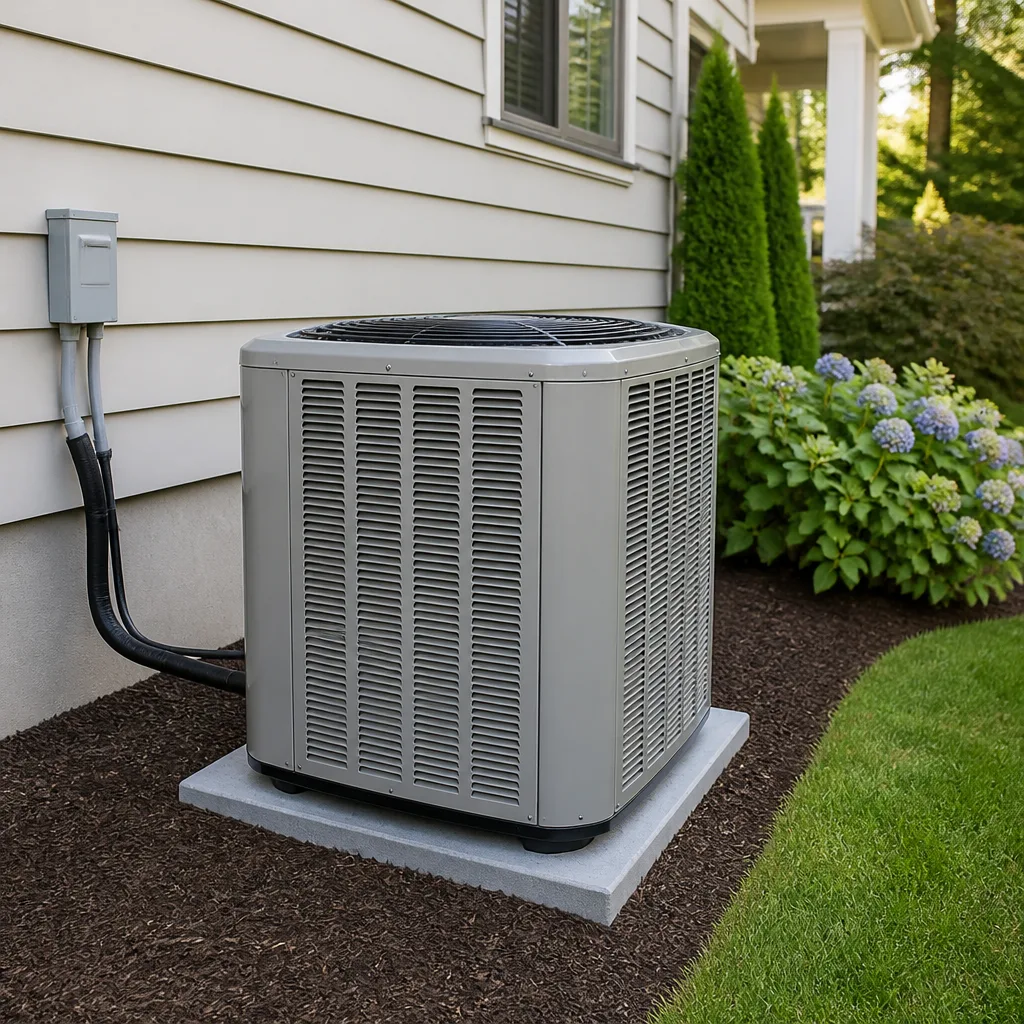
 AC repair
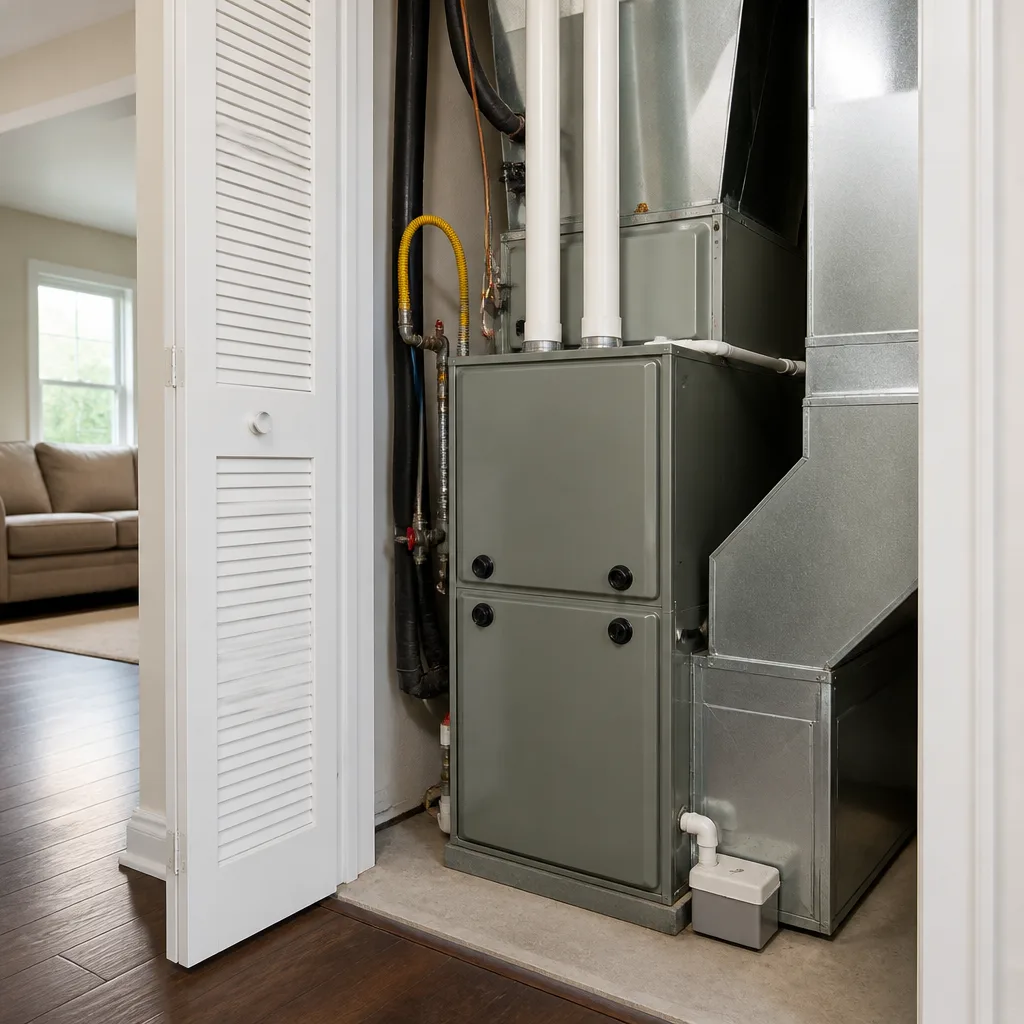 Furnace & heating
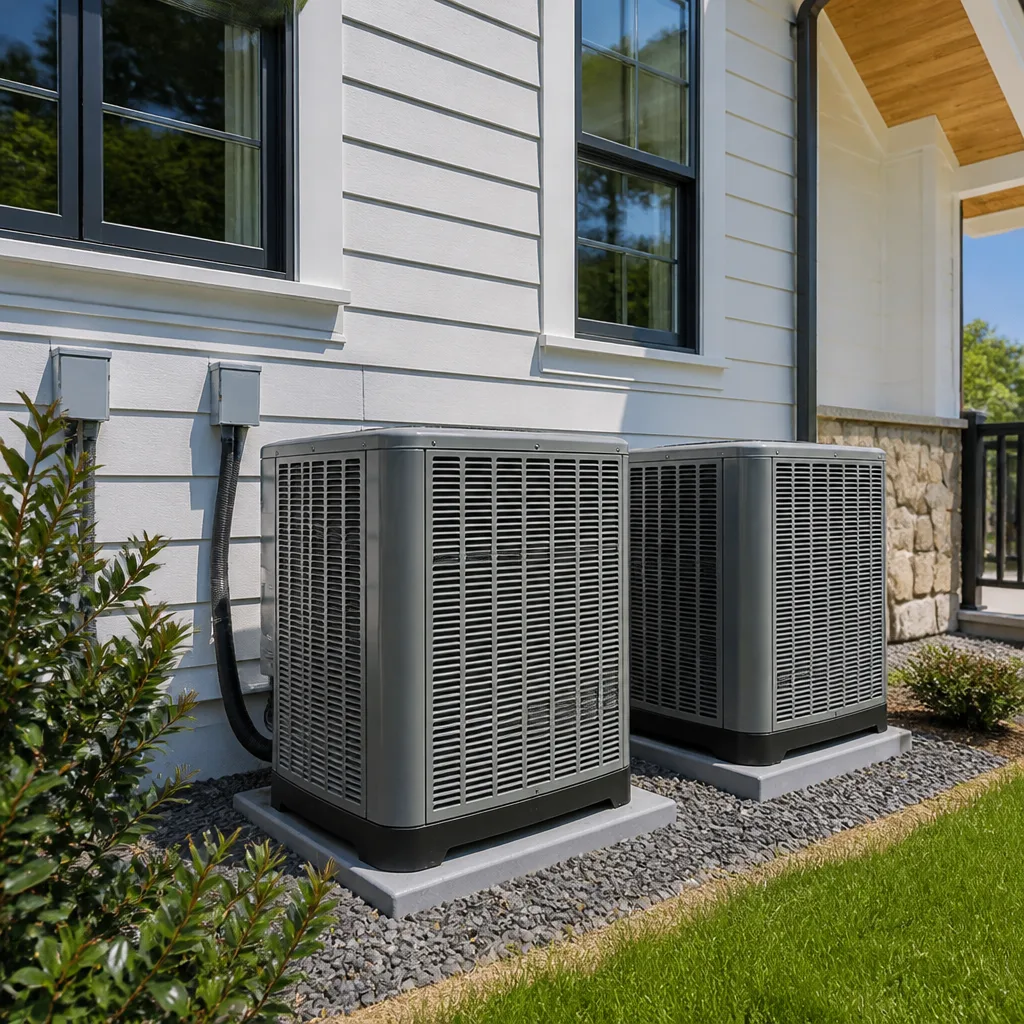 Heat pumps
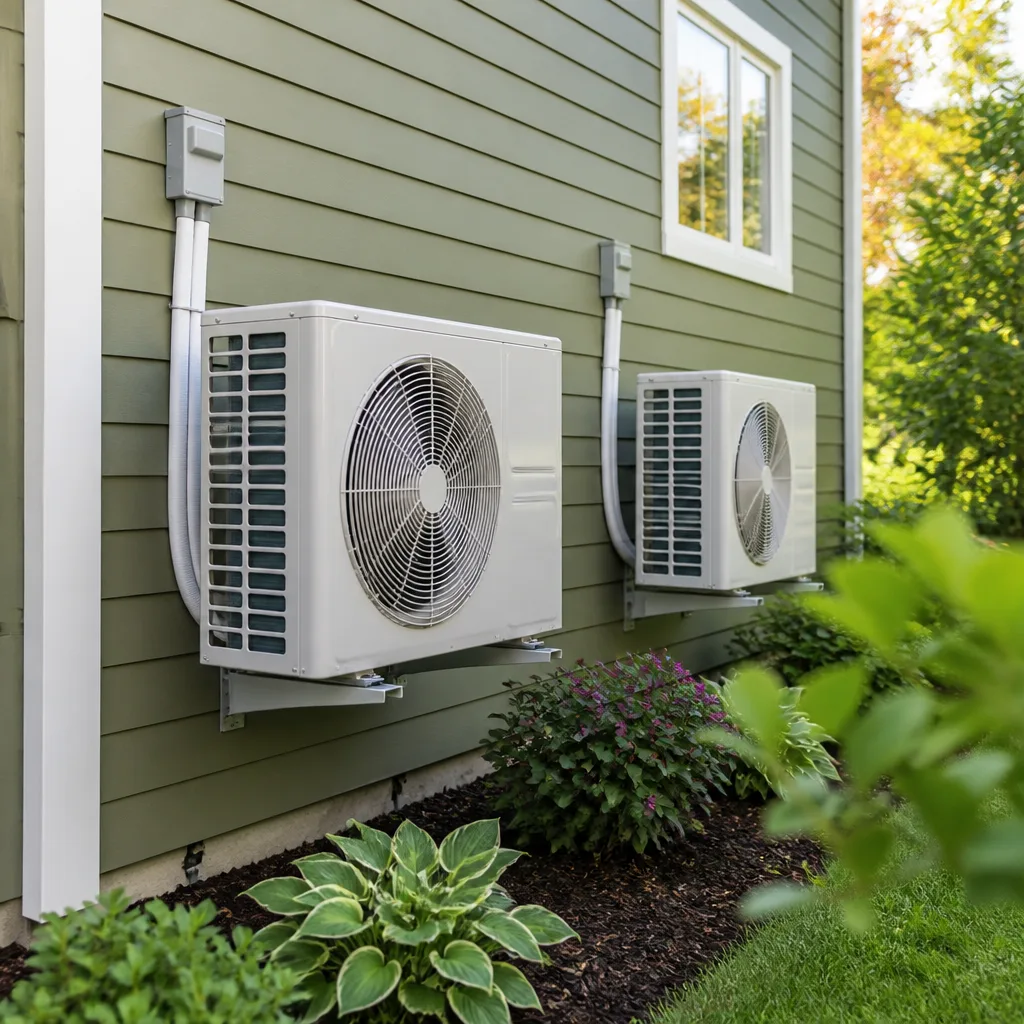 Ductless mini splits
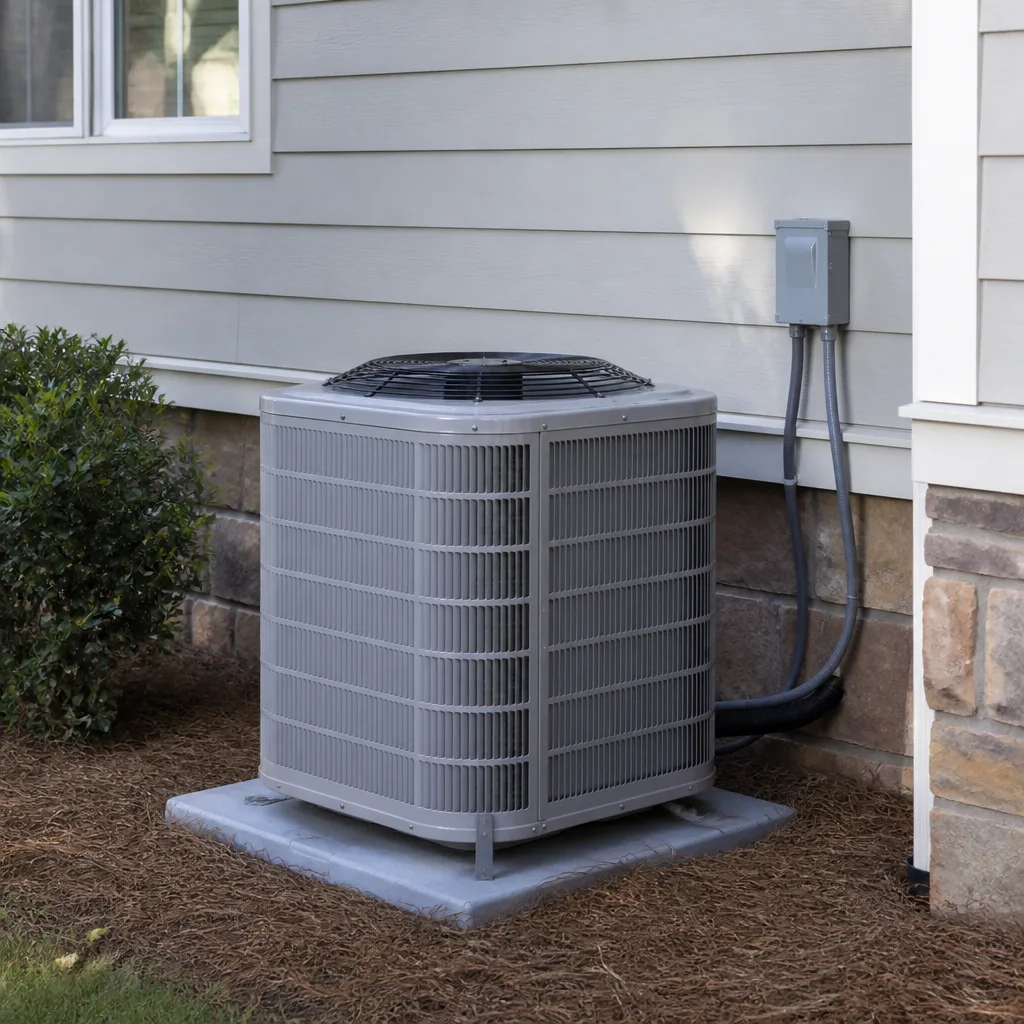 Carrier
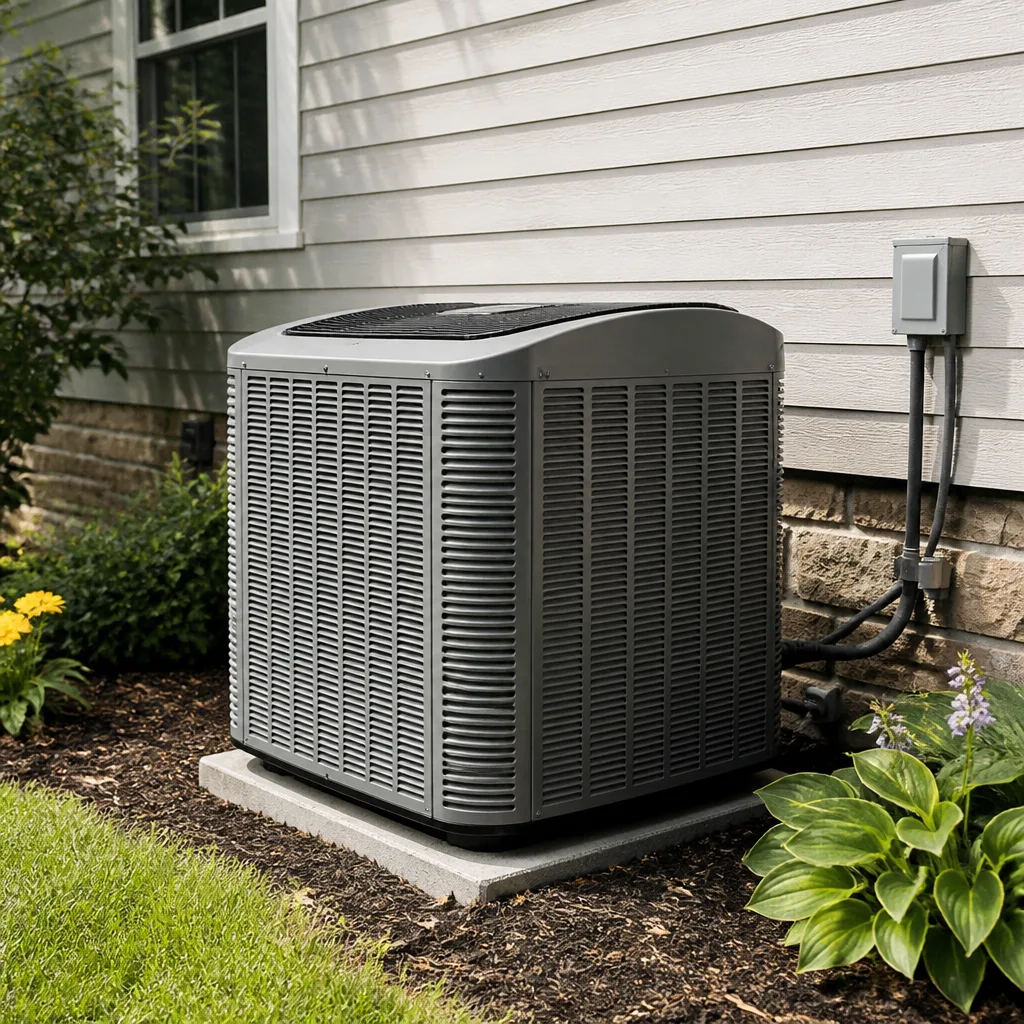 Trane
Trane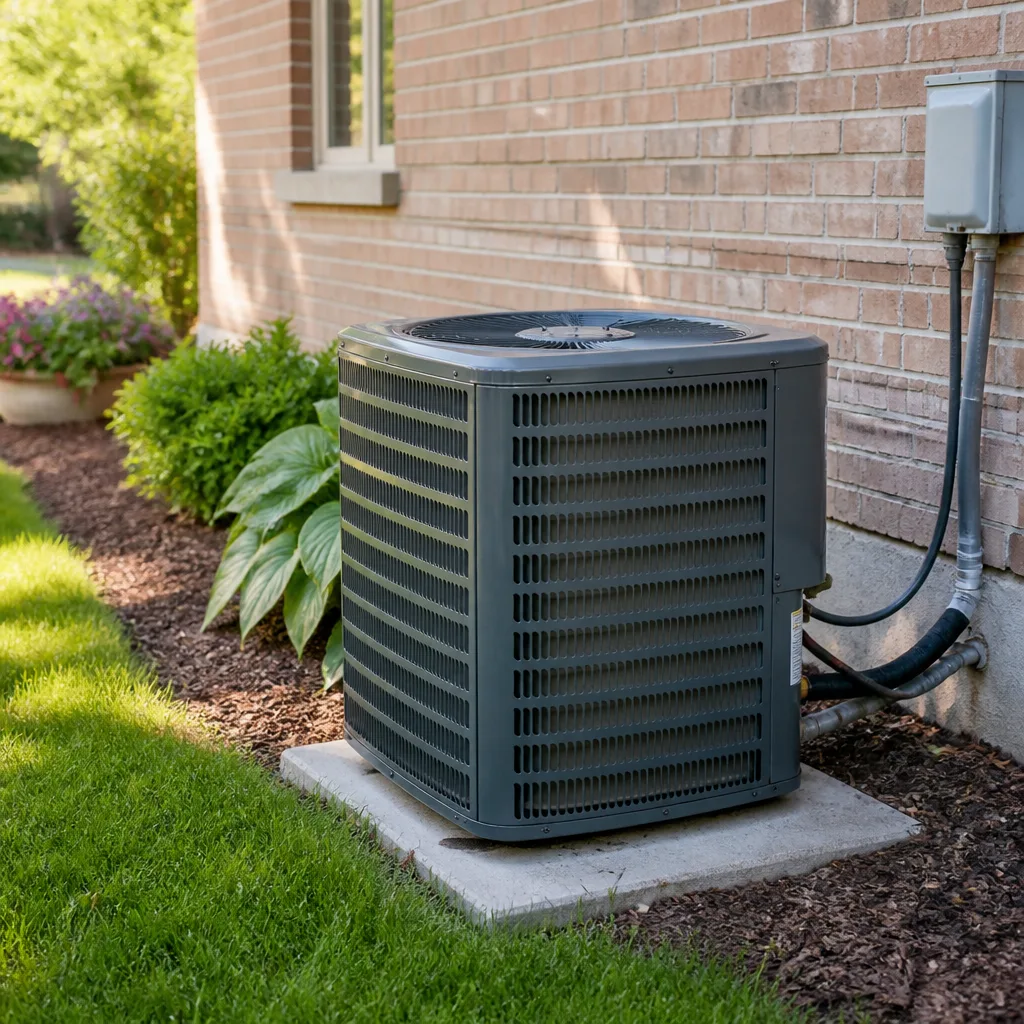 Goodman
Seasonal tune-up and full diagnostic on your Carrier, Trane, or Goodman system - readings shown to you before any repair is proposed
Diagnosis first, numbers second - you approve the repair price before a single part goes in.
Get your free estimateFast, Reliable AC Repair Across Fort Worth
AC repair in Fort Worth runs $150 – $650 for most jobs, with the most common fixes – capacitor replacement and refrigerant correction – landing between $150 and $500. We’re Dalton Heating & Air Fort Worth, and our AC Repair crews cover the whole city from Haltom City to Burleson, usually inside 90 minutes. Call (817) 730-5369 and you’ll get a live person, a written price before any work starts, and a repair guaranteed in writing for a full year.
Why Dalton Heating & Air Fort Worth Is Fort Worth’s Preferred AC Repair Company
Fort Worth’s housing stock does not forgive sloppy HVAC work. The dominant build type here – 1990s to 2010s brick veneer on concrete slabs with horizontal units stuffed into low-pitch vented attics – fails in predictable ways, and we’ve diagnosed enough of them to know exactly where to look first. A tech who hasn’t sweated through a Keller-Haslet attic in August will chase the wrong problem. Our techs have, and the repair ticket proves it.
Marco Benitez runs this location, and he holds every tech to The Garrison Standard: arrive inside the stated window, put the price in writing before starting, do the job by the book, leave the site clean, and stand behind the work for a full year. That last part is not a tagline. It’s the 365-Day Done Right Promise, and it’s printed on every invoice.
We answer calls with a live person 24/7. Not a voicemail queue. Not a callback window. When your AC dies on a 104° afternoon in Arlington Heights, you talk to someone who can get a truck rolling to your street.
Styles & brands we work with
Emergency AC Repair in Fort Worth
Emergency AC Repair in Fort Worth means one thing: the system is down, the inside temperature is climbing, and you need it fixed today. Not tomorrow. Not next Tuesday. We run emergency calls across Fort Worth every summer, and most arrive within 90 minutes of your call. The flat diagnostic is $89, and that fee is credited toward any approved repair. Fast, specific, no overtime penalty.
The dog days hit Fort Worth differently than Dallas. We’re further west, with less tree canopy and hotter afternoon air, so attics here routinely bake past 150°F. Every hour your AC is down, that attic heat works its way down through the insulation. Ceilings get warm. Walls get warm. By late afternoon, the upstairs is 10 degrees hotter than the thermostat says it should be.
Compressor Lockout and Capacitor Failure
Half the emergency calls we take in Fort Worth involve a capacitor that has drifted or failed and a compressor that’s now locked out on thermal overload. The fix itself is often just $150 – $350, which stings when you realize it was a $35 part gone bad. The trick is catching it before the compressor gets damaged from repeated hard starts.
Full System Stops and Air Handler Failures
Sometimes the blower motor gives up first, or the drain pan overflows and trips the safety float switch. In low-pitch Fort Worth attics, the secondary pan is often the highest point in the condensate path, which means that switch has already tripped by the time you see water on the ceiling. We check the switch and the pan before condemning anything else.
AC Not Blowing Cold Air in Fort Worth
AC not blowing cold air in Fort Worth is usually one of three things: low refrigerant from a slow leak, a seized or grinding condenser fan motor, or a frozen evaporator coil starving airflow through the supply plenum. The first costs $200 – $500 to correct including leak check. The second runs $250 – $450 installed. The third is often a symptom rather than the disease, and that’s where the diagnosis matters.
A frozen coil in a 2005-era Keller-Haslet house is rarely just a dirty filter. It usually means the return air plenum is undersized for the blower, and on a 100° afternoon the system is starving. We see it on three out of five no-cool calls in that corridor. The fix is measured static pressure, and often some return-side correction rather than just more refrigerant.
The Dirty Filter Ice-Up Cycle
Fort Worth summers are dusty enough that a one-inch filter left in place through spring can choke a system by July. Reduce airflow 30% and the coil temperature drops below freezing. Ice forms. Airflow drops further. By the time you notice warm air, the coil is a block of ice and the compressor is running hot again. Shut the system off, call us, and plan to check that filter monthly through October.
Refrigerant Level That’s Just Wrong
Under-charge and the coil starves. Over-charge and the compressor works harder than it should. Both shorten system life. Modern R-410A systems are less forgiving than the old R-22 units, and Fort Worth’s January-to-August temperature swing doesn’t help. We charge by superheat and subcooling, not by beer-can-cold guesses, and you get the reading on paper before you pay.
Why Your 1990s – 2010s Fort Worth House Loses Its Cool Every August
Fort Worth’s explosive suburban growth produced tens of thousands of slab-on-grade tract homes with attic-mounted horizontal systems and flex duct runs pulled tight across low-pitch trusses. Twenty summers later, that flex duct has baked brittle. The joints leak. The inner liner separates. The result is not a compressor problem – it’s a delivery problem. The coil makes cold air, and the attic swallows it.
In the Keller-Haslet sprawl north of Loop 820, 15- to 20-year-old attic flex ducts have typically crumbled into brittle, leaking runs by early August, which means duct leakage – not compressor failure – is the dominant AC repair call by then. A perfectly good 4-ton condenser simply cannot push enough air to the far bedrooms of a 2,600-square-foot two-story when a third of the supply air is disappearing into a 150°F attic before it ever reaches a register. Last summer we pulled a 4-ton Trane condenser and matching evaporator coil from just such a house. The attic flex duct had crumbled into brittle, leaking runs, and the capacitor had drifted far enough that the compressor was struggling. We corrected the refrigerant charge, replaced the capacitor, and sealed the return plenum before resetting the blower motor for the corrected static pressure. The real repair was in the ductwork – sealing the leaks that had the homeowner convinced the condenser was too small.
That’s the Information-Gain hook of this page, and we’re going to say it plainly: in Fort Worth, telling you to replace a 4-ton condenser with another 4-ton condenser – without measuring static pressure and sealing the duct leaks – is setting you up to fail again in 2027. A like-for-like swap leaves the same duct leakage behind, and the new compressor dies just as slowly as the old one. We will not do that to you. The Garrison Code says do the job by the book, and the book starts with measuring what’s actually there.
Older neighborhoods tell a different story. Homes in Arlington Heights and the Near Southside that predate 1970 often sit on pier-and-beam foundations with closet units or basement-style access, and the systems were updated piecemeal over the decades. Single-zone systems fight unbalanced floor plans with volume ceilings: the downstairs overcools while the upstairs runs 10 – 12°F hotter all summer. The homeowner blames the 10-year-old compressor. The real issue was a load calculation nobody did when the system was replaced 15 years ago. We run that calculation before recommending anything.
Trusted Brands We Service in Fort Worth
We’re factory-trained to service nine major residential HVAC brands, and in Fort Worth that matters. The tract-home era installed a lot of Rheem and Bryant condensers, while the custom and semi-custom builds leaned toward Trane and York. We carry common capacitors, contactors, fan motors, and control boards in our trucks, and the local parts distribution here keeps Daikin and York components a same-day pickup when the repair runs deeper. We service them all, and we don’t sell you a new system because your brand is one we don’t prefer – there is no brand we don’t prefer to repair.
See the difference
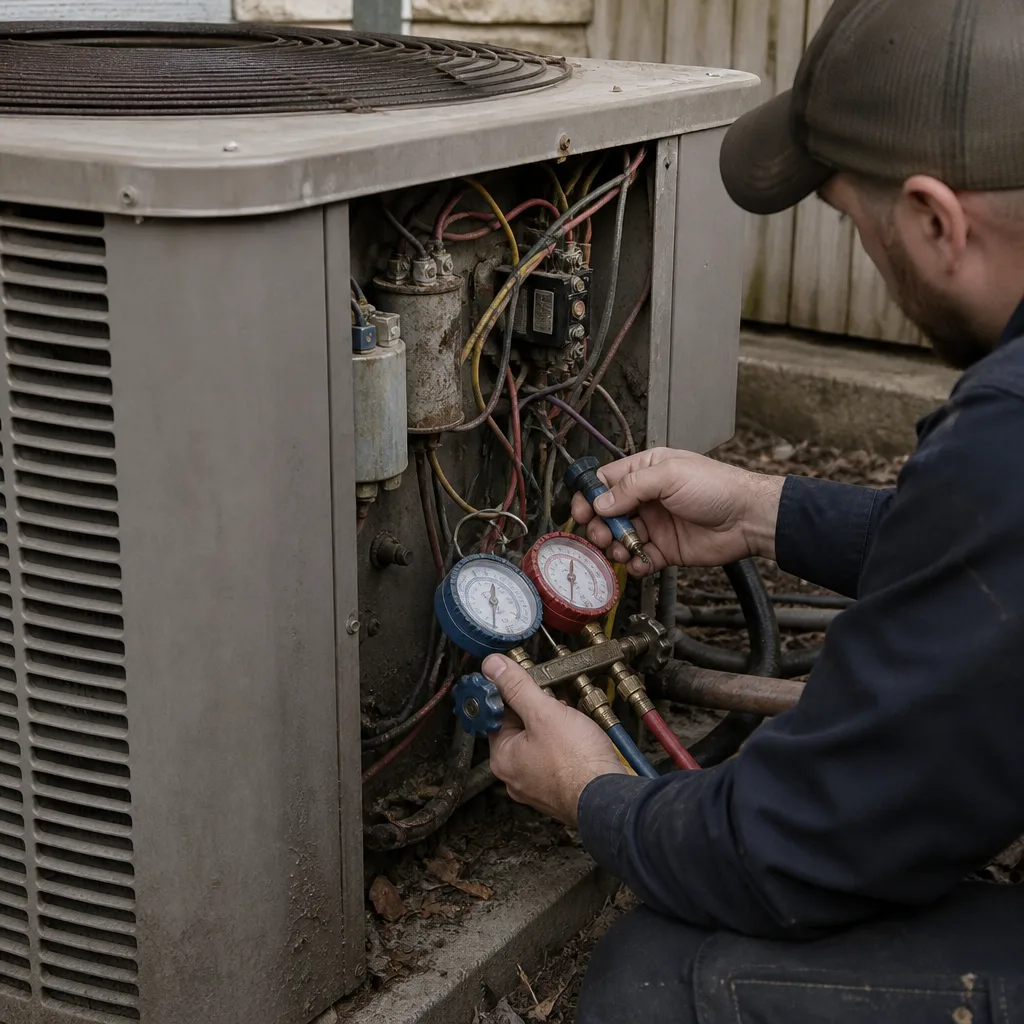 Before
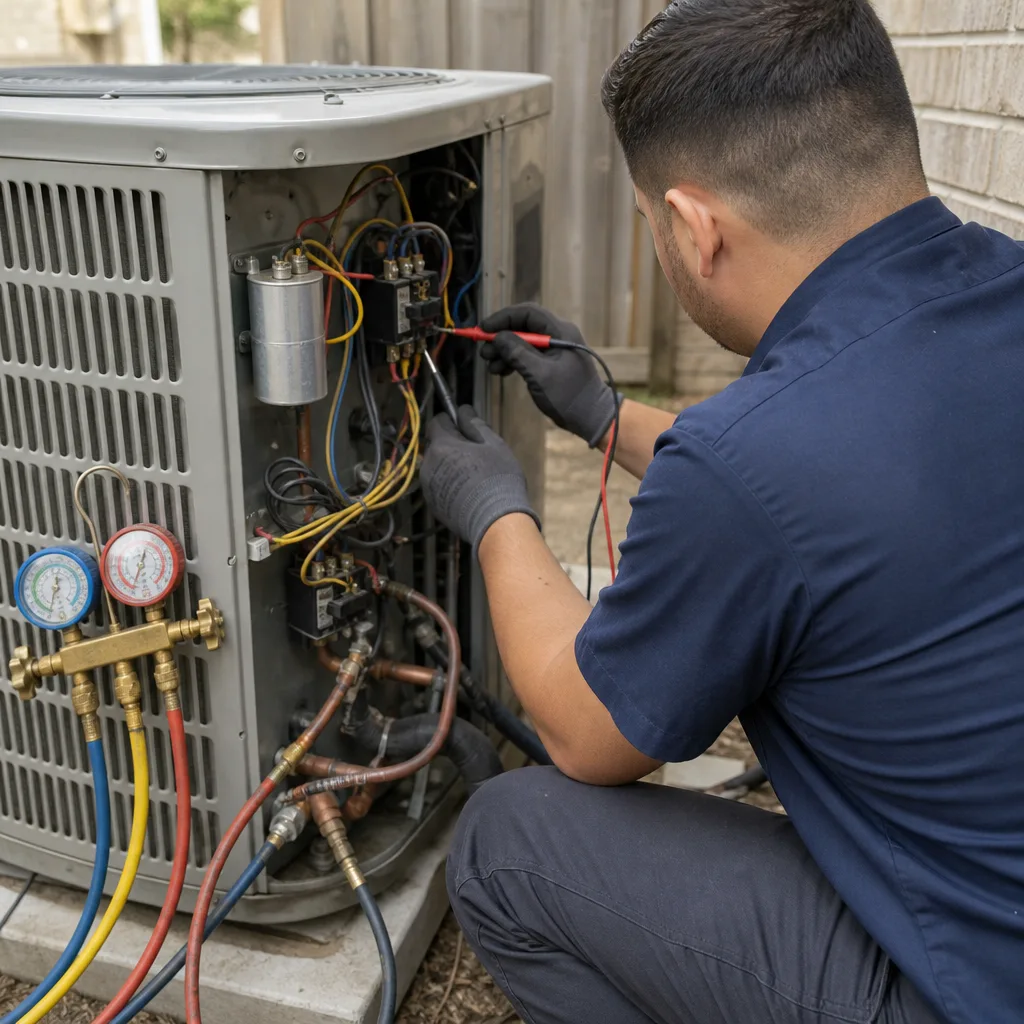 After
After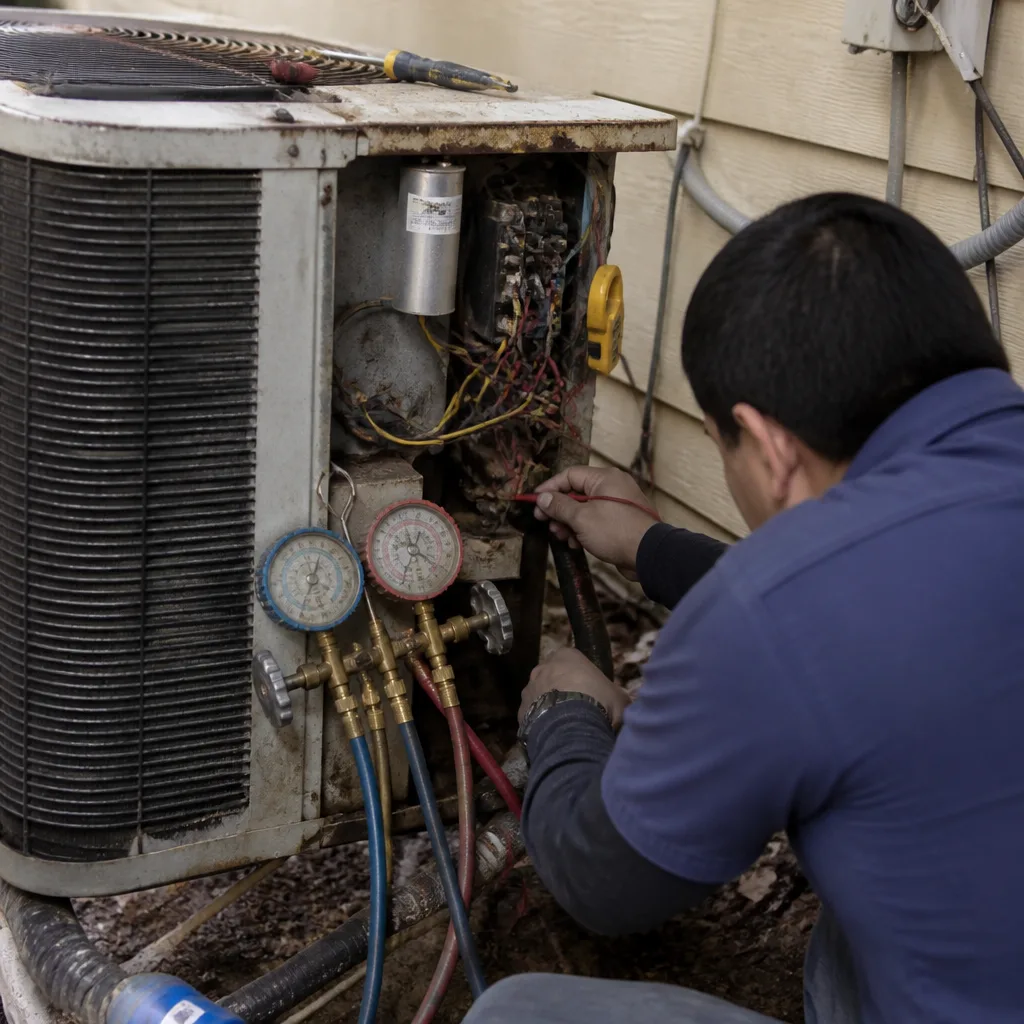 Before
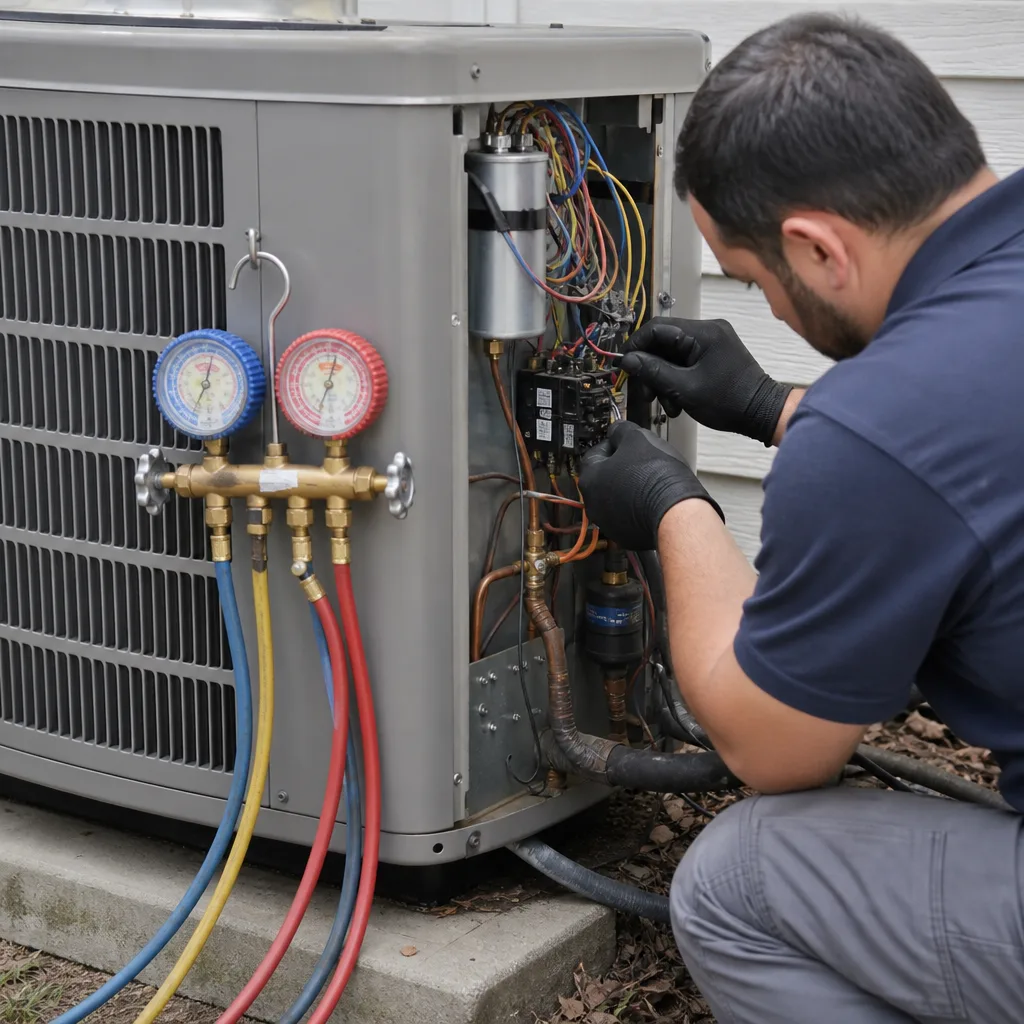 After
After Before
 After
AfterCommon AC Repair Problems We See in Fort Worth Homes
- Baked-brittle flex duct in low-pitch vented attics causes massive air leakage. A perfectly good condenser still can’t cool the far bedrooms of a two-story brick veneer when a third of the supply air is lost before the first register.
- Undersized return air plenums on 1990s – 2010s slab-on-grade tract homes starve the blower, causing evaporator coil freeze-ups and repeated capacitor failures in August heat. The system’s not broken; it’s suffocating.
- Single-zone systems in unbalanced floor plans with volume ceilings overcool the downstairs while the upstairs runs 10 – 12°F hotter, prompting premature compressor replacement that a load calculation would have avoided. Upstairs walls and ceilings are absorbing more heat than the duct design can offset.
- Electrical panel limitations in homes built before 2000: the outdoor condenser will often outlive the panel, and a new high-efficiency heat pump with inverter technology may demand more startup amperage than the existing breaker safely delivers. We check the breaker, the disconnect, and the wire gauge before we quote an install, not after.
Pricing for AC Repair in Fort Worth, TX
Most AC repairs in Fort Worth fall between $150 and $650. Here’s the line-item breakdown:
| Repair | Typical Range in Fort Worth |
|---|---|
| AC Repair (general diagnostic + common parts) | $150 – $650 |
| Capacitor replacement | $150 – $350 |
| Refrigerant charge correction | $200 – $500 |
Our diagnostic fee is flat, credited toward any approved repair, and the total price is in writing before a single tool comes off the truck. What pushes a Fort Worth job toward the high end? Correcting a charge on a system that’s been leaking for two seasons, or pulling a blower motor from an attic you can barely stand in. The price in writing means the price doesn’t move.
We Also Serve Cities Near Fort Worth
If you’re in Haltom City, Colleyville, Mansfield, or Burleson, you’re still in our service area. The same pricing, the same written guarantee, the same Fort Worth team running the call. Distance from our dispatch doesn’t change the rate.
Serving Fort Worth, TX - Our Local Coverage Area
We’re based in the Fort Worth area and know this community well. Use the map below to see our service coverage - if you’re nearby, we can almost certainly help.
FAQs About AC Repair in Fort Worth
It’s almost never a compressor problem in Fort Worth’s 1990s – 2010s slab homes. The issue is the attic ductwork leaking conditioned air into a 150°F attic space, or a single-zone system that can’t balance a floor plan with volume ceilings. We measure static pressure and inspect the duct runs before replacing anything. Call (817) 730-5369 for a diagnostic that finds the actual cause.
Yes, and in Fort Worth it’s the single most common no-cool call we run. The capacitor is a $35 part that provides the starting jolt for the compressor and fan motor. On a 104° afternoon with a heat-soaked condenser, a weak capacitor can’t deliver the starting torque, and the compressor locks out on thermal overload. Replacement runs $150 – $350. It’s cheap insurance compared to a burned-out compressor.
Usually not. The more common diagnosis in Fort Worth’s 2005-era tract homes is duck leakage and an undersized return air plenum, not an undersized condenser. A bigger unit won’t fix a delivery problem – it’ll just cycle on and off more, wear faster, and still not cool the far rooms. We run a load calculation and a static pressure test before recommending anything larger.
Because something is starving the evaporator coil of airflow, dropping its temperature below freezing. In Fort Worth attics, the usual culprits are collapsed or clogged filter media, undersized return ducting, or baked-brittle flex duct that has pulled loose from the plenum. A dirty filter is a $6 fix; a collapsed return duct is a ductwork repair. We diagnose which one before we charge anything.
SEER2 is the updated efficiency rating standard that took effect in 2023, and it applies to new system installations, not repairs. If your current system is still repairable – and many 10- to 15-year-old systems in Fort Worth are – you’re not required to upgrade to a SEER2-rated unit. Repairing an existing R-410A or R-22 system that’s still in good mechanical shape is often the right financial call, and we’ll tell you exactly when it’s not.
Call Dalton Heating & Air Fort Worth for a Free Estimate
Tell us what the system is doing – or not doing – and we’ll be there inside the window we give you. We’ll put the price in writing before any work starts, guarantee the repair for a full year, and come back at no charge if it fails within that time. Call (817) 730-5369 now; live person, straight answer, and if it’s an emergency, a truck headed your way.
Written by Marco Benitez, Owner at Dalton Heating & Air Fort Worth.