
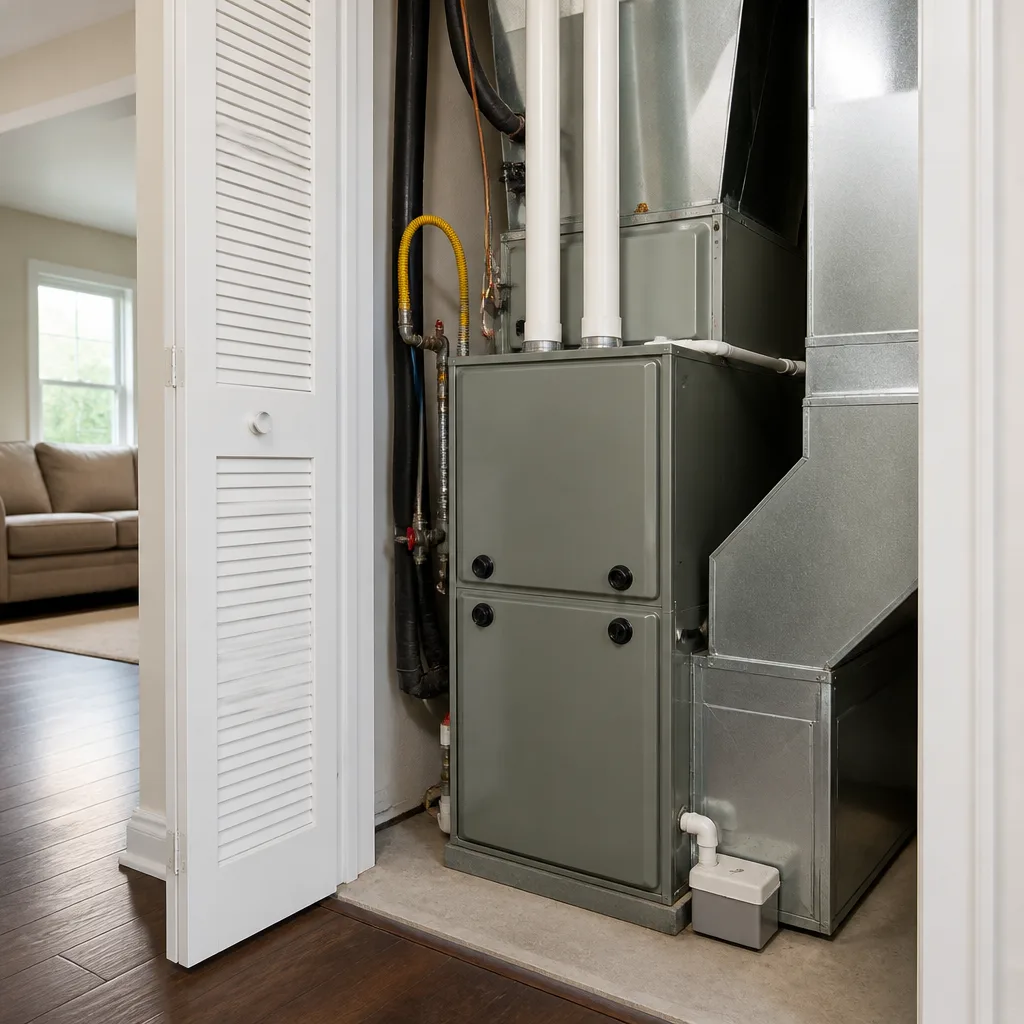
 Furnace & heating
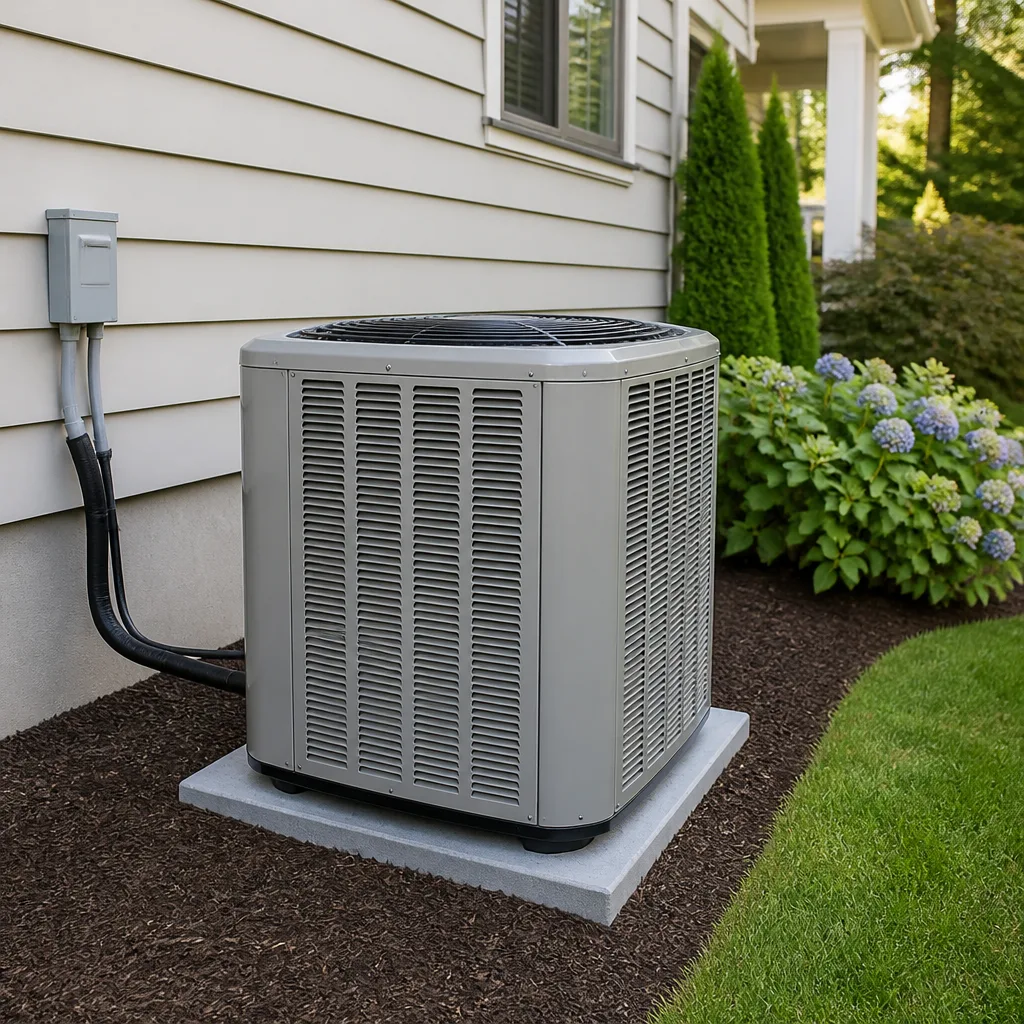 AC repair
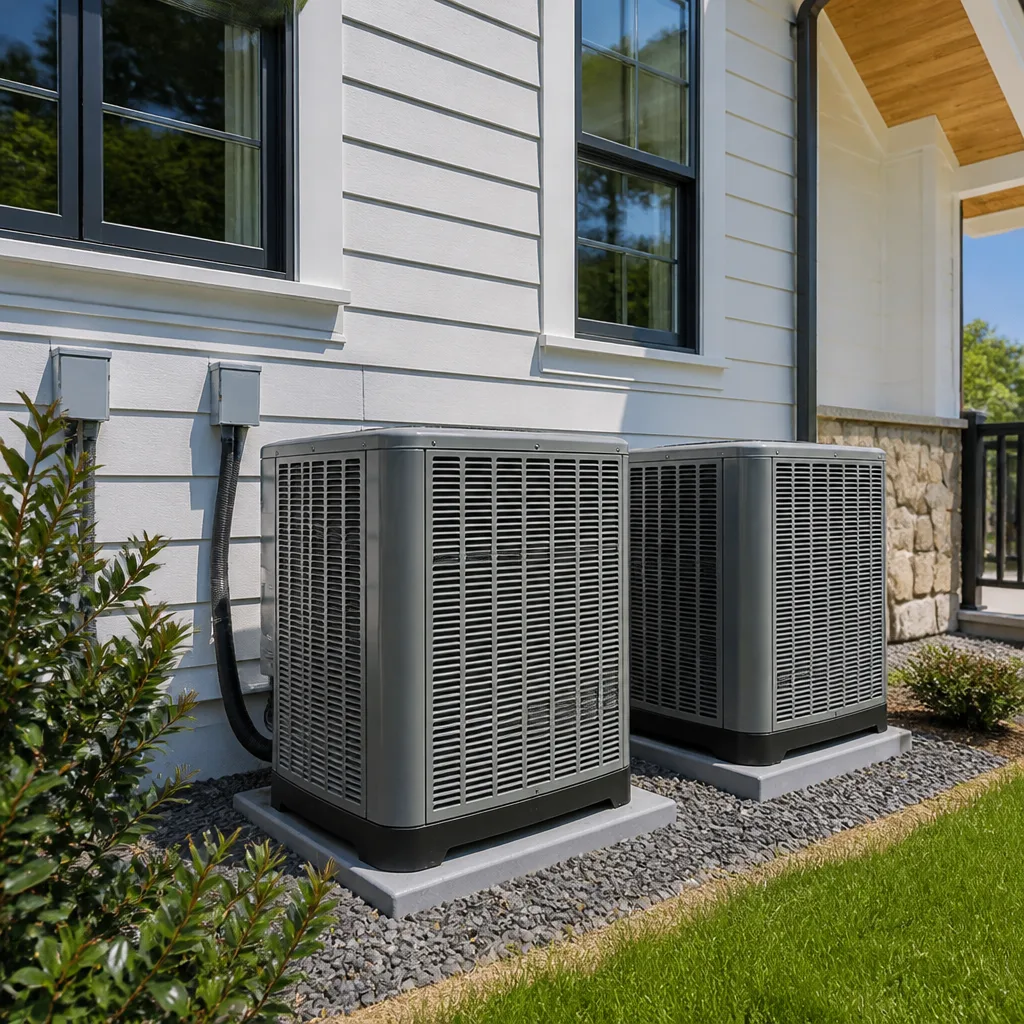 Heat pumps
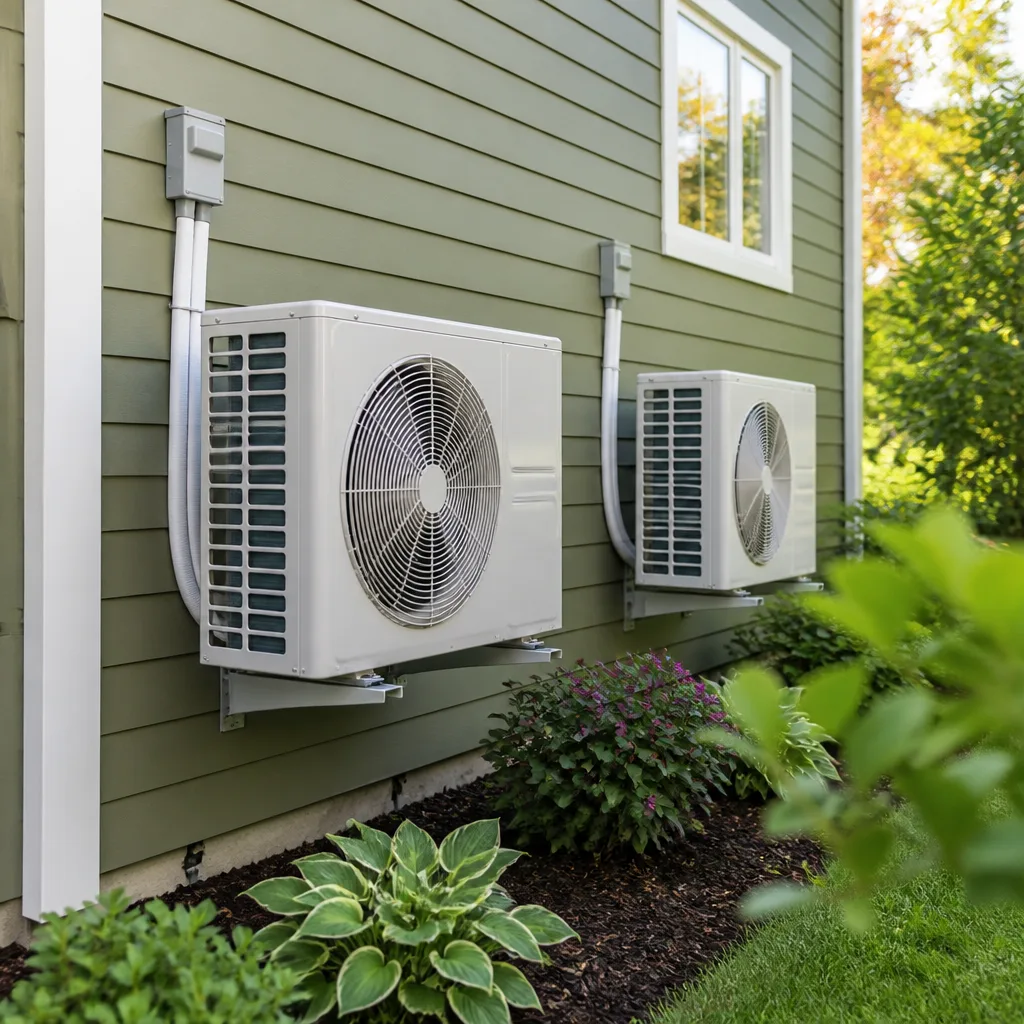 Ductless mini splits
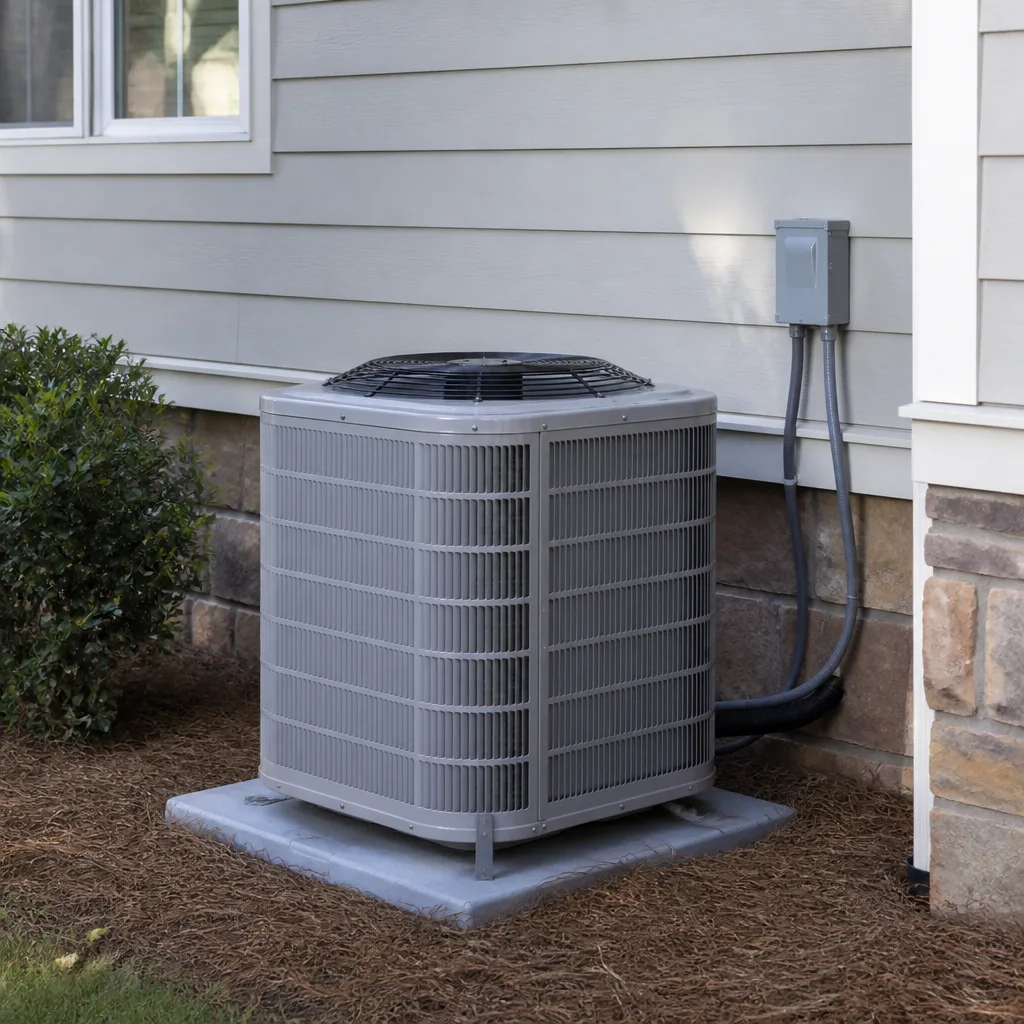 Carrier
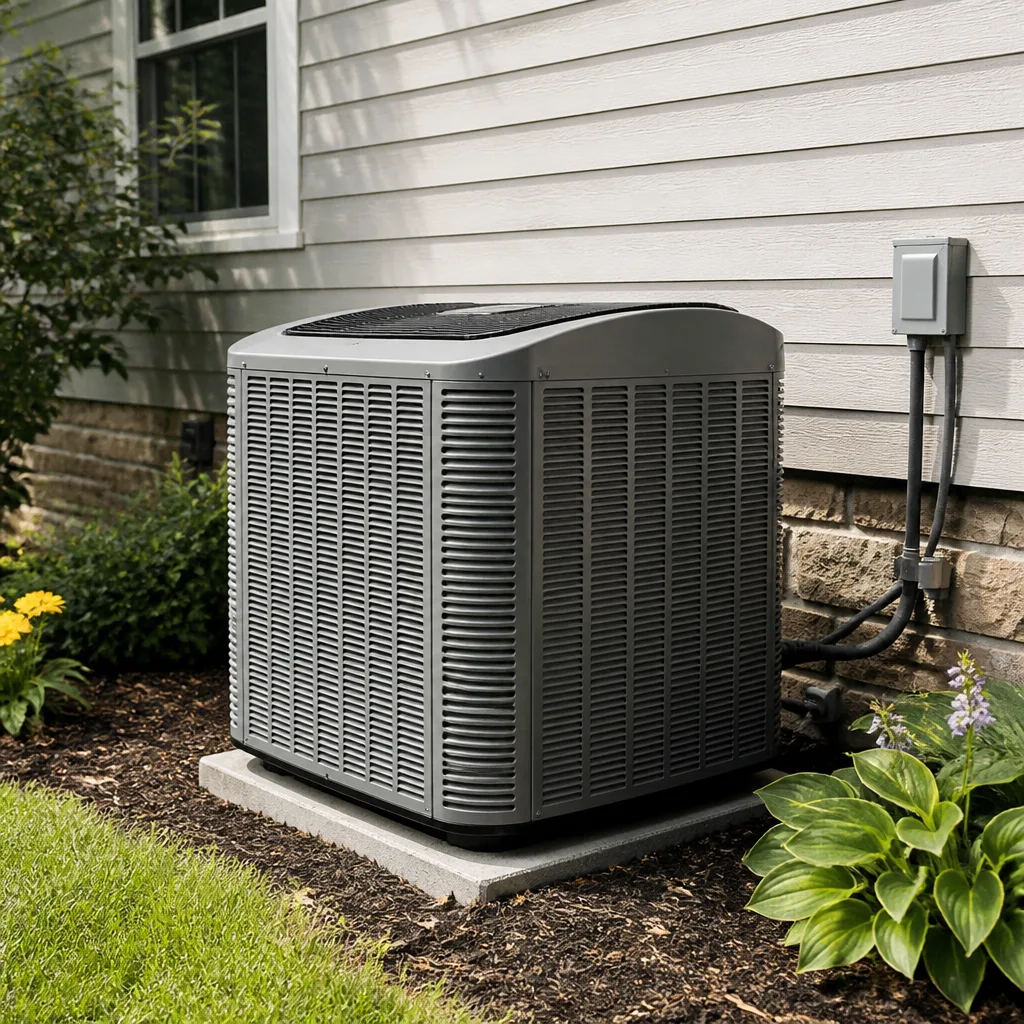 Trane
Trane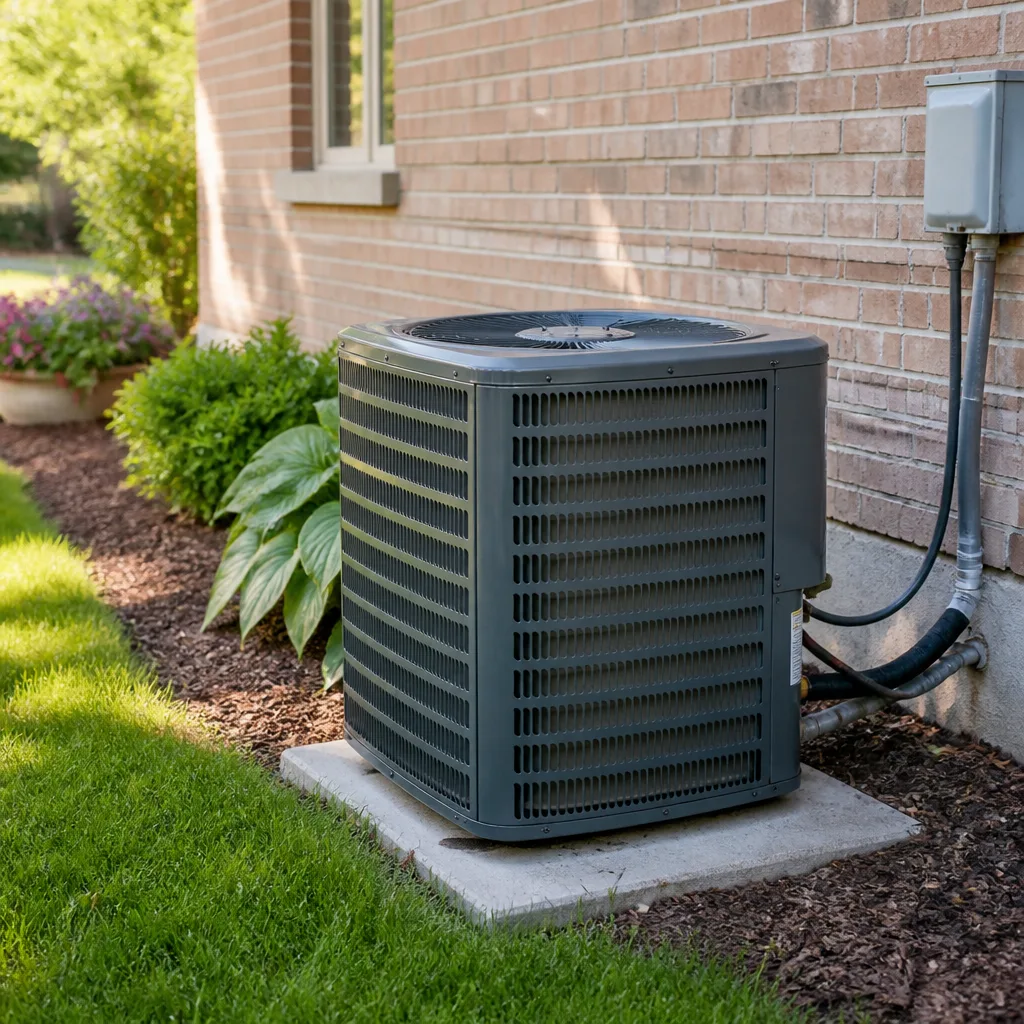 Goodman
Seasonal tune-up and full diagnostic on your Carrier, Trane, or Goodman system - readings shown to you before any repair is proposed
Diagnosis first, numbers second - you approve the repair price before a single part goes in.
Get your free estimateStyles & brands we work with
See the difference
 Before
 After
After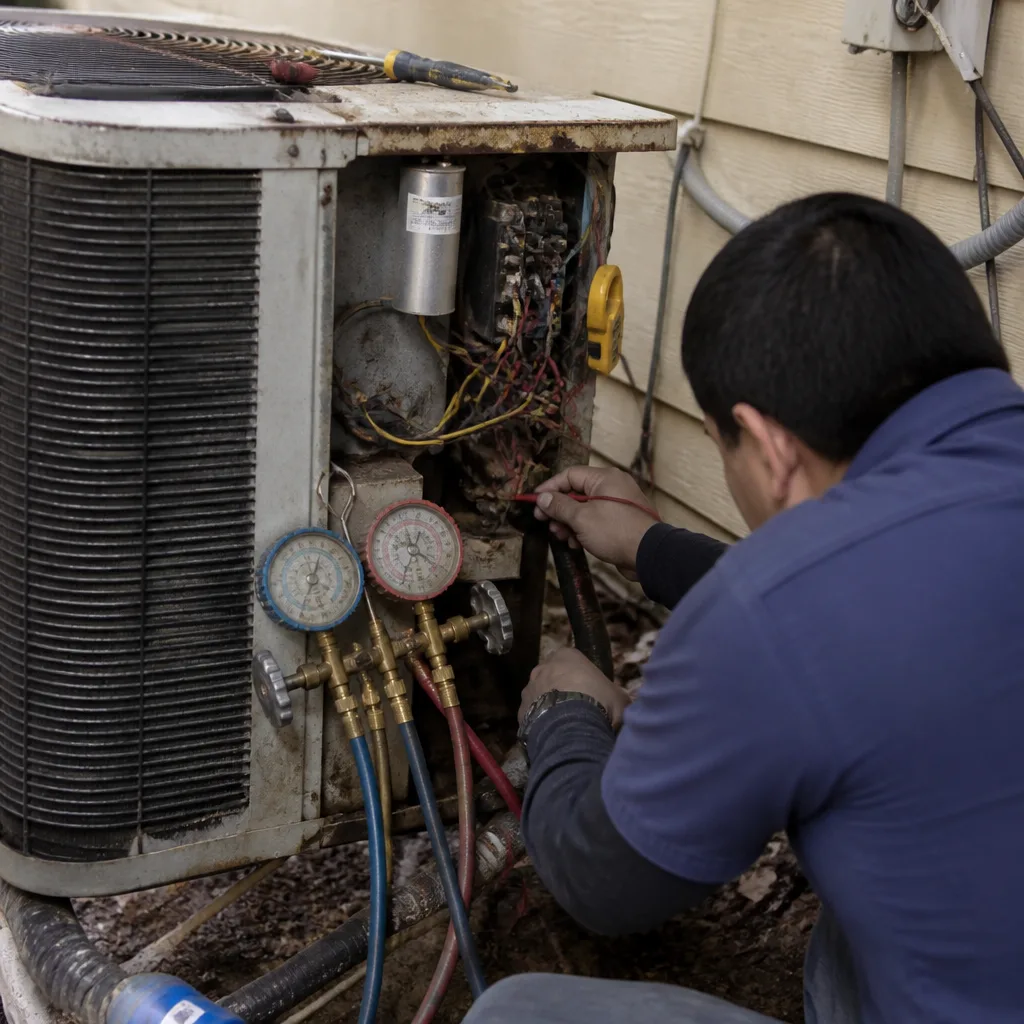 Before
 After
After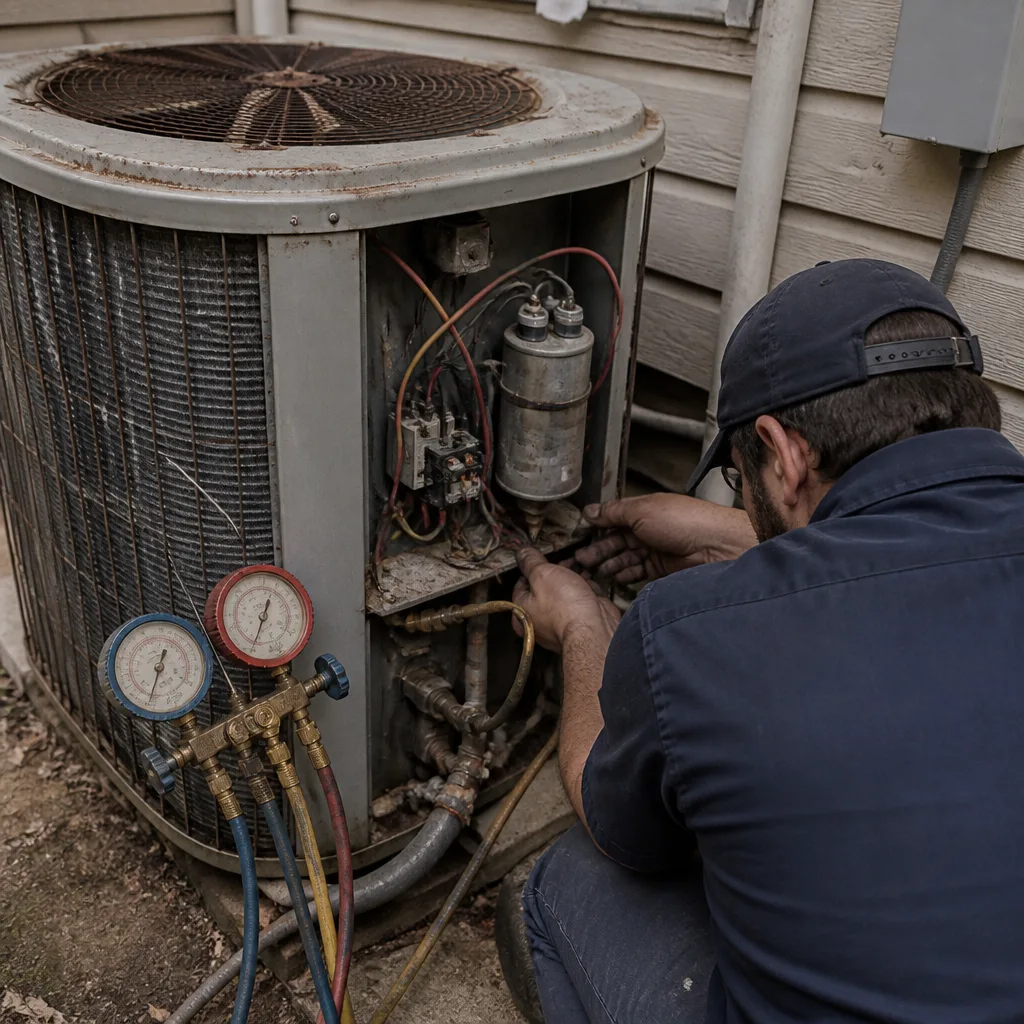 Before
 After
AfterRefrigerant Recharge in Fort Worth, TX
A refrigerant recharge in Fort Worth typically costs between $200 and $600, depending on how much refrigerant your system lost and whether we’re topping off a small leak or starting from empty. The job usually takes 45 to 90 minutes once we’re on site. Most systems lose refrigerant through a slow leak, which means the recharge itself is step one – finding and fixing the leak is the part that keeps you from calling us again next summer.
If your AC is running but the air coming out of the vents feels lukewarm, or your system runs nonstop without cooling the house below 78 degrees, there’s a good chance the refrigerant charge is low. Dalton Heating & Air Fort Worth handles this as part of our full AC Repair & Installation in Fort Worth service, and we put the price in writing before we touch anything. Call (817) 730-5369 and a live person answers, day or night.
Refrigerant recharge is one of the most misunderstood jobs in residential HVAC. It’s not a “top-off” like windshield washer fluid. Your AC is a sealed system – if refrigerant is low, it leaked out somewhere, and adding more without addressing the leak is like pouring gas into a tank with a hole in it. Marco Benitez and our AC repair installation techs treat every low-charge call as a diagnostic job first: we find out where the refrigerant went, tell you what it will cost to fix it right, and put that number in writing before any work begins.
When You Need Refrigerant Recharge
Some of these symptoms are easy to spot from your couch. Others take a trained eye and a set of manifold gauges. Here’s what typically sends Fort Worth homeowners to the phone:
- Warm air from the vents. The blower runs fine, but the air coming out feels room temperature or barely cool. You can hear the system working – it just isn’t doing much.
- Ice on the copper lines. If you see frost or solid ice on the larger copper line at the outdoor condenser unit, the evaporator coil is likely freezing up from low refrigerant. This is common in Fort Worth’s humid late-spring weather.
- Long run times, no temperature drop. The thermostat says 75, the AC has run for two hours straight, and the house is still 80. A low charge reduces the system’s heat-moving capacity, so it runs longer and cools less.
- Hissing or bubbling near the indoor coil. Refrigerant escaping through a pinhole leak can make an audible hiss. If you hear it, shut the system off and call us – releasing refrigerant into your home is something you want addressed quickly.
- Rising electric bills during mild weather. When the charge is low, the compressor works harder and runs longer to chase the set point. If June’s bill spiked without a matching heat wave, low refrigerant is a prime suspect.
- Short cycling. The compressor outside kicks on, then shuts off after a minute or two, then kicks on again. Low-pressure switches in modern systems will trip when refrigerant levels drop too far.
One thing worth knowing: a system that’s a pound or two low may still blow cool air in spring and fall, then cave entirely in August. If you’ve noticed any combination of the above, especially with a system that’s seven years old or more, a charge check now is cheaper than a compressor replacement later.
Our Refrigerant Recharge Process
Every Dalton heating and cooling call in Fort Worth follows the same order of operations. No shortcuts, no price surprises at the door – this is the sequence:
- Verify the system’s age and history. We pull the model and serial numbers off your condenser and air handler. If the system is under factory warranty, it affects parts pricing and it affects our recommendation. We also check the service history – if someone recharged this system two summers ago without finding a leak, that changes the conversation.
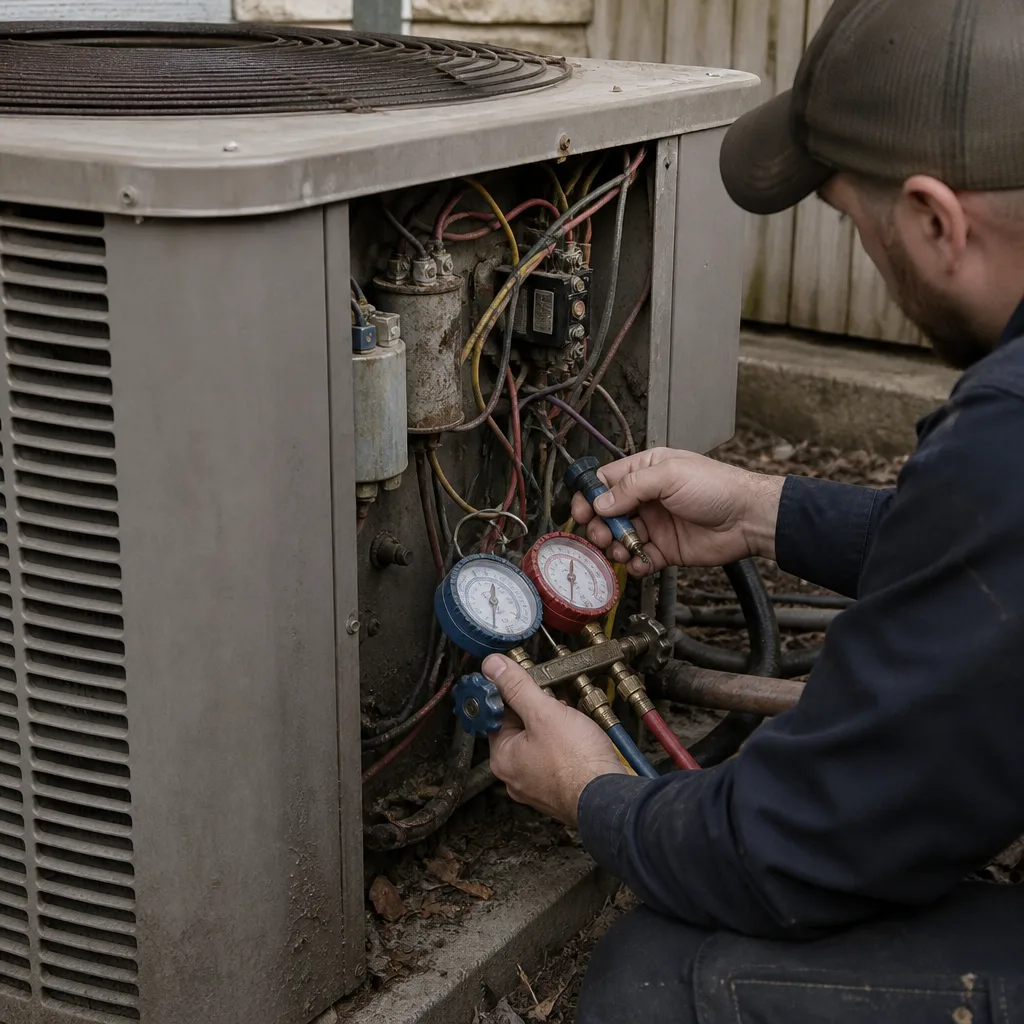
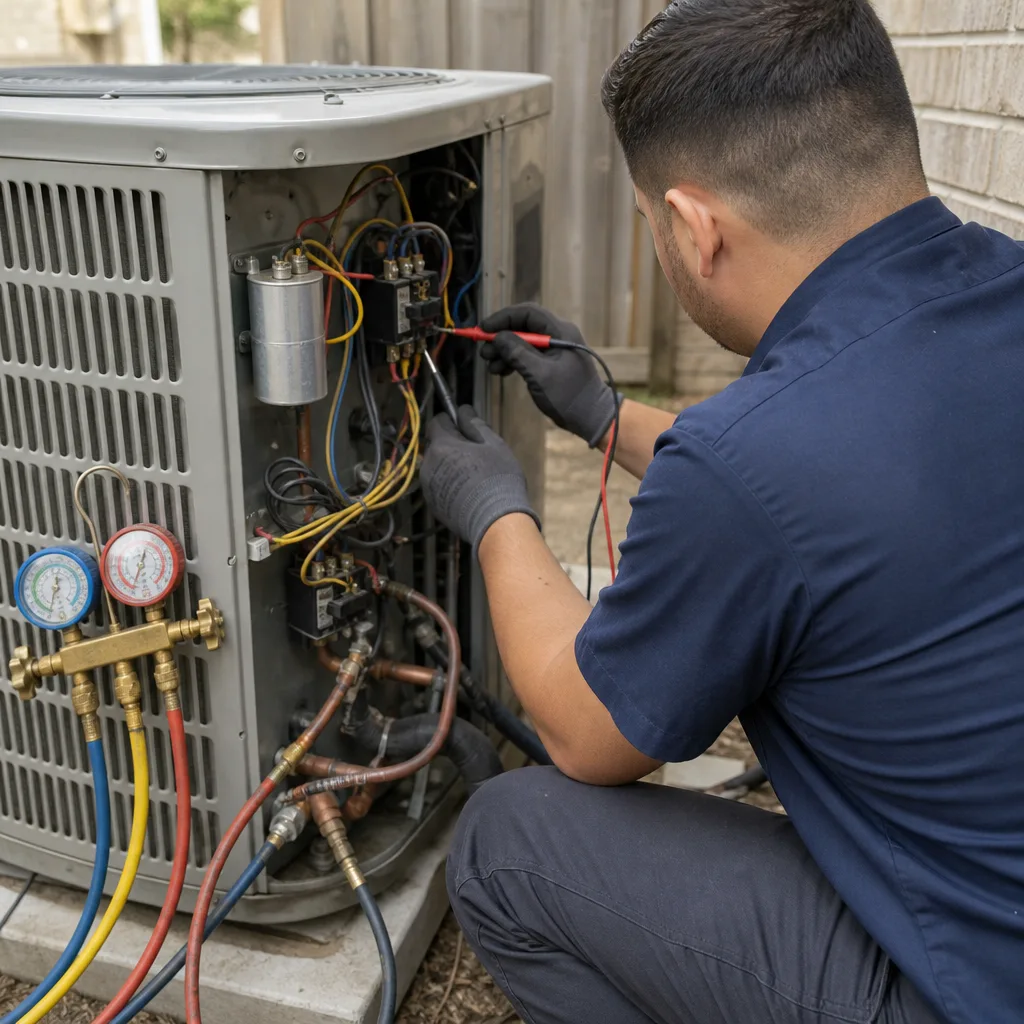
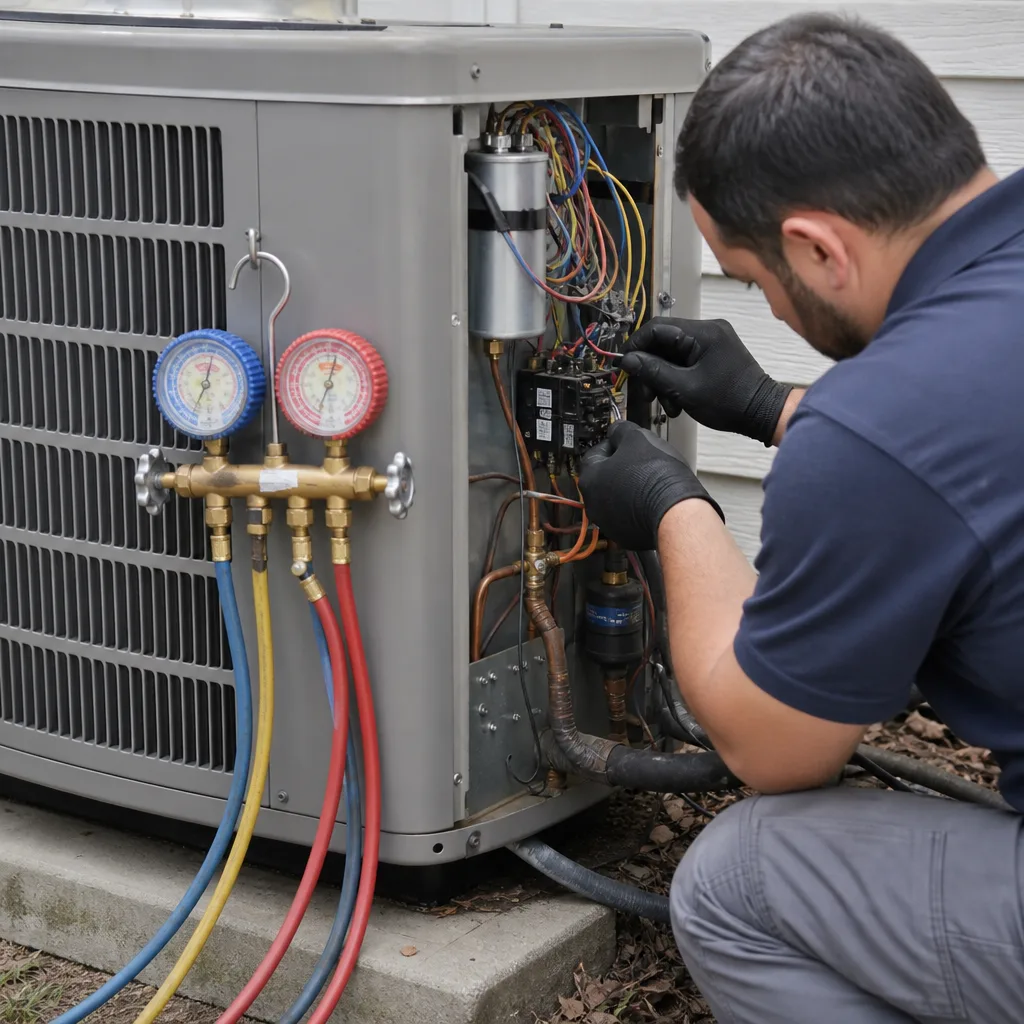
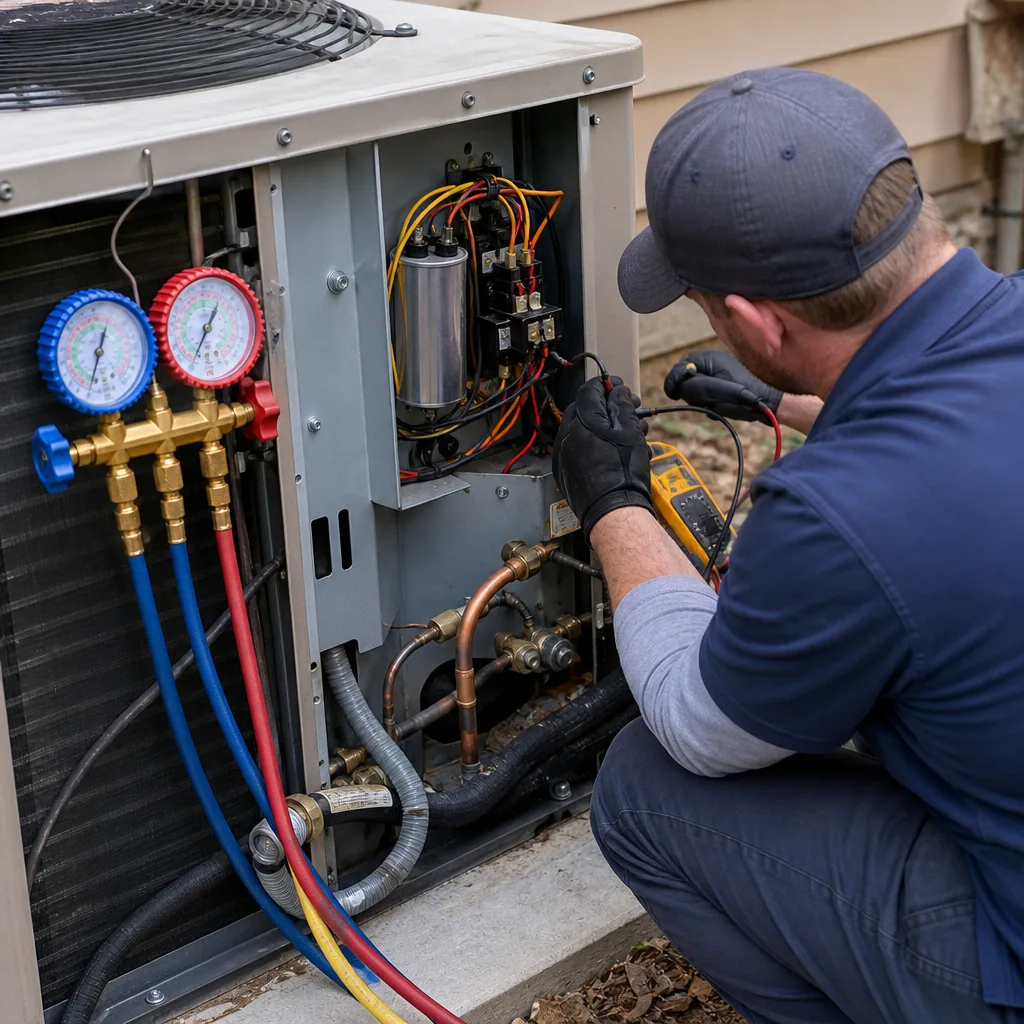
- Measure the current charge with manifold gauges. We connect digital manifold gauges and read both the high and low side pressures. This tells us how much refrigerant is missing and, combined with the manufacturer’s charging chart, what the correct charge is for your system. No guessing.
- Run a leak search on the accessible lines and coils. We use an electronic leak detector and, where the leak is stubborn, a nitrogen pressure test to isolate the failing component. Common Fort Worth culprits: schrader valve cores that have corroded from years of humidity, rubbing copper lines in tight attic chases, and aluminum evaporator coils in 8-to-12-year-old systems.
- Give you a written price before we add anything. Here’s the non-negotiable part. If we find a repairable leak, you get the cost to fix the leak and recharge the system. If the leak is in a place that makes repair a bad investment, we’ll tell you that too, and we’ll show you the numbers for both paths. You decide. Nothing gets charged or topped off until you approve it in writing.
- Repair, evacuate, and weigh in the correct charge. If you approve the fix, we repair the leak, pull a vacuum on the system to remove air and moisture, and weigh in refrigerant by the ounce per the manufacturer’s spec. No “looks about right” charging. This is where a lot of Fort Worth AC repairs go sideways – putting in too much refrigerant is as harmful as too little.
- Verify performance and leave the site clean. We check the temperature drop across the coil, check the subcooling or superheat reading per manufacturer spec, and confirm the system is cycling properly. Then we clean up. You shouldn’t be able to tell we were there except by the colder air.
Refrigerant Recharge Pricing in Fort Worth
Nobody in this industry can give you a firm recharge price over the phone without seeing the system, and any company that does is guessing or lowballing. What we can give you is the honest range, and a promise: the price you approve is the price you pay, in writing, before the refrigerant goes in.
Here’s what refrigerant recharge costs in Fort Worth as of this year, based on the work we do most often:
| Job Type | Typical Cost Range | What’s Included |
|---|---|---|
| Refrigerant top-off (small leak, trace loss) | $200 – $350 | Charge check, 1-2 lbs of R-410A or R-22 (if available), system performance check |
| Recharge after leak repair (minor – valve core, fitting, braze joint) | $350 – $550 | Leak repair, nitrogen test, evacuation, full refrigerant recharge, performance verification |
| Recharge after leak repair (major – evaporator coil replacement) | $1,200 – $2,800 | Coil replacement, evacuation, full recharge, system test, one-year written repair guarantee |
Three things move the number: how much refrigerant your system takes (a 5-ton unit holds nearly double a 2-ton unit), what refrigerant it uses (legacy R-22 is expensive and increasingly scarce; modern R-410A is more affordable but prices have risen with the 2025 phasedown schedule), and whether the leak is repairable in place or requires a coil replacement.
If the coil has failed and the system is 8 to 12 years old, many homeowners make the math call: a $1,800 coil repair on a 12-year-old unit is a short-term patch compared to putting that money toward a new AC Installation. We’ll show you both paths and respect whichever one you choose. No scare tactics, no “this thing could go any minute” sales pressure. Numbers, in writing, and a recommendation you can verify.
Estimates are free. If you call (817) 730-5369, a live person picks up and schedules a technician who will arrive inside the stated window – the Garrison Standard applies to every visit, not just the big-ticket ones.
FAQs – Refrigerant Recharge
How do I know if my AC needs a refrigerant recharge or a different repair?
If your system blows air at a normal volume but the air isn’t cold, that points to a refrigerant or compressor problem. If the blower isn’t moving air at all, that’s usually electrical or a motor. The fastest way to know is a charge check with manifold gauges – a 20-minute diagnostic that costs the same as any other Fort Worth service call and removes the guesswork. Call (817) 730-5369 and we’ll check it properly.
How much does refrigerant recharge cost in Fort Worth?
Most recharge jobs in Fort Worth run between $200 and $600, with the average falling around $400 when a minor leak repair is included. Coil replacements push the job higher, into the $1,200 to $2,800 range. We give you a written price before any work starts, so the number doesn’t move on you.
Can you recharge my AC the same day in Fort Worth?
In most cases, yes. We keep the common refrigerants stocked on every truck, and a straightforward recharge with a minor leak repair usually fits inside a single visit. Same-day availability depends on call volume and what parts the system needs – our phone line is answered by a real person around the clock, so call and we’ll tell you exactly when we can be there for AC Repair & Installation Near Me in Fort Worth, TX.
Is it cheaper to recharge or replace my AC system?
If your system is under 10 years old and the leak is repairable, a recharge and repair is almost always the cheaper short-term move – think $400 to $800 versus $7,000 to $14,000 for replacement. If the system is 12-plus years old, uses R-22 refrigerant, and needs a coil replacement, the math flips. We’ll lay out both options with real numbers and let you decide.
Why does my AC keep losing refrigerant even after a recharge?
Because every recharge without a leak repair is temporary. The refrigerant didn’t evaporate or “get used up” – it leaked. Systems that keep losing charge have an unresolved leak, typically in the evaporator coil, a line set fitting, or a compressor valve. Our process is built around finding the leak, not just refilling the system, and every repair carries a full-year written guarantee with a free return visit if it fails. We service York, Daikin, Bryant, and American Standard systems, along with five other major brands, and the guarantee applies to all of them unconditionally.
Written by Marco Benitez, Owner at Dalton Heating & Air Fort Worth, serving Fort Worth.