
Last updated October 16, 2026
 AC repair
 Furnace & heating
 Heat pumps
 Ductless mini splits
 Carrier
 Trane
Trane Goodman
Seasonal tune-up and full diagnostic on your Carrier, Trane, or Goodman system - readings shown to you before any repair is proposed
Diagnosis first, numbers second - you approve the repair price before a single part goes in.
Get your free estimateHVAC Permits, Codes & Inspections in TX: What You Need to Know
Here’s a number most Fort Worth homeowners never hear until it’s too late: more than 40% of residential HVAC replacements in Tarrant County happen without a permit on file. That’s not a state statistic you’ll find on any government website because unpermitted work, by definition, flies under the radar. We know it from pulling records on houses during pre-purchase inspections and from the calls we get after a sale falls apart at the title company. If you’ve ever had a system replaced, or you’re about to, this guide covers what the City of Fort Worth actually requires, what inspectors actually check, and how to find out whether your own house has a clean permit history before it becomes someone else’s problem at closing. For more guides & resources on keeping your home’s systems running right, see our blog.
Quick Answer
In Fort Worth, replacing HVAC equipment (an outdoor condenser, an indoor evaporator coil, a furnace, or a full system) requires a mechanical permit from the City of Fort Worth Development Services Department before work begins. Repairs and part swaps on existing equipment generally do not. The permit triggers a mechanical inspection after installation, and unpermitted work can void a homeowner’s insurance claim and complicate a future home sale under Texas disclosure rules. Homeowners who want to stay ahead of problems should review our HVAC Warning Signs: A Fort Worth Homeowner’s Reference Guide.
Styles & brands we work with
Table of Contents
- The Legal Line: What Needs a Permit vs. What’s a Repair
- What an HVAC Permit Costs in Fort Worth and How Long It Takes
- What a Tarrant County Mechanical Inspection Actually Checks
- Texas Mechanical Code Sections Most Often Failed in Fort Worth
- How Unpermitted HVAC Work Affects Insurance Claims
- Unpermitted Work and Texas Real Estate Disclosure (TREC Rules)
- How to Check If a Permit Was Pulled for Your Address
- Who Pulls the Permit: Homeowner or Contractor?
The Legal Line: What Needs a Permit vs. What’s a Repair
The City of Fort Worth adopts the International Mechanical Code with local amendments, and the operative distinction is simple: are you changing equipment or fixing what’s there? A permit is required when HVAC equipment is replaced, relocated, or added. A repair that restores existing equipment to working condition, replacing a capacitor, contactor, blower motor, or circuit board on the existing unit, does not require a permit.
Here’s where homeowners in places like Wedgwood, TCU-area bungalows, and Ryan Place get tripped up. What contractors casually call a “coil swap” is legally an equipment replacement. If the indoor evaporator coil is being replaced with a new coil, not repaired, that’s a permitted job because the coil is a major component of the system. Same with an outdoor condenser unit. If the old unit is disconnected, removed, and a new unit is set on the pad, that’s equipment replacement, full stop, regardless of whether the line set and ductwork stay.
Here’s a practical rule of thumb we use on every call: if the job involves disconnecting refrigerant lines, moving equipment, altering ductwork, or changing the electrical disconnect, assume a permit applies. If the job keeps the same unit in place and swaps a failed part, it’s a repair.
Common scenarios, clarified:
- Blower motor replacement on existing furnace: No permit. This is a part swap.
- New outdoor condenser, existing coil stays: Permit required. Equipment is being changed.
- New evaporator coil, existing condenser stays: Permit required. Same reason.
- Full system replacement (furnace + coil + condenser): Permit required, and this is the most common permit in Fort Worth residential HVAC.
- Ductwork replacement in a remodel: Permit required, usually folded into the broader building permit for the remodel.
- Thermostat replacement: No permit. This is a control swap, not equipment.
- Refrigerant leak repair on existing lines: No permit, though EPA certification is required to handle refrigerant.
The distinction matters because the permit is not a city money-grab. It’s the trigger for an independent inspection that verifies the work was done to code. The code exists because bad HVAC work kills people: incorrect gas connections leak carbon monoxide, bad electrical work starts fires. The permit is the only mechanism that puts a second set of eyes on it.
What an HVAC Permit Costs in Fort Worth and How Long It Takes
A residential mechanical permit for HVAC replacement in Fort Worth typically runs $75 to $250 depending on the scope of work and the current fee schedule. That’s not a quote from us, that’s the city’s published fee range, and it’s a line item on any legitimate contractor’s written price. If your contractor quotes a full system replacement and there’s no permit line item on the proposal, that’s your first signal the job may go unpermitted.
Timeline looks like this on a typical replacement: the contractor pulls the permit online through the City of Fort Worth’s Accela Citizen Access portal before work starts. Same-day permit issuance is common for straightforward residential swaps. After installation, the contractor schedules the rough or final inspection, usually within 24 to 72 hours depending on inspector availability. The inspection itself takes 20 to 40 minutes. If it passes, the permit is closed and the record is permanent. If it fails, the contractor corrects the listed deficiency and schedules a reinspection.
Some homeowners worry the permit process will add a week to their replacement. That’s not how it works in Fort Worth. The permit is typically pulled the same morning the crew arrives. The inspection happens after the work is done, not before, so a permit adds zero days to the front end of your project. It adds a follow-up inspection 1 to 3 days later, and if the installing contractor did the job by the book, you’ll never even know the inspector came except for the green tag on the permit record.
| Permit Item | Typical Cost Range | Notes |
|---|---|---|
| Mechanical permit (residential HVAC replacement) | $75 – $250 | City of Fort Worth fee, scope-dependent |
| Reinspection fee (if first inspection fails) | Often included; some scopes incur a re-inspection fee | Contractor’s responsibility if their work failed |
| Contractor administrative time to pull permit | Typically $0 – $75 | Some companies fold this into the permit fee line |
| Penalty for work done without permit (if discovered) | 2x permit fee plus corrections | Fort Worth can assess double fees for unpermitted work |
Dalton Heating & Air Fort Worth home practices include pulling permits on every replacement we install in Fort Worth and the surrounding Tarrant County cities. The permit fee is a line item on your written price, never buried, never optional.
What a Tarrant County Mechanical Inspection Actually Checks
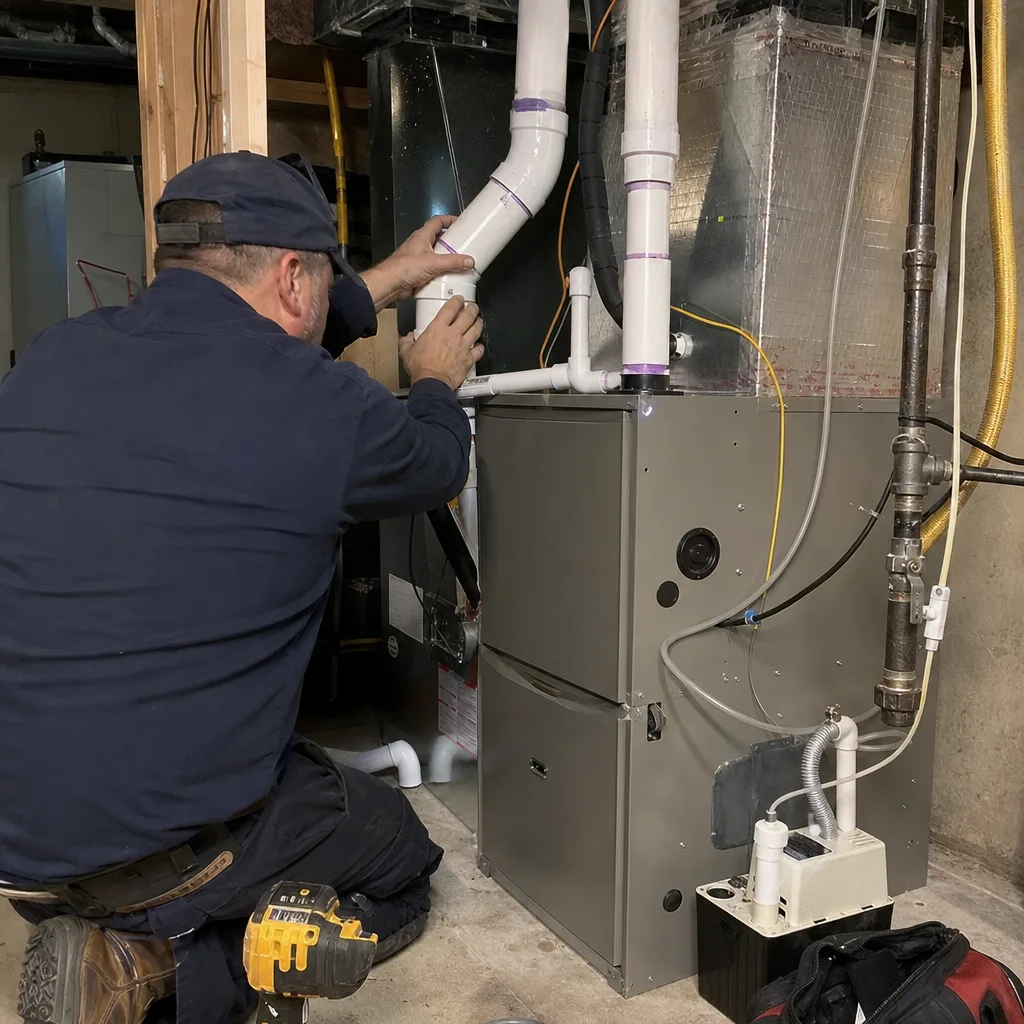
When a City of Fort Worth mechanical inspector arrives after your HVAC replacement, he or she is working through a defined checklist under the adopted mechanical code. Understanding that checklist keeps you from being surprised by a failed inspection, and it tells you what “passed” actually means. Here’s the scope, line by line, based on what we see inspectors verify on residential replacements in Fort Worth:
- Electrical disconnect and wire sizing: The inspector verifies the outdoor disconnect box is within sight of the unit, the breaker and wire gauge match the condenser’s nameplate amperage, and connections are torqued correctly in the disconnect. Undersized wire on a 40-amp condenser circuit is one of the most common catches.
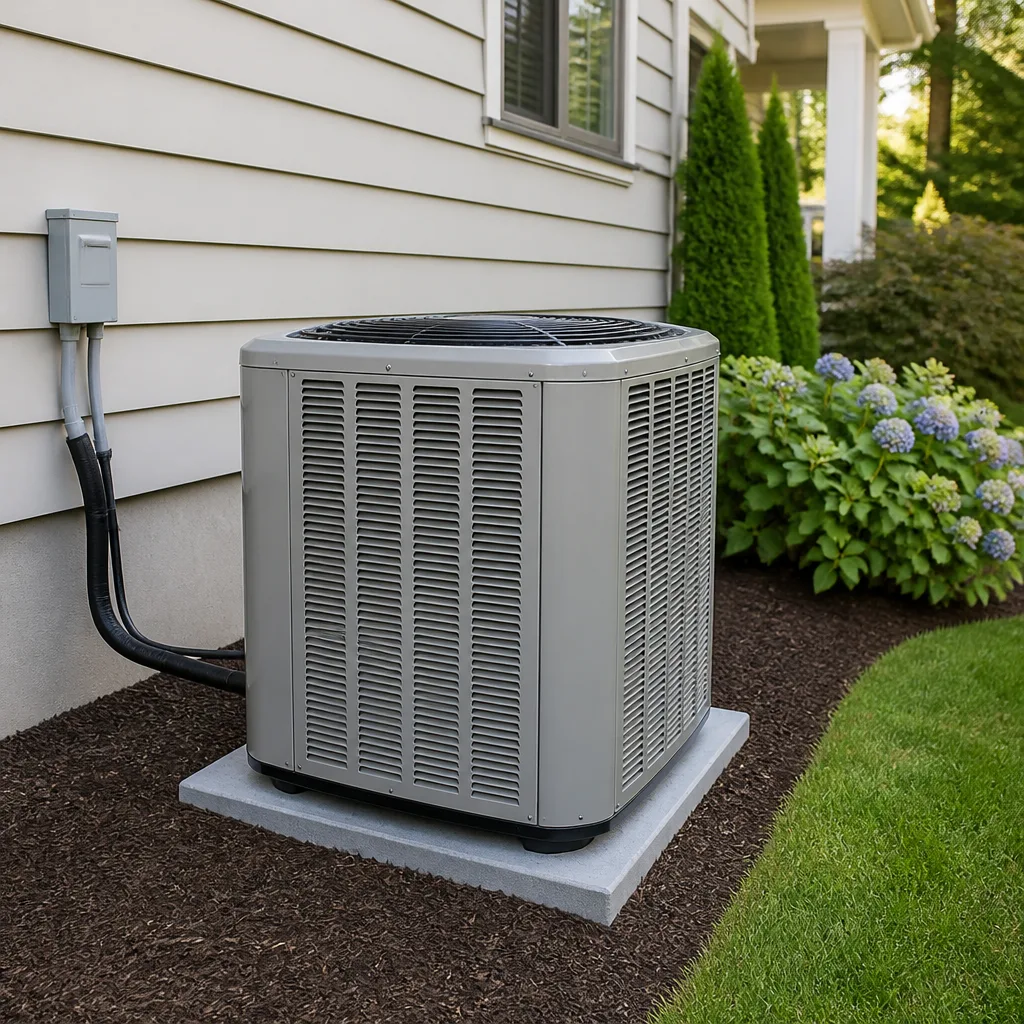
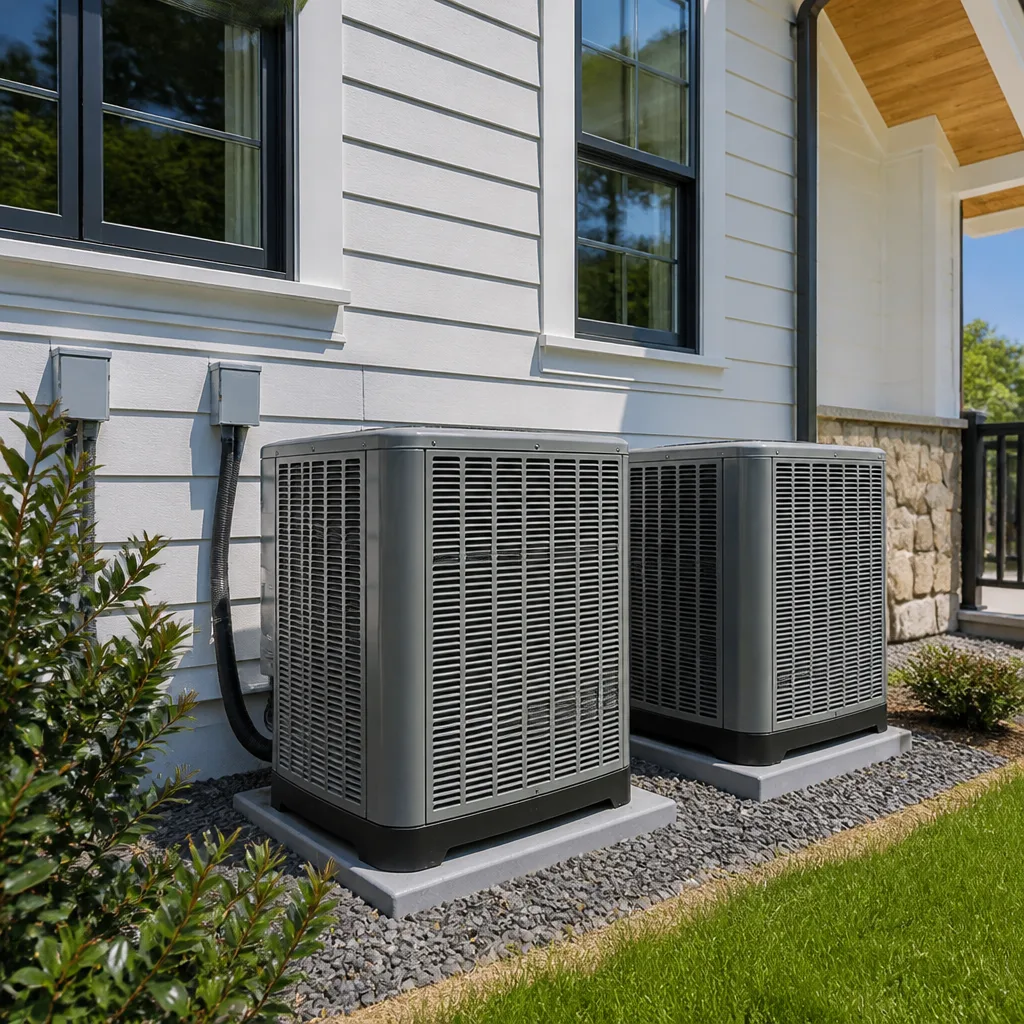
- Condenser pad and clearance: The outdoor unit must sit on a level pad, concrete or composite, with specified clearance from walls, fences, and the house. Fort Worth’s climate, with its 100-degree summer days, means airflow clearance matters more than in cooler markets. The inspector checks side and overhead clearances against the manufacturer’s minimums.
- Refrigerant line set and insulation: The copper lines between condenser and evaporator must be properly sized, secured, and insulated on the suction line. An inspector will look for kinks, missing armaflex insulation, and unsupported runs.
- Condensate drain and secondary safety switch: The primary drain line must slope correctly and terminate per code. Fort Worth inspectors specifically check for the secondary drain or float switch, the safety device that shuts the system down if the primary drain clogs, because this is one of the most common sources of ceiling damage in Texas homes.
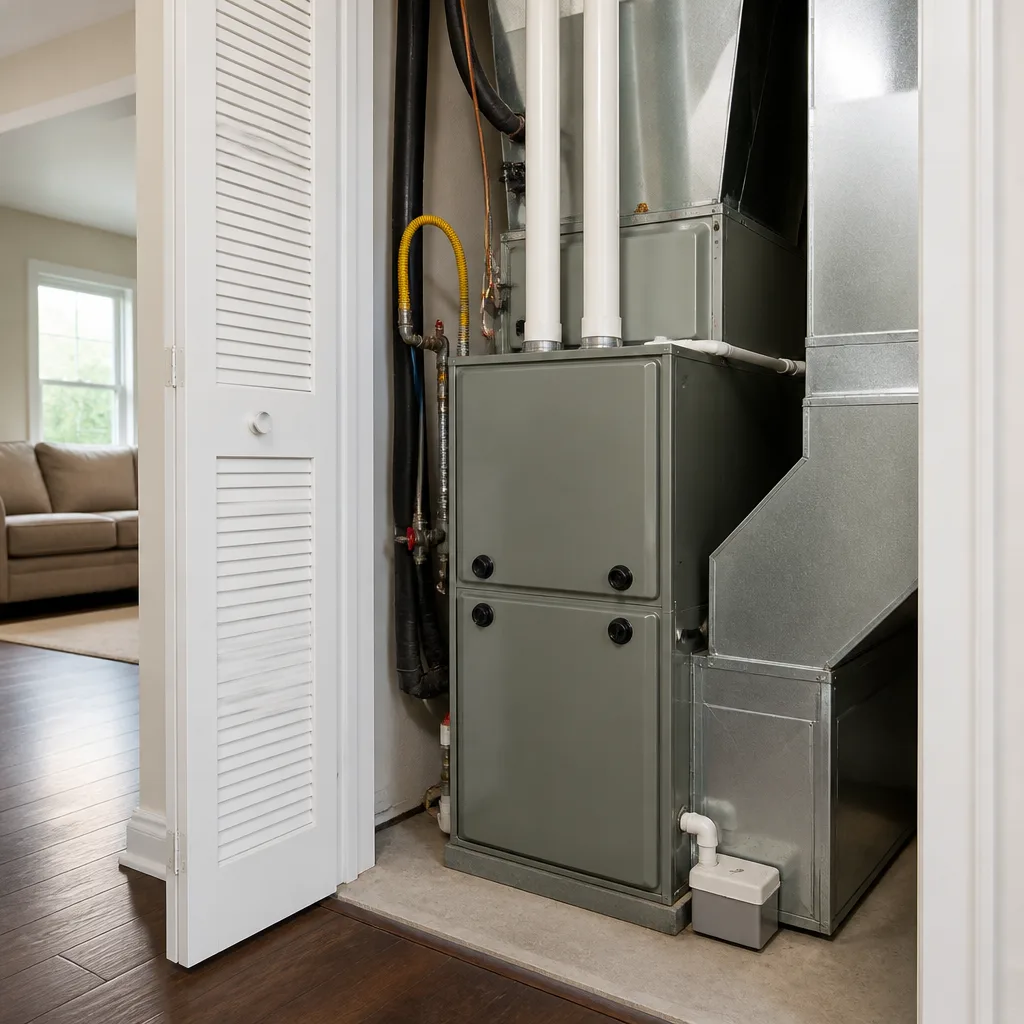
- Gas connection and combustion air (furnace jobs): If a furnace was replaced, the inspector checks the gas flex line for proper sizing, the shutoff valve, the flue or vent pipe material and slope, and the combustion air supply to the furnace closet. This is where inspectors are most careful, because a botched gas connection is a carbon monoxide risk.
- Air handler and coil placement: Indoor equipment must be level, with access panels in place and the coil mounted correctly relative to the airflow direction. The inspector verifies the filter is accessible and the plenum connections are sealed.
- Static pressure and airflow evidence (on some jobs): Depending on the inspector and the scope, they may ask to see the commissioning report or verify airflow measurements were taken. This is less uniform but increasingly common as Fort Worth moves toward energy-code enforcement on full system replacements.
That’s the scope. A passed inspection means all of the above was verified by a city inspector on the day of the visit. That’s the level of verification a permit buys. A contractor who skips the permit is asking you to trust that all of this was done correctly with no independent check. Our position after 20+ years in Fort Worth: the inspection is a feature, not a hurdle. If a contractor doesn’t want an inspector looking at their work, that tells you something about their work.
Texas Mechanical Code Sections Most Often Failed in Fort Worth
We’ve sat through enough failed inspections in Fort Worth to know exactly where contractors get caught. If you’re reading this because your own project failed inspection, you’re in good company, and most failures are correctable in a single return trip. Here are the most common residential HVAC inspection failures we see in Tarrant County, with the plain-language correction each one requires:
1. Condensate drain run incorrectly (IMC 307)
The code requires the condensate line from an attic air handler to drain by gravity to an approved location, typically a bathroom vent stack, a dedicated drain, or outside in a manner that doesn’t create a slip hazard. The failure we see most often in Fort Worth’s ranch homes from the 1970s and 1980s is a drain line that doesn’t have fall, or a secondary drain that’s missing entirely. Correction: reroute the primary drain to achieve proper slope, install a secondary drain or float switch, or both.
2. Gas flex line through the furnace cabinet (IMC 403.10)
This is the single most common gas-furnace failure. The code prohibits running a flexible gas connector through the sheet-metal cabinet wall into the furnace. The flex line can connect to a hard pipe at the cabinet, but it cannot pass through the metal skin. Correction: a short piece of hard black iron pipe from the furnace gas valve through the cabinet, then the flex line connects outside the cabinet to the gas shutoff.
3. Inadequate electrical disconnect or wrong wire size (IMC 306 / NEC 440)
Fort Worth inspectors catch undersized breakers and undersized wire on condenser replacements all the time. An installer sets a condenser that draws 28 amps minimum circuit ampacity on a 20-amp circuit, and the inspector catches it from the nameplate. Correction: run new wire and install the correct breaker. This is not a five-minute fix, and it’s exactly why the inspection exists.
4. Missing or improperly installed sediment trap on gas furnaces (IMC 408.4)
A sediment trap, sometimes called a drip leg, catches moisture and debris in the gas line before it reaches the gas valve. Code requires it on every furnace installation. Installers skip it because it’s three extra fittings and fifteen minutes they’d rather spend elsewhere. Correction: install the sediment trap on the gas line before the furnace connection.
5. Flue pipe with incorrect clearance or slope (IMC 503)
On 80% efficiency furnaces, the flue pipe must slope upward toward the chimney or vent termination so condensation and exhaust gases flow correctly. Installers sometimes run the vent horizontally or with back-slope. Correction: re-pitch the flue, replace improper materials, and verify clearances to combustible surfaces.
6. Equipment not listed or rated for the application
Occasionally a job fails because the contractor installed equipment that carries no listing for residential use, or a coil and condenser that are mismatched for efficiency rating purposes. Correction: replace with properly matched, listed equipment.
When we replace a system in Fort Worth, whether it’s a AC repair job that leads to a replacement or a planned heat pump installation, the goal is a first-pass inspection. That’s not luck. It’s doing the work to the code the first time rather than using the inspector as a punch list.
How Unpermitted HVAC Work Affects Insurance Claims
This is the section that explains why the permit matters more than you think. Most Texas homeowners insurance policies contain a clause that excludes coverage for damage caused by faulty workmanship or by construction, installation, or remodeling that was not performed in compliance with applicable building codes. A water-damage claim from a clogged condensate drain on a system that was installed without a permit is not automatically denied, but the insurer has a defensible reason to investigate and deny if the unpermitted installation contributed to the loss.
Here’s the real-world sequence we’ve seen in Fort Worth. A homeowner in the Ryan Place neighborhood had a new furnace installed by a handyman. Two years later, a gas leak at a fitting the handyman made caused a small fire. The insurance adjuster asked for the permit and inspection record for the furnace installation. When none existed, the claim was denied on the grounds that the loss resulted from unpermitted, non-code-compliant work. The homeowner was left with the repair bill and a furnace that now had a claim history attached to its installation.
Insurance companies are not required to cover the consequences of illegal or unpermitted work. They write the policy, and the policy says what it says. Your agent will not warn you about this when you tell them you’re getting a new system installed. They only find out when you file the claim.
This is why we treat the permit as a non-negotiable part of every replacement we install. It’s not just about complying with the City of Fort Worth. It’s about keeping the work insurable. If your system fails because of a defect in a part, the part manufacturer’s warranty applies. If it fails because of an installation error and the work wasn’t permitted, you may have no recovery path at all.
Unpermitted Work and Texas Real Estate Disclosure (TREC Rules)
Texas real estate law does not require a seller to volunteer that HVAC work was done without a permit, but the Texas Real Estate Commission Seller’s Disclosure Notice asks specific questions about repairs and improvements, and a seller who lies on that form commits fraud. The current TREC seller’s disclosure form asks whether the seller is aware of “any condition on the property that materially affects the health or safety of an individual.” A gas furnace installed without a permit and never inspected arguably fits that definition. It also asks broadly about previous repairs and improvements, and while unpermitted status isn’t always a direct question, the cumulative effect of the disclosure requirements means unpermitted HVAC work surfaces more often than sellers expect.
What we see in Fort Worth is this: a buyer’s home inspector flags a newer HVAC system with no permit record. The inspector writes it in the report. The buyer’s agent requests the permit record from the seller. When the seller can’t produce it, the deal either renegotiates, usually with a price concession, or the buyer walks. If the buyer discovers the issue after closing and can prove the seller knew about the unpermitted work and failed to disclose it, that’s grounds for a post-closing lawsuit under the Texas Deceptive Trade Practices Act.
The correction for a seller who discovers unpermitted work mid-transaction is to commission a retrofit permit. The City of Fort Worth allows a process for after-the-fact permits, which involves pulling the permit, having the work inspected, and making any corrections the inspector requires. That process is slower and more invasive than pulling the permit at the time of installation, but it’s how a seller cleans the record. We’ve done these retrofits for Fort Worth homeowners trying to close a sale, and the lesson is always the same: the $100 permit at installation is the cheapest version of this problem.
How to Check If a Permit Was Pulled for Your Address
If you’ve had HVAC work done in the past and you want to verify the permit record, Fort Worth makes it easier than most Texas cities. Here’s the step-by-step process we walk homeowners through, and you can do the same thing from your laptop in ten minutes.
- Go to the City of Fort Worth Accela Citizen Access portal. Search “City of Fort Worth permit search Accela” and open the Development Services permit search page.
- Select “Search Permits” and enter your street address. Use the number and street name only, no city or ZIP, to avoid missing records under slight address variations.
- Look for “Mechanical” permits in the results. Each result shows the permit type, issue date, status, and the contractor name. A mechanical permit associated with your address on or near the date your system was installed is the record you’re looking for.
- Check the status. “Issued” means the permit was pulled. “Finaled” or “Closed” means the inspection passed. A permit that’s still “Open” years later means the inspection was never completed, which is almost as bad as no permit at all.
- If you find no record, call Development Services. The city’s records desk can search by address and contractor name manually. Sometimes old permits predate the Accela system, and the only record is on paper in the city’s archive.
If you find that your system was replaced without a permit, the correction path is the after-the-fact permit we described in the real estate section. Call a licensed mechanical contractor in Fort Worth, explain the situation, and ask for a code-compliance review. If the work was done correctly and only the administrative step was skipped, the fix is a permit and an inspection. If the work has code violations, the inspector will list them, and the corrections become the cost of cleaning the record. Either way, that record matters the next time the house changes hands.
One caveat from our own service area: if your house is in an unincorporated part of Tarrant County rather than within Fort Worth city limits, the permitting authority may be Tarrant County or a different municipality, and the search process is different. If you’re not sure which jurisdiction applies, the city’s permit desk can usually point you in the right direction.
Who Pulls the Permit: Homeowner or Contractor?
Texas law allows a homeowner to pull a mechanical permit on their own property for work they perform themselves, and it allows a licensed contractor to pull the permit for work they perform for a customer. In practice, when you hire a contractor, the contractor’s name should be on the permit. Here’s why this matters in Fort Worth: if the contractor pulls the permit, the contractor is the party of record. The inspection results tie to their license and their bond, if they carry one. If the homeowner pulls the permit and the contractor does the work, the legal responsibility gets murky. If something goes wrong, the city’s enforcement action targets the homeowner, not the contractor.
A legitimate HVAC company will volunteer to pull the permit and include it in the written price. A contractor who asks the homeowner to pull the permit is usually doing one of two things: avoiding the permit fee, which is small, or avoiding the city’s scrutiny of their license status and insurance. Neither reason benefits you.
This is another place where the written price matters. The Garrison Standard, the operating code our company has held since 2003, requires a written price before any work begins, and that written price includes the permit fee as a line item on every job that requires one. We also encourage homeowners to use our AC Repair Maintenance Checklist for Fort Worth Homeowners to track what their system needs between service calls. If a contractor’s price doesn’t include a permit on a replacement, ask why. There’s no good answer that benefits the homeowner.
We service all nine major residential HVAC brands in Fort Worth, including Carrier, Trane, and American Standard. On any replacement we install, the permit is pulled in our name before the crew touches your equipment. That’s part of the same discipline that includes background-checked, uniformed technicians and a written guarantee on every repair. If the work fails within the guarantee period, we return at no charge, and our furnace repair and replacement work is backed by the same standard.
Common Mistakes to Avoid
- Assuming the contractor pulled the permit without verifying. Most homeowners who discover unpermitted work find out years after the fact. Ten minutes on the Accela portal the week after installation tells you the truth.
- Taking a verbal “we don’t need a permit for this” at face value. If the equipment is being changed, a permit is required in Fort Worth. The only person who benefits from no permit is the contractor skipping the inspection.
- Paying in full before the inspection is finalized. A permit that’s pulled but never finaled means the inspection never happened. Hold final payment until the city’s record shows “Finaled” or “Closed.”
- Buying a home with a newer HVAC system and no permit history. This is a negotiation point and a potential insurance issue. Ask the seller for the permit record before closing, not after.
- Attempting a DIY replacement to save money. Fort Worth allows a homeowner to pull a permit on their own property, but a full system replacement involves refrigerant handling, 240-volt electrical work, and gas connections if the furnace is in scope. Mistakes in this scope are how houses burn down. This is not a DIY project.
- Confusing a city permit with a manufacturer’s warranty registration. Registering your new unit with the manufacturer activates the parts warranty. It does nothing for code compliance, and it won’t help if an insurance adjuster asks for the inspection record.
- Believing the inspection is a rubber stamp. Fort Worth inspectors fail mechanical work on a regular basis. A contractor who tells you “the inspector won’t even look” is telling you they don’t want him looking.
See the difference
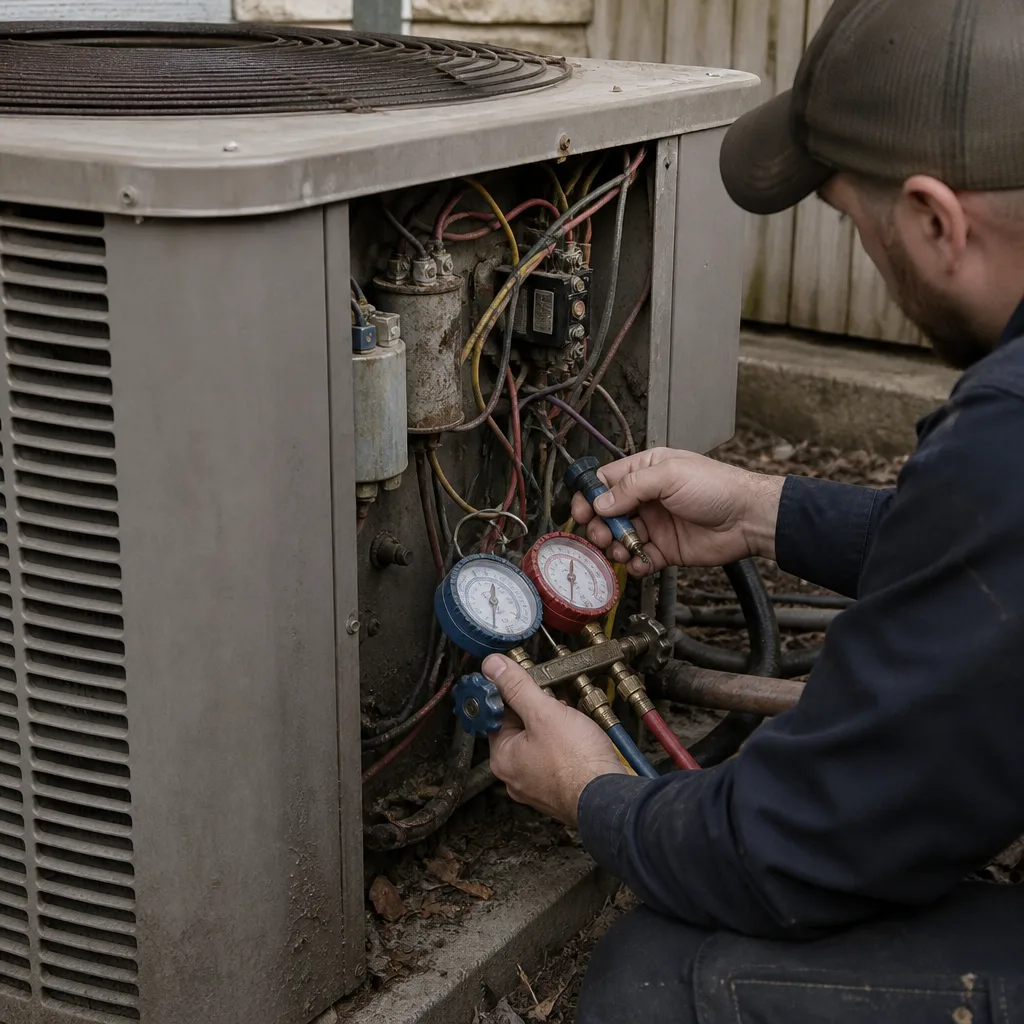 Before
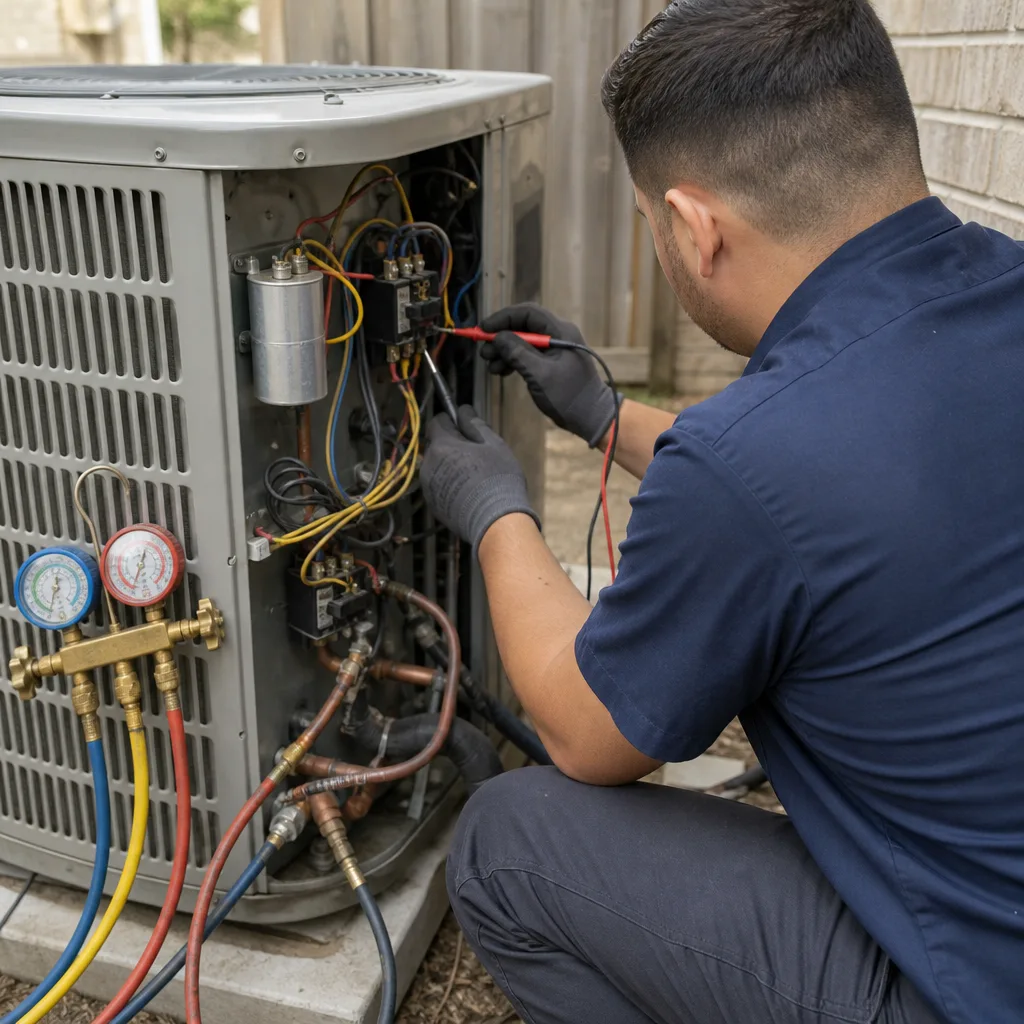 After
After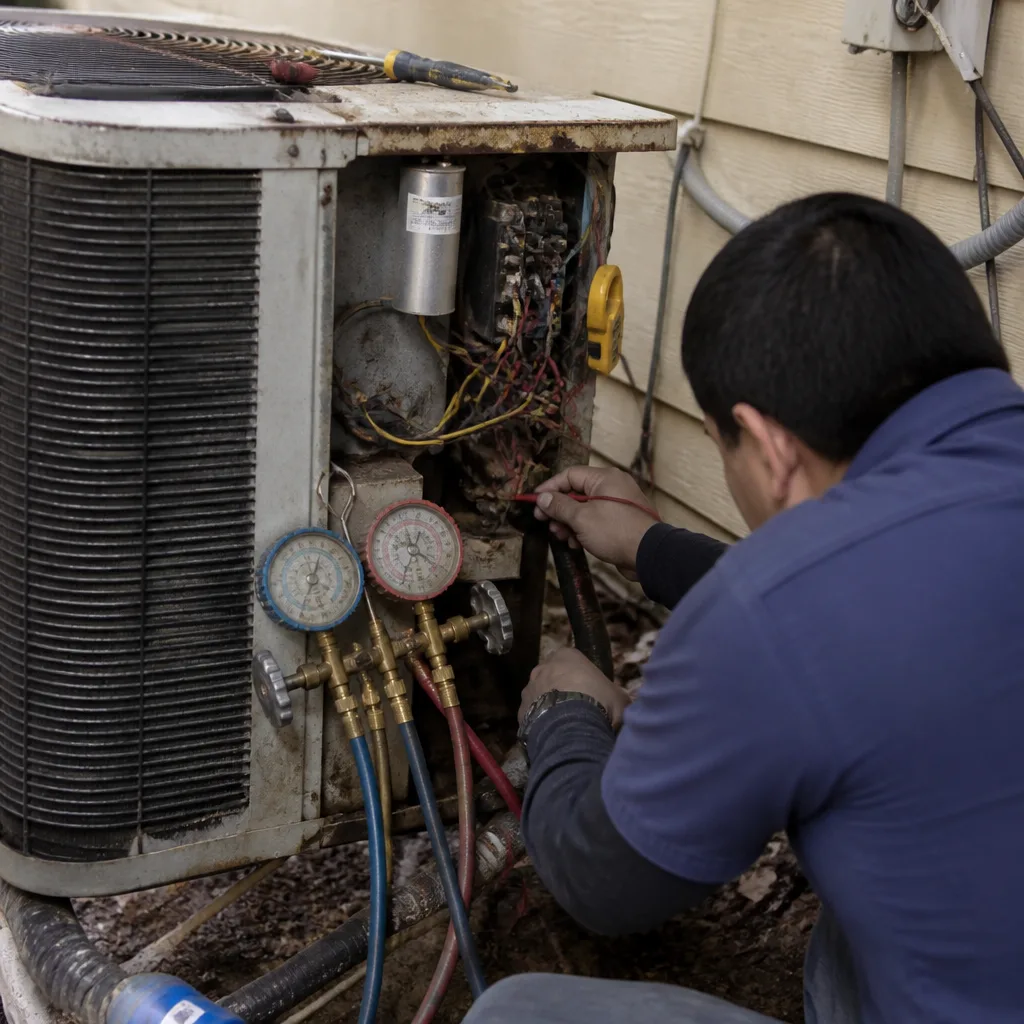 Before
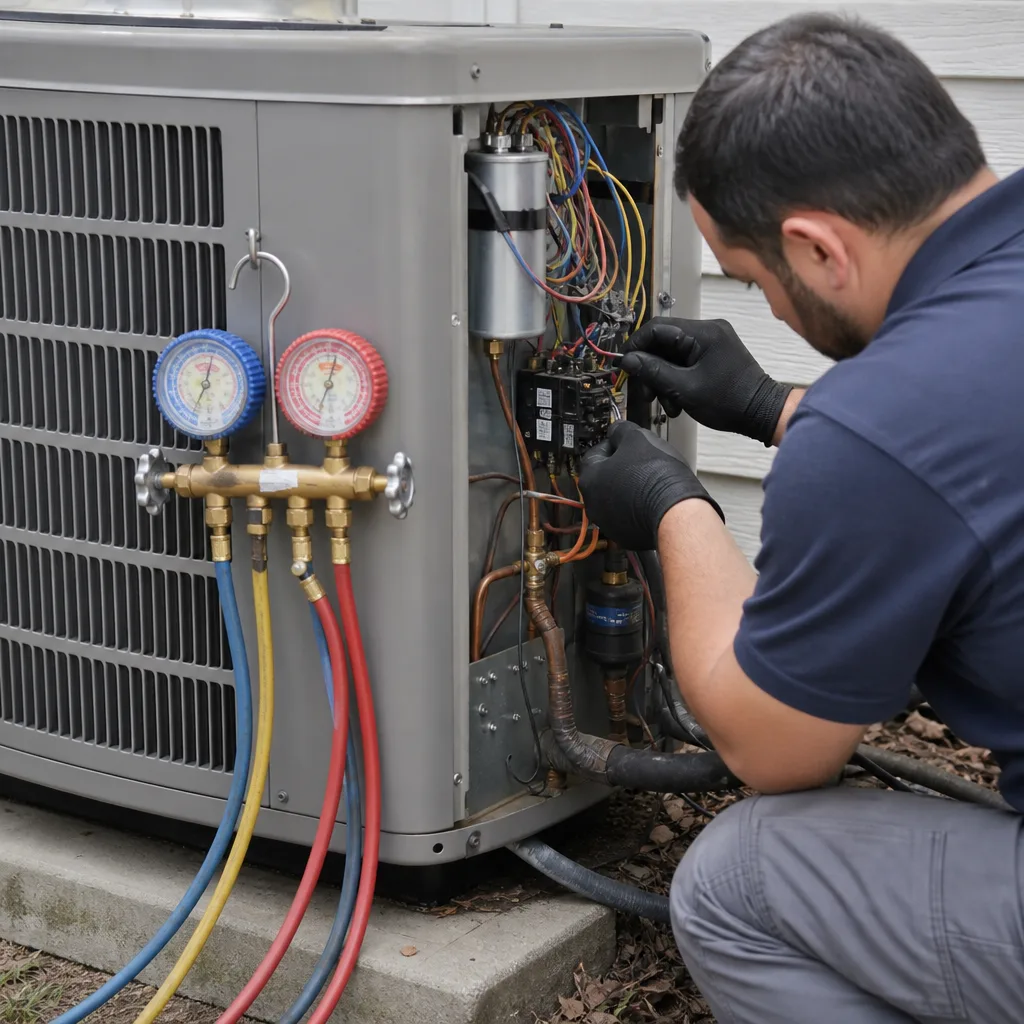 After
After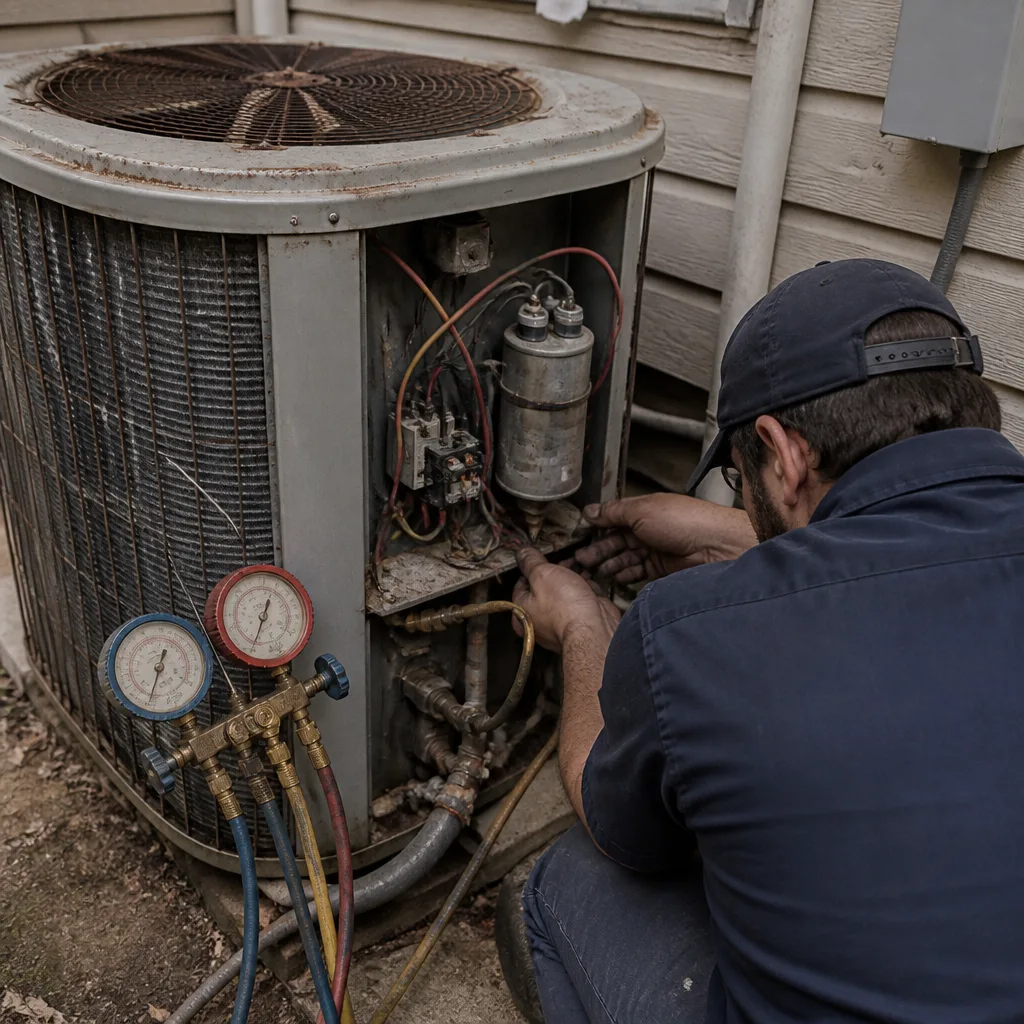 Before
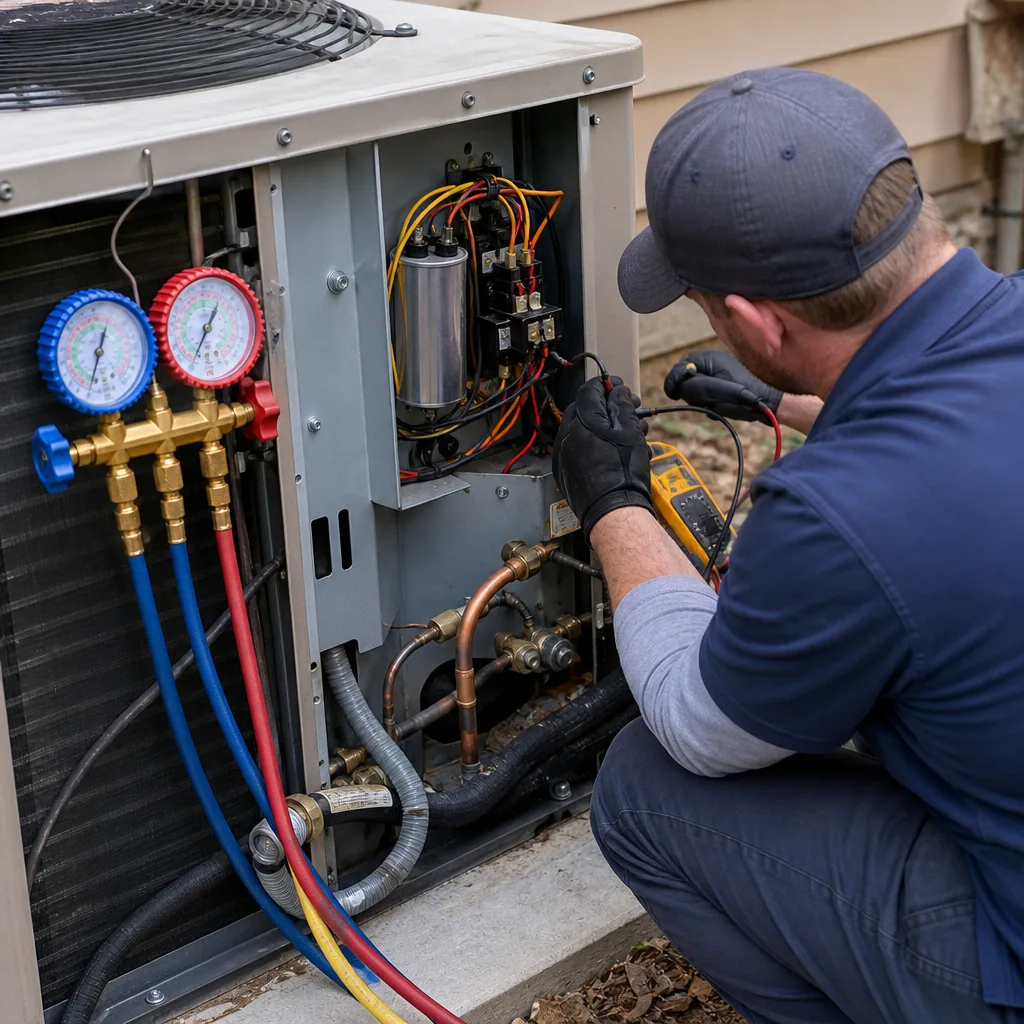 After
AfterWhen to Call a Professional
If you’ve read this guide and discovered your system was replaced without a permit, or you found an open permit on your address that was never finaled, call a licensed mechanical contractor in Fort Worth. The fix is not paperwork you can handle alone. A contractor must do a code-compliance review, pull the after-the-fact permit if needed, and make any corrections the inspector requires before the record can close.
If you’re planning a replacement and you want it permitted, inspected, and installed the first time, Dalton Heating & Air Fort Worth has operated under The Garrison Standard since 2003. We put the price in writing before work starts, we pull the permit in our name, we schedule the inspection, and we don’t consider the job done until the city’s record shows the inspection passed. Call (817) 730-5369 for a free estimate in Fort Worth.
Frequently Asked Questions
Yes. Replacing an outdoor condenser, indoor coil, or full HVAC system in Fort Worth requires a mechanical permit from the City of Fort Worth before work begins. A repair that keeps the existing equipment in place and replaces a failed part, like a capacitor or blower motor, does not. When in doubt, ask the contractor to show you the permit record for your address on the city’s Accela portal. Call (817) 730-5369 for a free estimate on a permitted replacement.
A residential HVAC mechanical permit in Fort Worth typically runs $75 to $250 depending on scope. That’s a city fee, not a contractor markup, and it should appear as a line item on your written proposal. If a contractor includes no permit fee on a replacement quote, ask whether they plan to pull one at all.
You can sell it, but the unpermitted work will likely surface in the buyer’s inspection and may force a price concession or an after-the-fact permit before closing. Texas law doesn’t require voluntary disclosure of unpermitted work in every case, but a seller who lies on the TREC disclosure form about known conditions commits fraud. The cleanest fix is a retrofit permit and inspection before you list.
The inspector verifies the electrical disconnect and wire sizing, condenser clearance on the pad, the refrigerant line set and insulation, the condensate drain and safety float switch, gas connections and combustion air on furnace work, and the indoor coil and air handler placement. A passed inspection means all of that was verified against the adopted mechanical code on the day the inspector visited.
Yes, in Fort Worth and most Texas cities, a gas furnace replacement requires a mechanical permit because of the gas connection. The inspection verifies the gas flex line is correctly sized and routed, the sediment trap is installed, and the flue pipe slopes correctly and clears combustible surfaces. Skipping this inspection leaves a carbon monoxide risk unchecked.
You have options. The City of Fort Worth allows after-the-fact permits, which means a licensed contractor reviews the work, pulls the permit retroactively, and the city inspects it. If the work is clean, the record closes and the issue is resolved. If the inspector finds violations, they must be corrected before the permit finales. Either way, the record is clean for your eventual sale, and your insurance exposure from unpermitted work goes away.
The Bottom Line
An HVAC permit in Fort Worth is a $75 to $250 line item that buys you an independent inspection of a system that can leak gas, start a fire, or flood an attic if installed wrong. The permit record follows your address permanently, and it’s one of the first things a buyer’s inspector checks when your house goes on the market. The contractor who suggests skipping it is not saving you money; they’re transferring risk from themselves to you. On every replacement we install in Fort Worth, the permit is pulled in our name, the inspection is scheduled on time, and the work stands behind a written one-year guarantee under The Garrison Standard. That’s been our operating rule since 2003, and it’s not changing.
Written by Marco Benitez, Owner at Dalton Heating & Air Fort Worth, serving Fort Worth since 2003.