
Last updated October 16, 2026
 AC repair
 Furnace & heating
 Heat pumps
 Ductless mini splits
 Carrier
 Trane
Trane Goodman
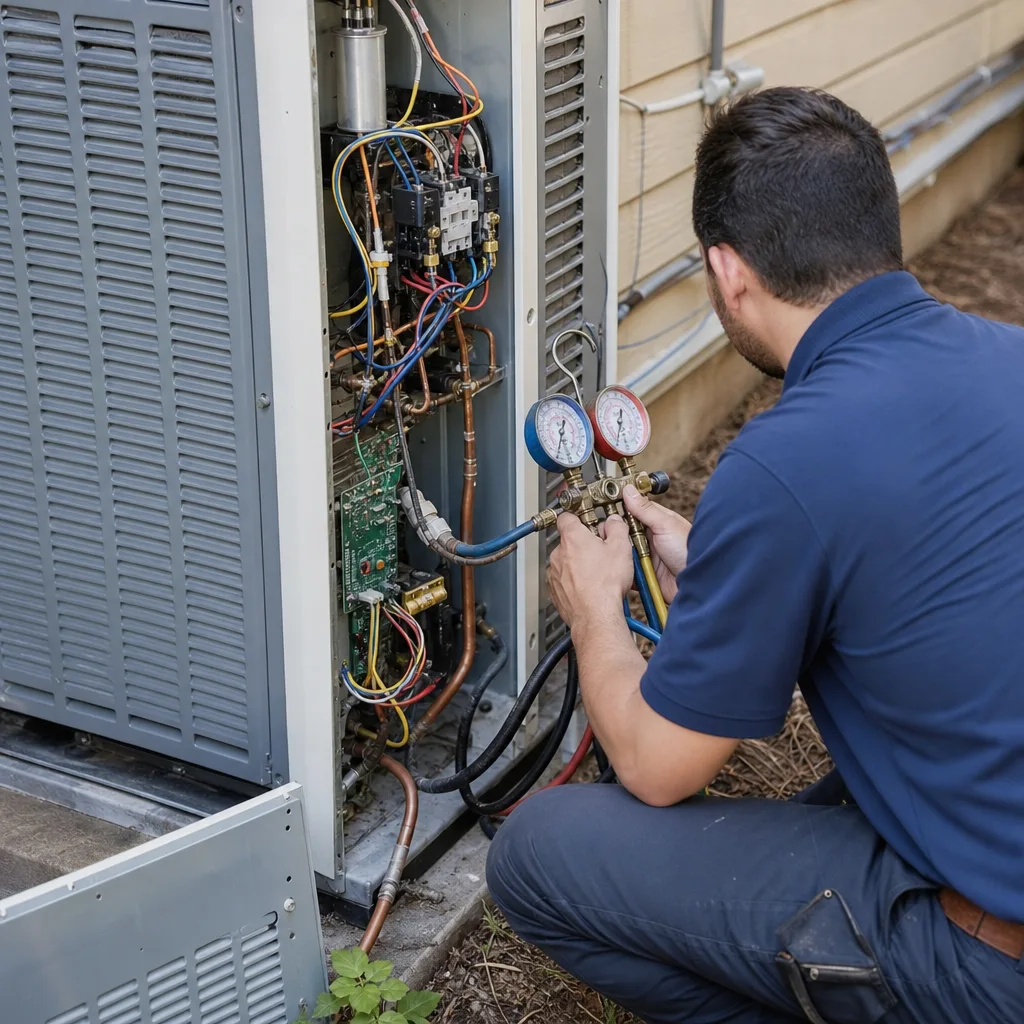
Seasonal tune-up and full diagnostic on your Carrier, Trane, or Goodman system - readings shown to you before any repair is proposed
Diagnosis first, numbers second - you approve the repair price before a single part goes in.
Get your free estimateSeasonal HVAC Care for Fort Worth: Year-Round Homeowner’s Guide
The most expensive HVAC service call of the year in Fort Worth consistently lands the first week of June. Not because systems suddenly fail, but because homeowners skipped the April task that would have caught the failure before peak cooling demand hit. This guide rebuilds the maintenance calendar around Fort Worth’s actual climate: two brutal seasons, two chaotic shoulders, and specific tasks timed to local weather windows. For a deeper dive, see The Complete Guide to HVAC in Fort Worth. You’ll learn what to do, when to do it, and which jobs to leave to a pro.
Styles & brands we work with
Quick Answer
Fort Worth doesn’t have four clean seasons. It has a long, scorching cooling season, a short but real heating season, and two unpredictable transition periods that wreck HVAC systems when homeowners wait too long. The right maintenance schedule for Fort Worth is: May condenser service before the summer spike, October heat-side tune-up before the first hard freeze, filter and drain-line checks every 60 days, and seasonal logbook entries that give technicians diagnostic context in minutes instead of hours.
Table of Contents
- The Fort Worth Climate Calendar: Four Seasons That Aren’t
- Cedar Fever and Your HVAC: The January-February Filter Problem
- The Pre-Summer Heat Ramp: April and May Tasks That Prevent June Failures
- Why Fall Is the Highest-Stakes Tune-Up Window in North Texas
- Heat Pump vs. Gas Furnace: The Tune-Up Tasks Are Not the Same
- Outdoor Unit Clearance and Fort Worth Storm Debris
- The Homeowner Log: Five Data Points Per Season That Save Diagnostic Time
- Common Mistakes to Avoid
- When to Call a Professional
- Frequently Asked Questions
- The Bottom Line
The Fort Worth Climate Calendar: Four Seasons That Aren’t
Fort Worth’s weather follows a pattern that surprises newcomers: hot arrives early, cold arrives suddenly, and the transitions between them are violent. Average highs cross 90°F by late May and stay there through September. The first freeze typically lands between November 15 and November 25. But the freeze that matters most is the one nobody plans for: the February deep freeze that hits every few years and separates maintained systems from neglected ones.
Here’s the working calendar we use in Fort Worth:
- January – February: Cedar pollen peaks. Heating load peaks. Freeze-watch windows open. Filter replacement frequency doubles.
- March – April: Wild temperature swings. Mornings in the 40s, afternoons in the 80s. Both heating and cooling run in the same week. This is when condensate drains clog and systems short-cycle.
- May – June: The heat ramp. First triple-digit days arrive. Cooling demand spikes overnight. Systems that limped through mild weather fail under full load.
- July – September: Sustained heat. The system runs 12 to 16 hours daily. Capacitors, contactors, and condenser fan motors fail at the highest rate of the year.
- October – November: First cold snaps. Heating systems wake up after months of disuse. Cracked heat exchangers and failed ignitors surface. Freeze-watch windows open for real.
- December: Short heating runs. The system cycles lightly. Problems hide because the system never runs long enough to reveal them.
This calendar is not academic. It’s the pattern we see in service call volume across Fort Worth neighborhoods, from Ridglea Hills to North Richland Hills to Arlington Heights. The homeowners who follow it spend less on emergency repair than the ones who react to weather.
Cedar Fever and Your HVAC: The January-February Filter Problem
Cedar fever is the Fort Worth homeowner’s annual January nightmare, and it has a direct mechanical consequence. Mountain cedar pollen from the Hill Country rides north winds into Tarrant County from December through February. A standard 1-inch MERV 8 filter clogs in two to three weeks under that load. A clogged filter raises static pressure, forces the blower motor to work harder, and on a heat pump, reduces airflow across the indoor coil until the system ices over or trips a limit switch.
During cedar season in Fort Worth, check the filter every two weeks. Not once a month. Every two weeks. Hold the filter up to a light. If you can’t see through it, replace it. For homes with allergy sufferers, a MERV 11 or MERV 13 media filter is the better move, but only if the ductwork can handle the added resistance. Older Fort Worth homes with undersized returns will struggle with high-MERV filters, and that struggle shows up as frozen coils and blower motor failures.
- Check the filter every 14 days from mid-December through February. Cedar pollen is airborne, microscopic, and relentless.
- Run the fan on “Auto” during cedar season, not “On.” Continuous fan moves more pollen across the filter but also pulls unfiltered air through duct leaks.
- Seal the return plenum if you hear whistling. A whistling return during peak pollen means the system is pulling attic air or wall-cavity air around the filter, not through it.
- Consider a media cabinet upgrade. A 4-inch media filter lasts longer under pollen load than a 1-inch filter and moves more air doing it.
If your system was installed before 2010, there’s a good chance the return side is undersized for modern filter media. That’s the single most common cause of winter airflow problems we see in Fort Worth homes.
The Pre-Summer Heat Ramp: April and May Tasks That Prevent June Failures
Every June, Fort Worth HVAC companies run the same emergency call: condenser fan motor seized, capacitor swollen, contactor pitted, system dead on a 98-degree afternoon. None of these are sudden failures. They are progressive failures that a single April inspection would have caught. Capacitors lose microfarad capacity slowly over months. Fan motors give audible warning: a squeal on startup, a rumble at speed. Contactors show visible pitting long before they fail open.
The April-May window is the single highest-value maintenance period in Fort Worth because it catches these failures before the system runs 16 hours a day. Here is what that visit should cover:
- Capacitor testing under load. A capacitor can read fine on a bench meter and fail under operating voltage. The test has to happen with the system running.
- Condenser coil cleaning. Fort Worth’s clay soil, construction dust, and cottonwood pollen cake onto outdoor coils every spring. A dirty coil raises head pressure and kills compressors early.
- Contactor inspection. Pitted contacts arc and heat up. Replacing a $40 contactor in April prevents a $400 call in June.
- Refrigerant charge check. Not a top-off by default. A proper check measures superheat and subcooling against manufacturer specs. If the charge is low, there is a leak, and the leak must be found.
- Drain line cleaning. Once humidity climbs in May, the coil produces gallons of condensate daily. A partially clogged drain overflows by mid-June.
In our experience across Fort Worth, the systems most likely to die in the first June heat wave are the ones that ran all April and May without a single inspection. The math is simple: a $150 to $250 seasonal check versus a $300 to $900 emergency repair. Schedule the check before you need the system at full load. If you need a service provider, AC Repair in Fort Worth is available for seasonal maintenance and emergency calls.
Why Fall Is the Highest-Stakes Tune-Up Window in North Texas
Here’s the uncomfortable truth about Fort Worth: the February freeze is coming. It may not come this February. It may not come next February. But it will come again. And when it does, the heating systems that fail are the ones that never got a fall inspection. North Texas freezes are brief but brutal, and a dead furnace or heat pump when the overnight low hits 10°F is a plumbing risk as much as a comfort problem.
Fall in Fort Worth is not about getting ready for a long winter. It’s about making the system bulletproof for a short, violent one. The October-November window is when you verify the heat side actually works, before you need it at 3 a.m. in February. Prioritize these components:
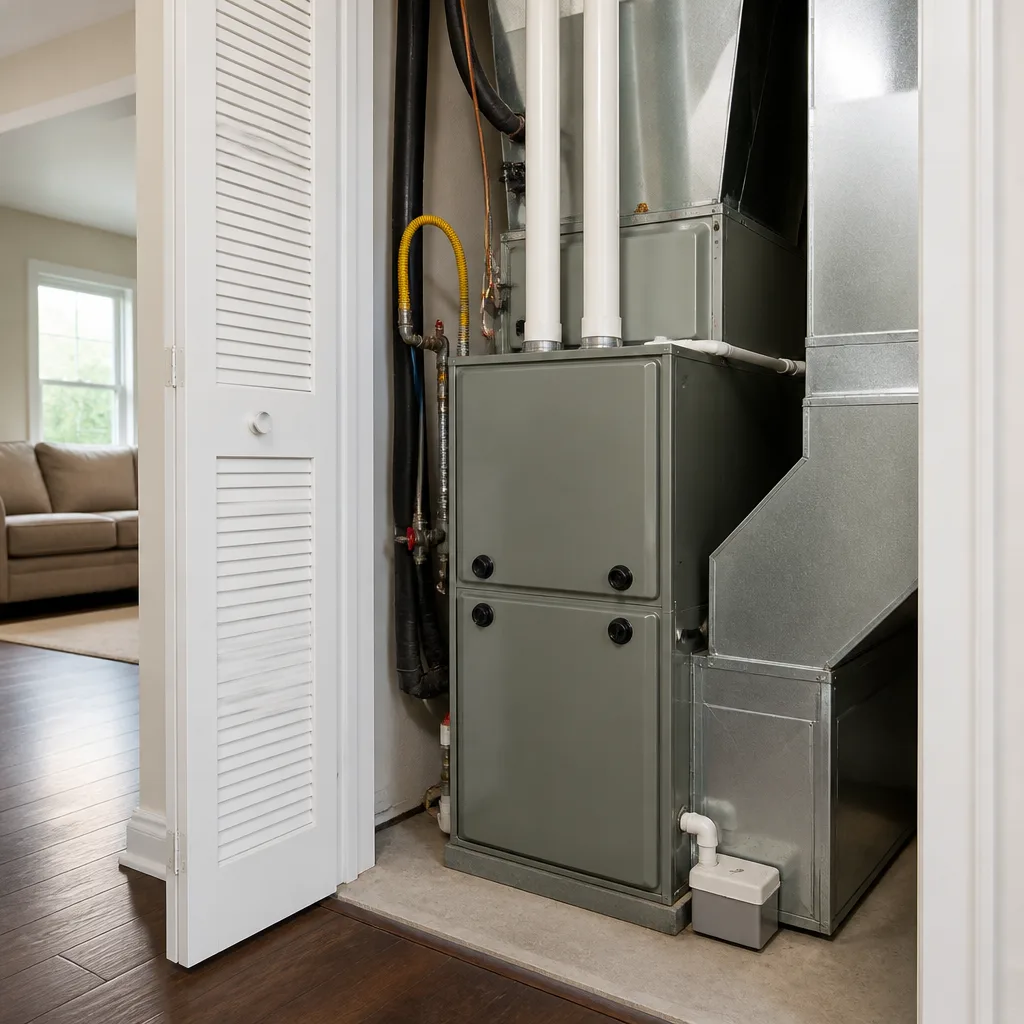
- Gas furnaces: Heat exchanger inspection for cracks, burner flame check for proper color and pattern, flame sensor cleaning, inducer motor amp draw, and safety switch verification.
- Heat pumps: Reversing valve operation, auxiliary heat strip amp draw, defrost cycle verification, and outdoor unit coil condition before heating season.
- Both systems: Thermostat calibration, emergency heat lockout verification, and duct temperature rise measurement.
The heat exchanger is the non-negotiable item on a gas furnace. A cracked exchanger sends carbon monoxide into the airstream. Current code requires CO detectors in many Fort Worth homes, but a detector is a last line, not a maintenance plan. Every fall furnace inspection should include a visual and combustion-based exchanger check. If your provider skips it, find another provider.
For Fort Worth homeowners on our maintenance plan, the fall visit includes a full 21-point heat-side inspection with a written report. The report shows what was checked, what was found, and what needs attention, with the price in writing before work starts. See Furnace Repair in Fort Worth for details on heat-side service.
Heat Pump vs. Gas Furnace: The Tune-Up Tasks Are Not the Same
Most generic HVAC guides write one heating maintenance list and call it done. That’s a disservice to Fort Worth homeowners, because a heat pump and a gas furnace are different machines with different failure modes. A heat pump moves heat. A gas furnace creates it. The tasks that keep each one running are not interchangeable.
Here is what a heating tune-up actually means on each system in Fort Worth:
Gas Furnace Tune-Up Tasks
- Inspect the heat exchanger for cracks, corrosion, and burn marks. This is the safety-critical item.
- Clean the flame sensor. A dirty flame sensor causes intermittent lockouts, and intermittent lockouts mean a house that loses heat at 3 a.m.
- Check burner flame quality. A blue, steady flame is correct. Yellow or flickering flames indicate incomplete combustion and possible carbon monoxide production.
- Measure inducer motor amp draw. A failing inducer draws more current and eventually seizes. It is the most common mid-winter furnace failure in Texas.
- Verify limit switches and rollout switches. These are safety devices. They must trip when they should and reset when they should.
- Check gas pressure at the valve. Low or high manifold pressure wastes fuel and shortens exchanger life.
Heat Pump Tune-Up Tasks
- Test the reversing valve. This is the component that shifts the system between heating and cooling. If it sticks mid-cycle, your system tries to heat and cool at the same time.
- Check auxiliary heat strip operation. When the outdoor temperature drops below the heat pump’s balance point, typically 35-40°F for older systems, the strips carry the load. A burned strip means your system runs constantly and the house stays cold.
- Verify the defrost cycle. In humid winter conditions, the outdoor coil frosts over. The defrost board, sensor, and cycle must work or the coil ices into a solid block.
- Measure refrigerant charge in heating mode. A heat pump’s charge is checked differently in heating mode than in cooling mode. The tech must use the correct method.
- Inspect the outdoor coil for damage and debris. The coil works year-round, not just in summer.
If you have a heat pump in Fort Worth and your last tune-up used a furnace checklist, you paid for work that did not address your system’s actual failure modes. Heat pump service requires a tech who understands both refrigeration and electrical load. For installation or replacement, see Heat Pump Installation in Fort Worth.
Outdoor Unit Clearance and Fort Worth Storm Debris
Fort Worth’s severe weather season runs from March through June, with a secondary peak in October. What those storms leave behind is exactly what your outdoor condenser does not need: twigs, leaves, seed pods, grass clippings, cottonwood fluff, and in really unlucky neighborhoods, roofing shingles. Debris that blocks the condenser coil raises head pressure, reduces capacity, and shortens compressor life.
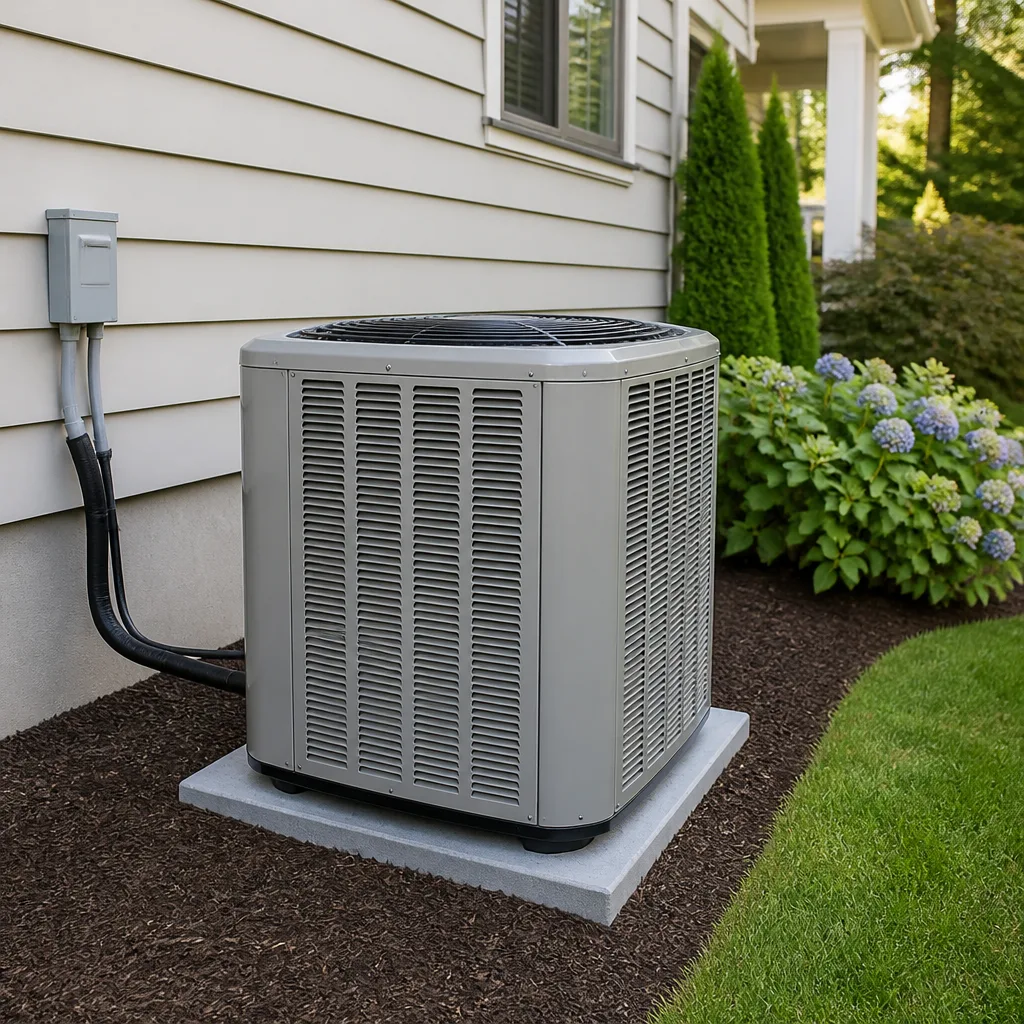
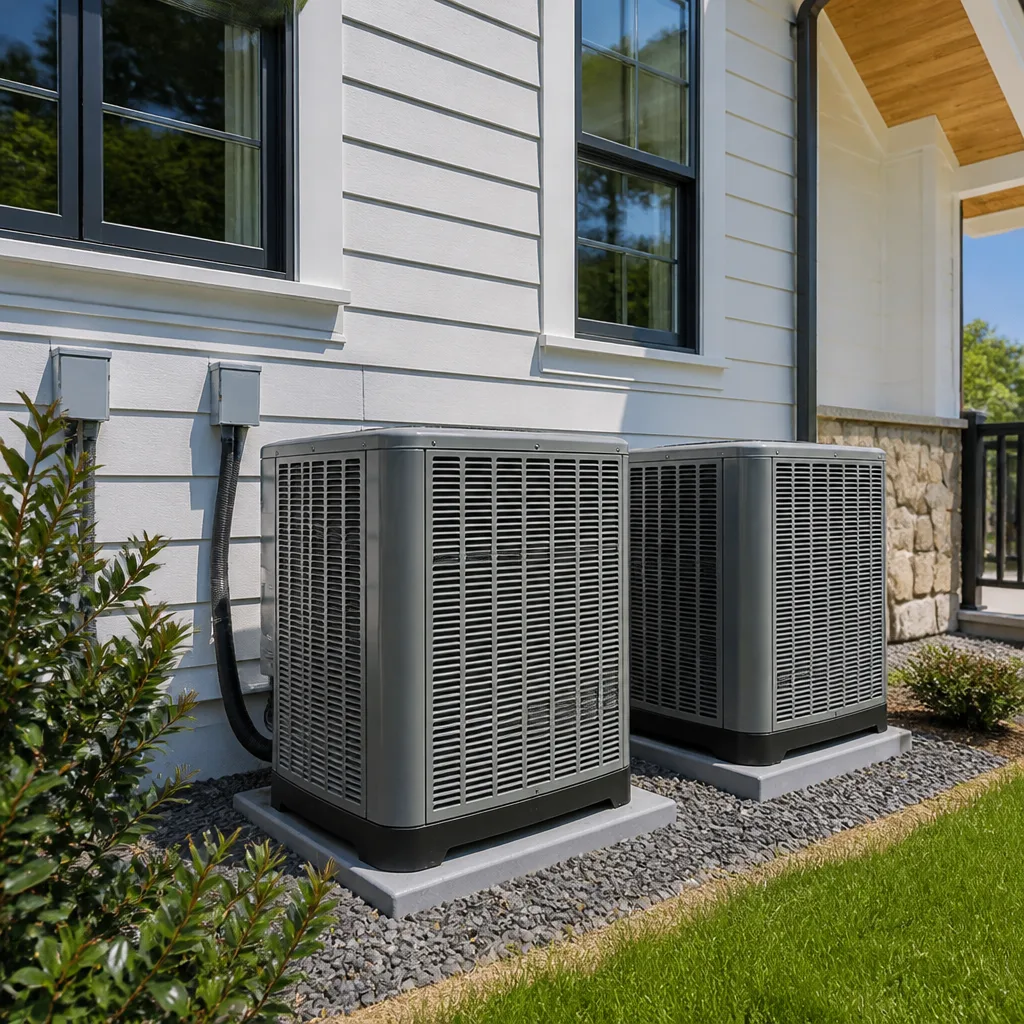
But here’s the part most guides get wrong: clearance around the unit matters more than cleanliness on the coil. A condenser needs 18 to 24 inches of open air on all four sides and at least 5 feet of clearance overhead. The airflow is what makes the refrigeration cycle work. A unit crammed against a fence or buried in shrubs will destroy its compressor no matter how clean the coil is.
Fort Worth-specific storm debris checklist:
- After every severe thunderstorm, walk the condenser perimeter. Clear anything touching the unit. Check for limbs resting on the refrigerant lines.
- Watch for hail damage. Fort Worth gets hail, and hail dents in the coil fins restrict airflow. Fine dents, often called cosmetic, still add up across a 30-square-foot coil.
- Trim grass and weeds to keep a 12-inch bare zone. String trimmers throw debris directly into the coil. Edge away from the unit, not toward it.
- Do not wrap the unit in a tarp for winter. Trapped moisture causes corrosion, and rodents love the sheltered space. If you must cover the top, use a breathable cover and remove it before operation.
- Check the disconnect box for storm water. A wet disconnect corrodes connections and trips breakers. If the box is fogged or dripping after a storm, replace the weather seal.
- Date and outdoor temperature at the time of the reading. This gives the technician a performance baseline.
- Thermostat setpoint and actual indoor temperature. The gap between the two shows whether the system is keeping up or falling behind.
- System runtime for the day. Most smart thermostats show this. A system running 18 hours daily in July is undersized or underperforming.
- Unusual sounds, smells, or behaviors. A rattle on startup, a musty smell, a short cycle. Write it down even if it goes away. Intermittent symptoms are the hardest to diagnose without a log.
- Filter change date. This seems minor, but knowing the filter was changed 3 weeks ago versus 6 months ago changes the diagnostic path entirely.
- Skipping the April maintenance visit and waiting for the first hot day. By June, every HVAC company in Fort Worth is booked out days or weeks. The system that fails in the heat wave waits the longest for repair.
- Using a furnace checklist on a heat pump. The systems are different. The failure modes are different. If your tech is not checking the reversing valve and defrost cycle, they’re not doing heat pump maintenance.
- Closing registers in unused rooms to save energy. Modern variable-speed systems compensate for added static pressure by working harder, not smarter. Closed registers raise pressure, reduce airflow, and shorten blower motor life.
- Ignoring the filter during cedar season. A clogged filter in January is the fastest path to a frozen coil and a system that runs constantly without heating the house.
- Planting shrubs or building a fence too close to the condenser. The unit needs 18 to 24 inches of clearance on all sides. Violate that, and every other maintenance task becomes academic.
- Waiting to test heat until the first freeze arrives. Test the heat side in October, not November. If the heat exchanger is cracked or the strips are burned, you want to know before the temperature drops.
- Assuming a newer system does not need maintenance. New systems fail too, and manufacturer warranty coverage often requires proof of regular maintenance. Skipping the check may void the coverage.
One more Fort Worth specific: cottonwood season. Late May through early June, cottonwood trees release seeds that coat condenser coils in a white film. If you have cottonwoods within a block, check and rinse the coil manually with a garden hose every week during those three weeks. Use a gentle spray, not a pressure washer, and only when the unit is off.
The Homeowner Log: Five Data Points Per Season That Save Diagnostic Time
When a technician arrives at a no-cool call in August, they start from zero. They don’t know how your system behaved last week, last month, or last year. They don’t know if the symptom is new or chronic. They don’t know if the system ran fine through last summer and suddenly quit, or has been struggling for months. That diagnostic time is billable, and it’s the difference between a 45-minute repair and a two-hour investigation.
A simple homeowner log fixes this. Five entries per season, two minutes per entry. Here is what to record:
A paper notebook on top of the air handler works fine. A notes app works better because it’s searchable. When the tech asks what’s been going on, you hand them the log instead of trying to remember. That saves 20 to 30 minutes of diagnostic time on a typical service call, and it gives the tech exactly the context they need to find the actual problem instead of guessing.
In our experience, homeowners who keep this log get faster diagnoses, more accurate estimates, and fewer repeat visits. The log is free. The information it captures is worth real money in avoided diagnostic hours.
Common Mistakes to Avoid
When to Call a Professional
Some jobs are homeowner tasks. Filter replacement, drain line clearing with a shop vac, storm debris removal, thermostat programming. Those are all within reach. Other jobs are not. Anything involving high voltage, refrigerant, natural gas, or a heat exchanger should be done by a licensed technician. Refrigerant is a controlled substance under EPA rules. Gas lines and burners are regulated by code. High-voltage electrical work kills people who guess wrong. If you are uncertain which category a task falls into, err on the side of calling. Dalton Heating & Air Fort Worth offers free estimates in Fort Worth. Call (817) 730-5369 and a live person will answer, 24 hours a day.
Frequently Asked Questions
Twice a year: once in April or May before cooling season, and once in October or November before heating season. Fort Worth’s climate puts real load on the system in both seasons, and the transitions between them are when neglected components fail. Annual service is the minimum. Semi-annual is what the climate actually demands.
Most seasonal tune-ups in the Fort Worth area run $150 to $250 per visit, depending on the system type and what’s included. Heat pump service generally costs slightly more than gas furnace service because of the additional checks required. Any company quoting less than $100 for a tune-up is almost certainly using it as a loss leader with limited inspections.
You can handle the basics: filter changes, outdoor unit clearance, drain line clearing, and the homeowner log. What you should not do is anything involving high voltage, natural gas, refrigerant, or combustion components. Those are the jobs where a wrong move creates a safety risk or voids a warranty.
Filter management during cedar season, from December through February. A clogged filter causes the majority of winter breakdown calls we see in Fort Worth. The fix takes two minutes and costs under $20. The repair it prevents averages $300 to $800.
It’s the written guarantee that comes with every repair from Dalton Heating & Air Fort Worth. If the repair fails within one year, we return at no charge and make it right. It’s not an upgrade, not an upsell, not a limited 30-day window. It’s part of the Garrison Standard on every service call, and it’s in writing before the work begins. For more on this, see Dalton Heating & Air Fort Worth home.
The replacement conversation starts when the system is over 12 years old and the repair quote exceeds 30 to 40 percent of a new system’s price. In Fort Worth’s climate, systems typically last 12 to 15 years, with some Trane and Carrier units pushing 18 to 20 with proper maintenance. If your system uses R-22 refrigerant, that’s another push toward replacement: R-22 is phased out, and the refrigerant alone costs more every year. Heat Pump Installation in Fort Worth covers replacement options with written, fixed-price quotes.
A maintenance plan makes sense for most Fort Worth homeowners because the semi-annual visits are already needed, and most plans bundle priority scheduling and reduced diagnostic fees. The key is reading what the plan actually covers. If it doesn’t include the heat exchanger inspection on a gas furnace or the reversing valve test on a heat pump, it’s not a real maintenance plan, it’s a filter subscription.
Frozen coils are almost always caused by a restriction: a dirty filter, a clogged coil, a blocked return, or a refrigerant charge that’s too low. In Fort Worth’s humid summers, a low refrigerant charge shows up first as a frozen coil rather than a warm house, because the moisture in the air condenses and freezes on the coil surface before the homeowner notices the temperature change. Turn the system off, let it thaw, and call a technician before restarting it.
The Bottom Line
Seasonal HVAC care in Fort Worth is not about following a generic four-season checklist. It’s about knowing which tasks matter in our specific climate and doing them before the weather turns hostile. Change the filter every two weeks during cedar season. Get the cooling system inspected in April or May, before the heat ramp. Get the heating system inspected in October or November, before the first freeze and long before the February deep freeze that will eventually arrive. Keep a written log of system behavior. And when a job is beyond your reach, call a professional who puts the price in writing and stands behind the work for a full year. Browse more guides & resources to keep your system running strong.
Contact: For a free estimate on seasonal maintenance, repair, or system replacement in Fort Worth, call (817) 730-5369. Dalton Heating & Air Fort Worth is a Garrison Partners company, operating under The Garrison Standard since 2003. Live phone support, 24 hours a day, 7 days a week. Written price before any work begins. Written guarantee on every repair.
Written by Marco Benitez, Owner at Dalton Heating & Air Fort Worth, serving Fort Worth since 2003.
See the difference
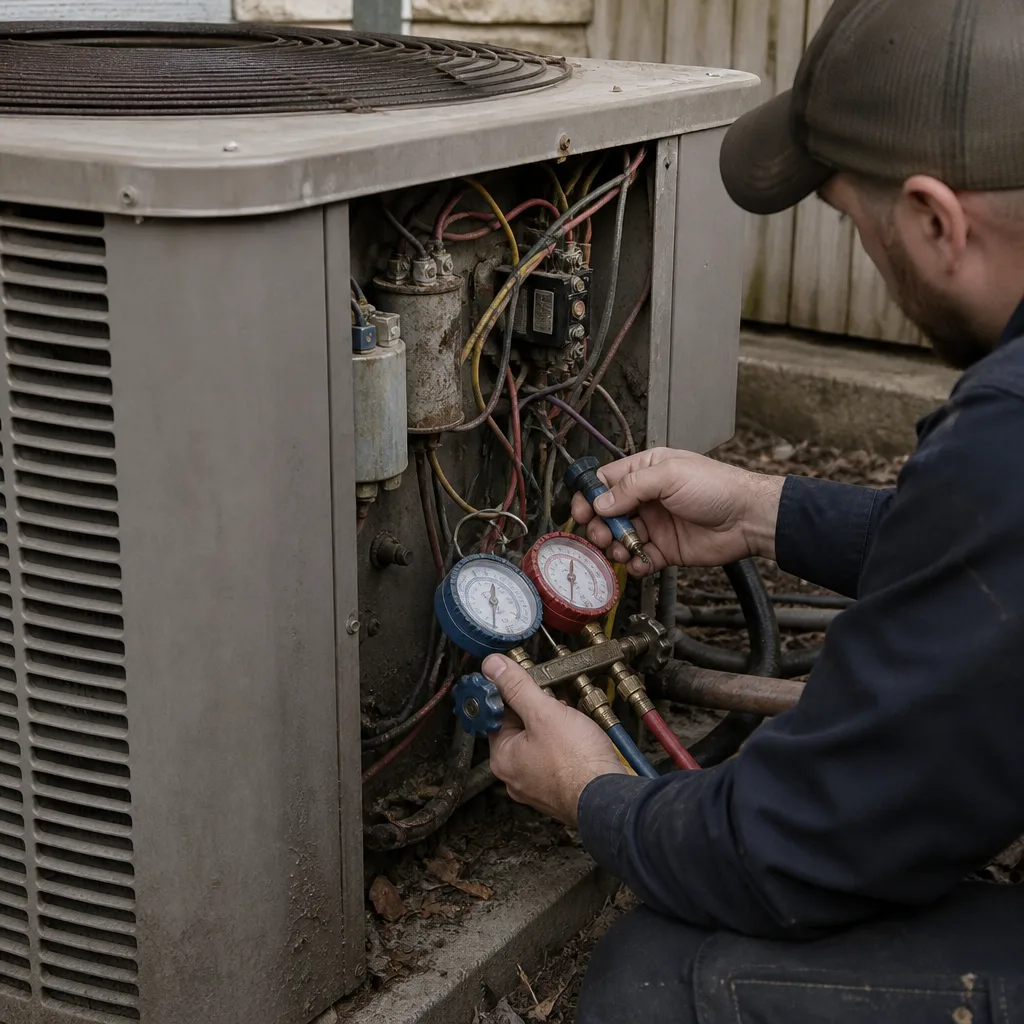 Before
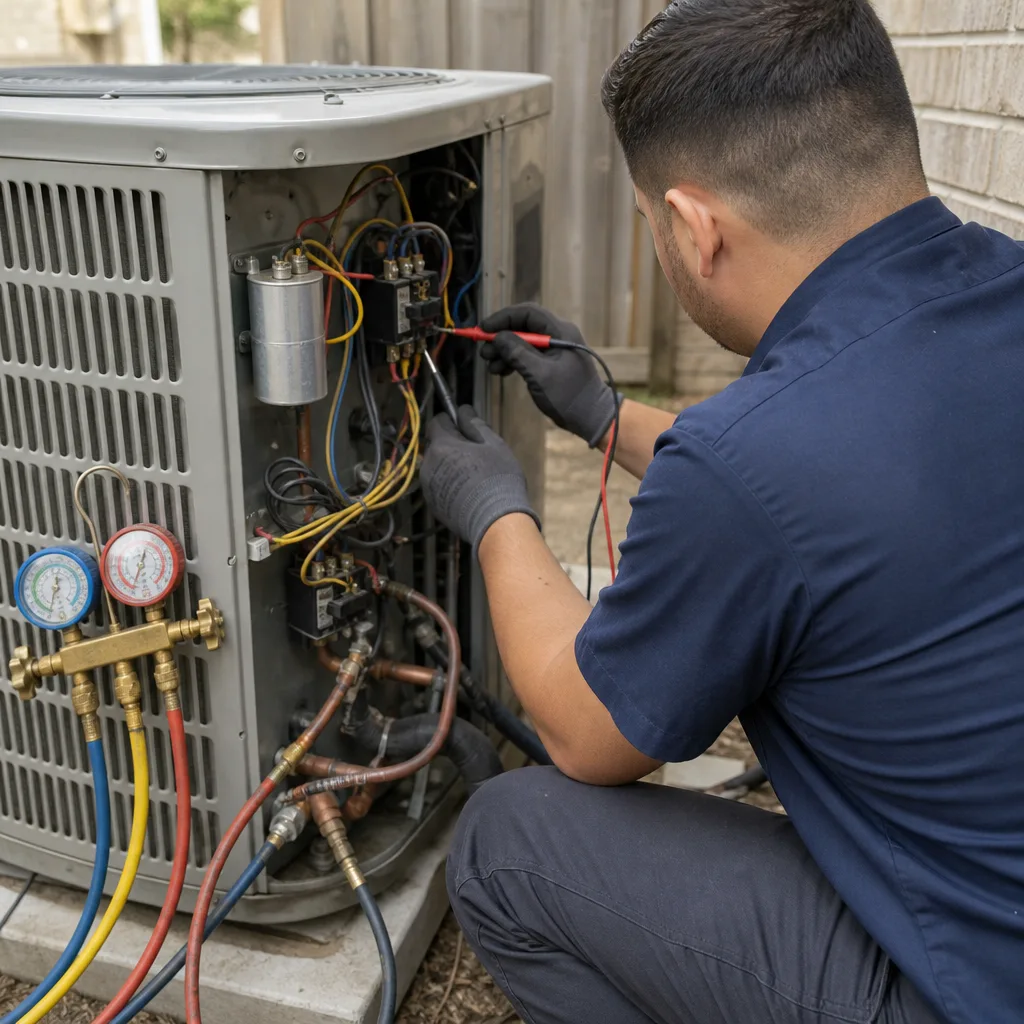 After
After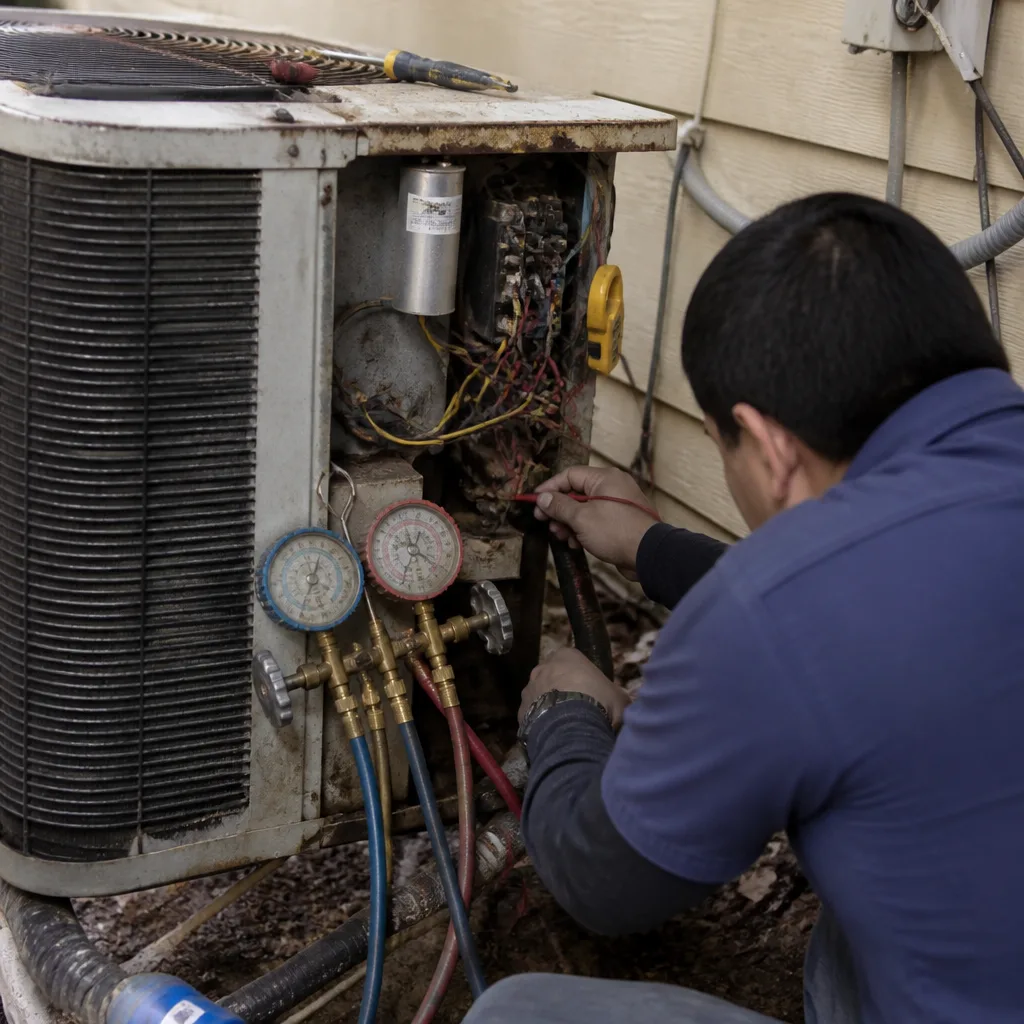 Before
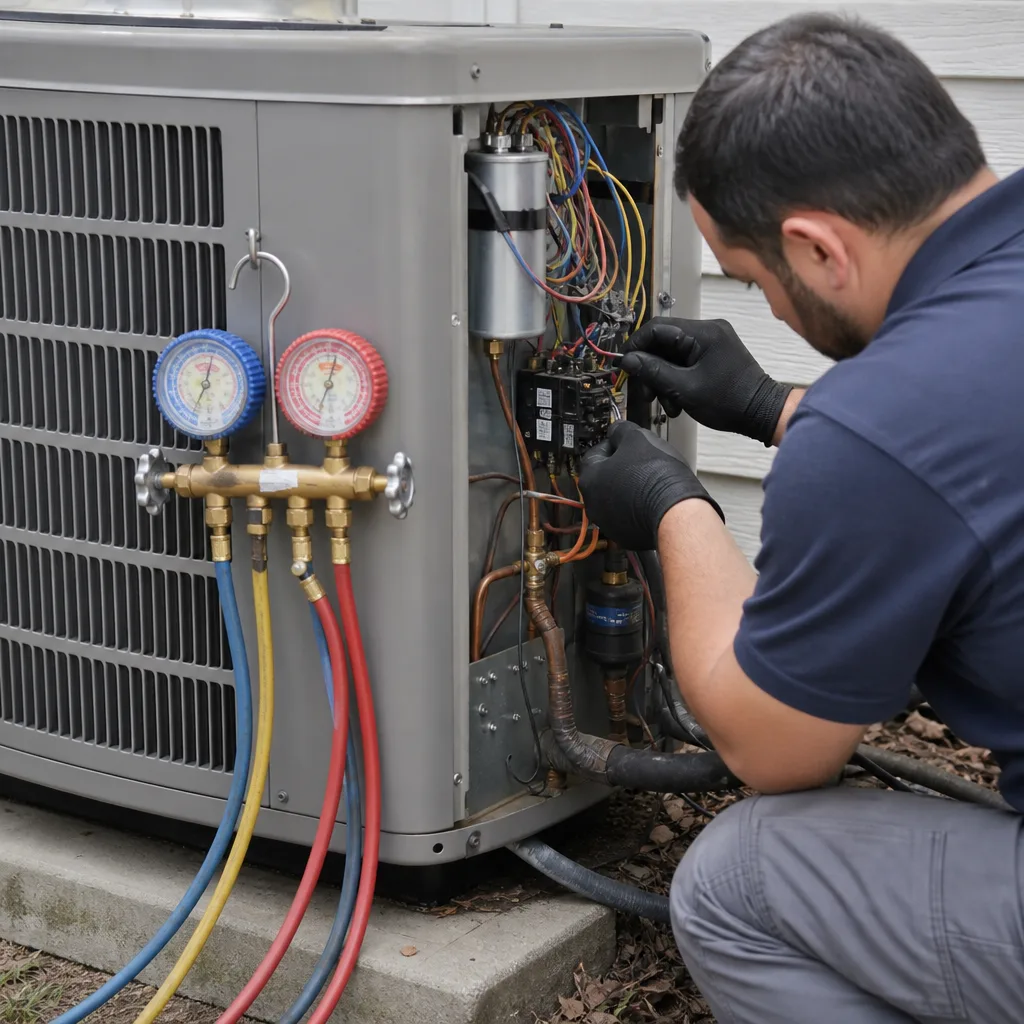 After
After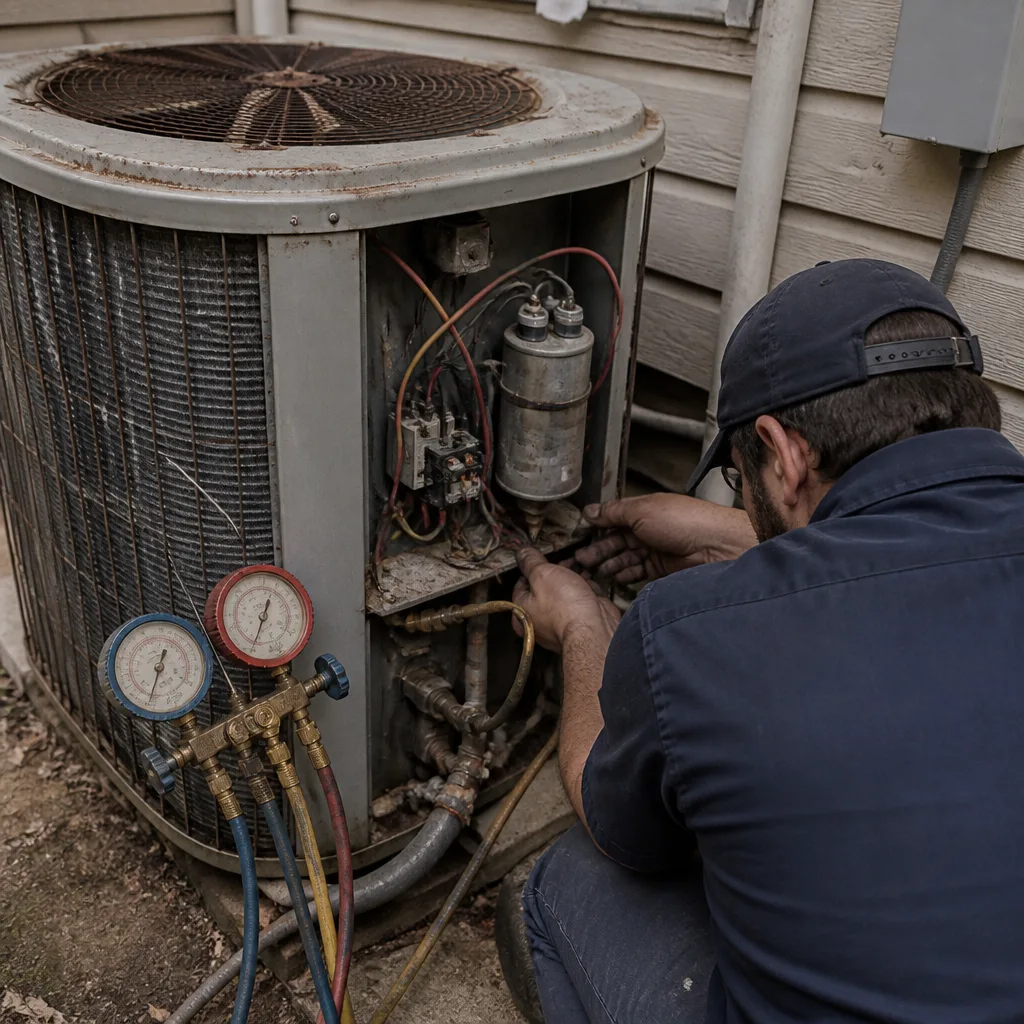 Before
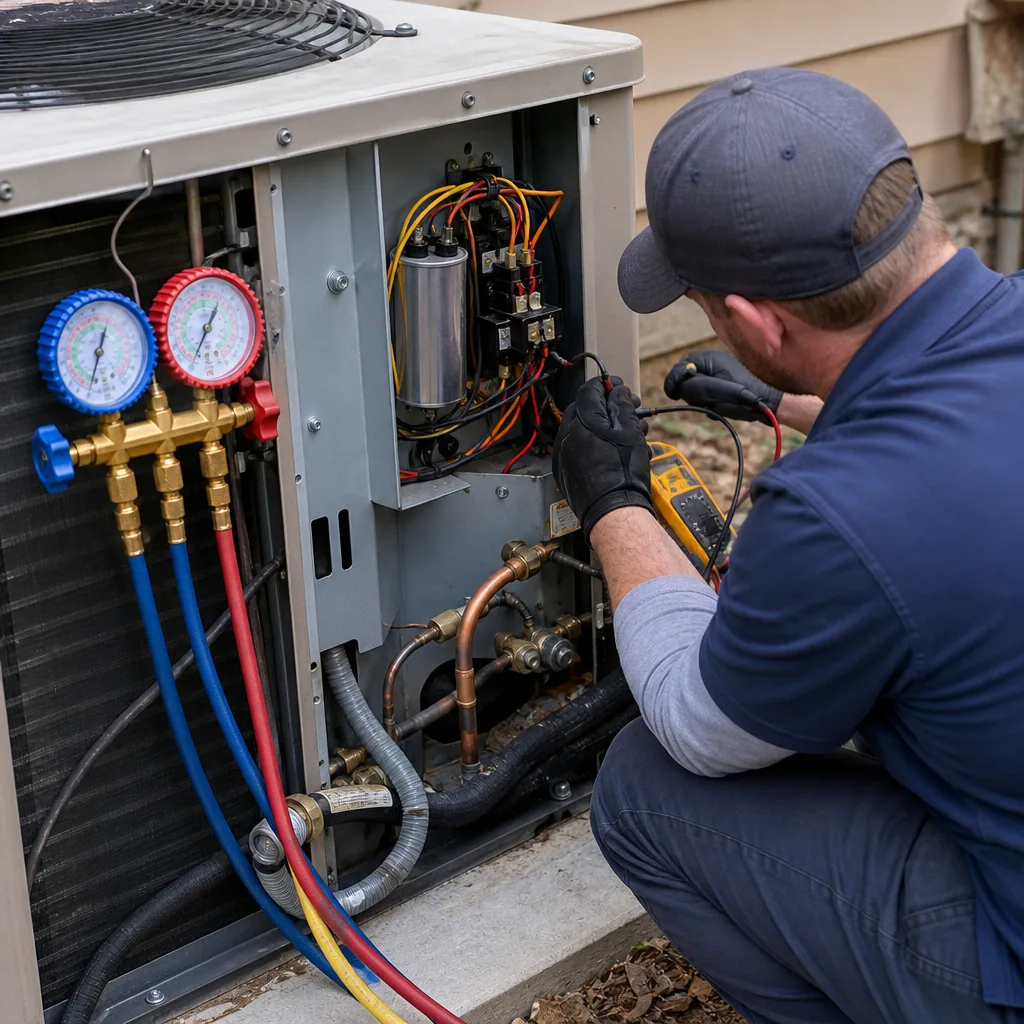 After
After