
Last updated October 16, 2026
 AC repair
 Furnace & heating
 Heat pumps
 Ductless mini splits
 Carrier
 Trane
Trane Goodman
Seasonal tune-up and full diagnostic on your Carrier, Trane, or Goodman system - readings shown to you before any repair is proposed
Diagnosis first, numbers second - you approve the repair price before a single part goes in.
Get your free estimateThe Complete Guide to HVAC in Fort Worth
Fort Worth averages 37 days above 100°F per year, but the same homes that bake in August froze in February 2021 – and most HVAC systems in this city were sized for only one of those extremes. This guide maps every major heating and cooling decision to the ground you actually live on: the clay soil under your slab, the Oncor meter on your wall, the humidity that makes 92°F feel like 105°F, and the winter nights when the temperature drops hard after a mild afternoon. You’ll learn what equipment actually holds up here, what maintenance timing makes sense in Fort Worth’s calendar, what repairs cost, and when replacing a system beats pouring money into it.
Styles & brands we work with
Quick Answer
HVAC in Fort Worth means buying a system sized for both sustained 100°F heat and hard freezes, a balance most homes miss in one direction or the other. A heat pump makes sense for roughly a third of Fort Worth homes and is a poor fit for others; furnace repair here typically runs $150 – $450, AC repair $150 – $500, and a full system replacement lands between $7,000 and $16,000 depending on size, efficiency, and fuel type. The single highest-ROI move most Fort Worth homeowners can make is not new equipment – it’s sealing leaky ductwork in the attic and scheduling maintenance at two specific points in the year.
Table of Contents
- The Truth About Fort Worth’s Climate and What It Demands From an HVAC System
- How Clay Soil and Slab Foundations Change the Way HVAC Gets Installed Here
- Heat Pumps vs. Furnaces in Fort Worth: The Sizing Math Most Contractors Skip
- SEER2 Ratings on Paper vs. Real Efficiency in Fort Worth’s Humidity
- The Refrigerant Transition: What R-22 Phase-Out Means for Older Fort Worth Homes Right Now
- Oncor’s Demand-Response Programs and Which Thermostats Actually Pay Off in Fort Worth
- A Month-by-Month Maintenance Calendar for Fort Worth, Not Generic National Advice
- What HVAC Work Actually Costs in Fort Worth: Repair, Maintenance, and Replacement Ranges
- Common Mistakes to Avoid
- When to Call a Professional
- Frequently Asked Questions
- The Bottom Line
The Truth About Fort Worth’s Climate and What It Demands From an HVAC System
Fort Worth’s climate does not sit politely between “hot” and “cold.” It swings. A design day in summer is 100°F dry-bulb with humidity that pushes the heat index to 108°F or higher. A design day in winter is 19°F, but February 2021 knocked the city down to -2°F and held it there for days. Most HVAC systems installed in Fort Worth over the last twenty years were sized using cooling load alone, with heating treated as an afterthought. That worked until it didn’t.
What this means practically: your system needs the cooling capacity to pull heat out of the house for four straight months without running continuously at the edge of its limits, and it needs heating capacity that does not collapse when the temperature stays below 25°F for multiple nights. A furnace that keeps up fine at 35°F can leave a house at 55°F indoor temperature at 5°F. A heat pump that performs beautifully at 40°F loses meaningful capacity below 25°F. The systems that held up best during Winter Storm Uri were either gas furnaces with properly sealed ductwork or heat pumps installed with electric heat strips rated for true cold-snap duty, not the minimum code requirement.
The second unappreciated factor is the swing itself. Fort Worth routinely sees a 40-degree temperature difference between afternoon and overnight during shoulder seasons. Your system cycles more, the expansion and contraction on ductwork and connections is harder, and thermostats that hold a tight temperature band will run the equipment far more than a thermostat set a degree or two wider. We’ll come back to what that does to lifespan later in the guide.
How Clay Soil and Slab Foundations Change the Way HVAC Gets Installed Here
Fort Worth sits on expansive clay soil, the same black gumbo that makes driveways crack and doors stick. Homes here are overwhelmingly built on post-tension or conventional slab foundations, not pier-and-beam. That changes the HVAC installation math in two ways that national guides miss.
First, ductwork. In a pier-and-beam home, ducts run under the floor where leaks go into a ventilated crawlspace and rarely cause major energy loss. In a Fort Worth slab home, ducts typically run through the attic. An attic in July can hit 140°F. If flex duct is installed with more than a slight sag, is disconnected at a collar, or was chewed open by rodents, you’re not just losing cooled air – you’re pulling in 140-degree attic air through the return leaks and pushing conditioned air out through supply leaks. Real-world energy audits in Fort Worth neighborhoods regularly find 20 – 40% of total air volume going to the wrong place. Sealing and insulating ducts in an attic is frequently a better dollar-for-dollar investment than buying a higher-SEER unit.
Second, heat gain. Slab foundations absorb heat all day and release it into the house through the floor at night, extending the cooling cycle well past sundown – and vice versa in winter. Homes with hard flooring laid directly on slab in rooms that get afternoon sun will run warmer than the thermostat reading suggests. The thermostat sees the air temperature near the return, not the radiant heat coming off the floor. If you’re noticing rooms that stay hot after dark, the issue is often not the AC but the thermal mass of the slab and inadequate return air in those zones.
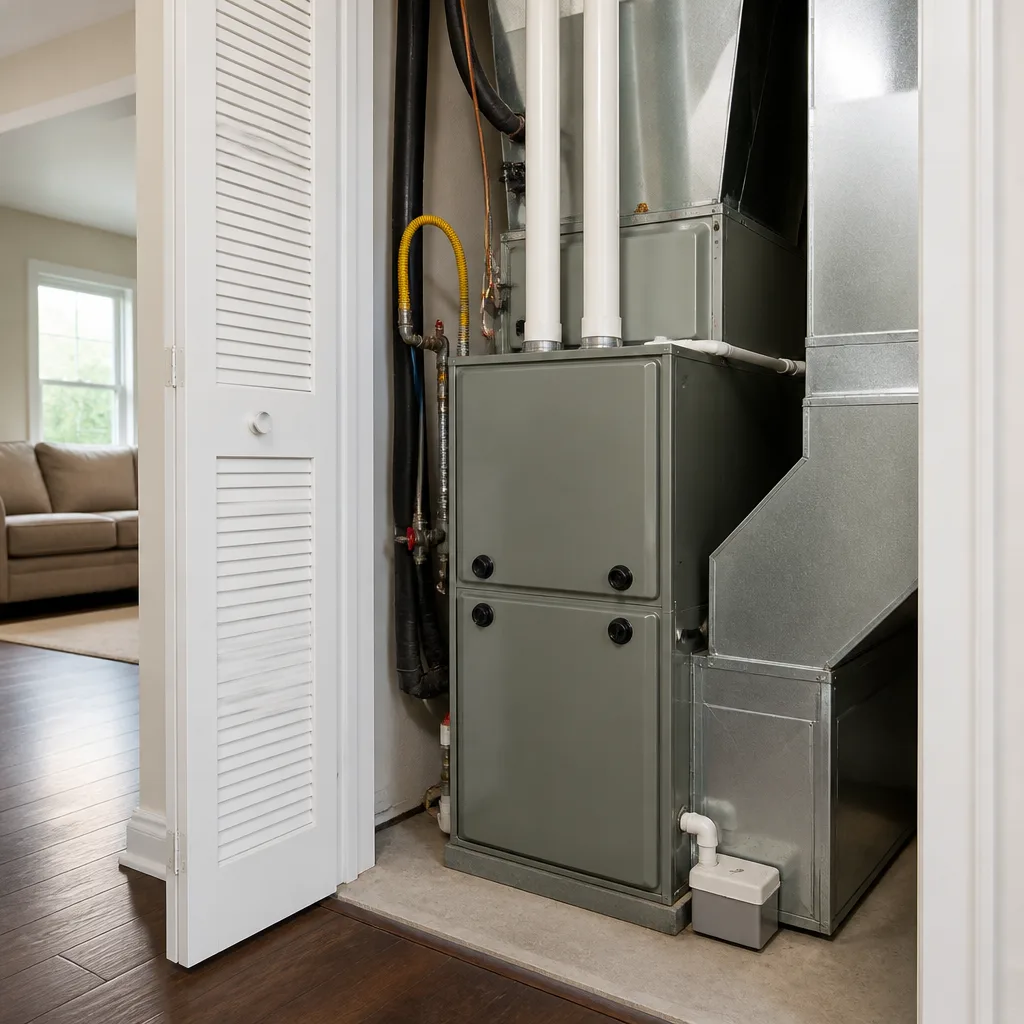
Third, line set routing. On slab homes, the copper refrigerant lines connect at a wall penetration and run outside to the condenser. If the coil is in a first-floor closet on the opposite side of the house from the condenser, the line set gets long. Lines run over 50 feet or with tight bends will underperform and shorten compressor life. Code allows longer runs with adjustments, but plenty of installers skip the adjustment. That is exactly the kind of detail that separates a Fort Worth install that holds up from one that quietly underperforms.
Heat Pumps vs. Furnaces in Fort Worth: The Sizing Math Most Contractors Skip
In Dallas and Houston, heat pumps are almost universally a strong play because the heating season is short and winters rarely dip into the teens. In Fort Worth, the answer genuinely depends on the house. A heat pump makes the most sense in three situations: the home is all-electric with no gas service, the home is smaller than about 1,800 square feet with good envelope sealing, or the homeowner is replacing an existing heat pump and has an electrical panel with spare capacity for heat strips.
The distinction that gets missed is that Fort Worth’s heating load is real. At 25°F, a standard heat pump produces roughly 70% of the heat it produces at 47°F. At 15°F, many units drop to 50 – 60% of rated output. That does not mean heat pumps fail here – it means they must be paired with electric heat strips sized for actual worst-case nights, and the thermostat strategy matters enormously. If you set a heat pump thermostat to aggressively snap back from a nighttime setback, the heat strips will kick on every morning and erase much of the efficiency advantage. Heat pumps in Fort Worth should run with shallow setbacks – no more than 3 or 4 degrees – and ideally with a thermostat that prioritizes heat pump runtime over heat strip activation.
For homes with natural gas service, a gas furnace remains the more dependable play for the coldest nights because its output does not degrade with outdoor temperature. A 60,000 BTU furnace puts out 60,000 BTU at 14°F the same as it does at 45°F. The trade-off is that the same home still needs a separate cooling system, meaning you own two appliances instead of one. That’s the practical reality of Fort Worth HVAC: the city’s winter low temperature and summer high temperature pull in opposite directions, and the ideal equipment choice often comes down to a load calculation on the specific house, not a preference from the installer’s preferred brand.
Dalton Heating & Air Fort Worth performs full Manual J load calculations on every heat pump installation in Fort Worth before quoting equipment, specifically because homes sized for Dallas design temps routinely underheat in Fort Worth’s harder winter snaps.
SEER2 Ratings on Paper vs. Real Efficiency in Fort Worth’s Humidity
SEER2 is the current federal efficiency metric, and it is a better predictor of real-world performance than the old SEER number because it includes realistic ductwork losses and higher static pressure. But there’s a Fort Worth-specific wrinkle: latent load. SEER2 measures total heat removal, which includes both sensible heat (temperature) and latent heat (humidity). Fort Worth’s summer air carries enough moisture that a system’s ability to remove humidity matters as much as its ability to drop the temperature.
Here’s the practical problem. A high-SEER2 two-stage or variable-speed system running at partial capacity is efficient, but if it is oversized – and many are, because installers size for a hotter day than the house actually sees – it will short-cycle. Short cycling means the compressor shuts off before the coil has run long enough to pull humidity out of the air. The result: the house reaches the set temperature, but it feels clammy, so the homeowner lowers the thermostat another degree, the cycle repeats, and the billed efficiency never materializes.
The real-world efficiency number in Fort Worth depends on four things in this order: correct sizing for the house’s actual load, sealed ductwork, a properly charged refrigerant system, and then the SEER2 rating. A 14.3 SEER2 unit installed the right way will routinely outperform a 17 SEER2 unit slapped in with leaky ducts and a sloppy charge. That is not a sales pitch; it is the pattern we see repeatedly on service calls across Fort Worth.
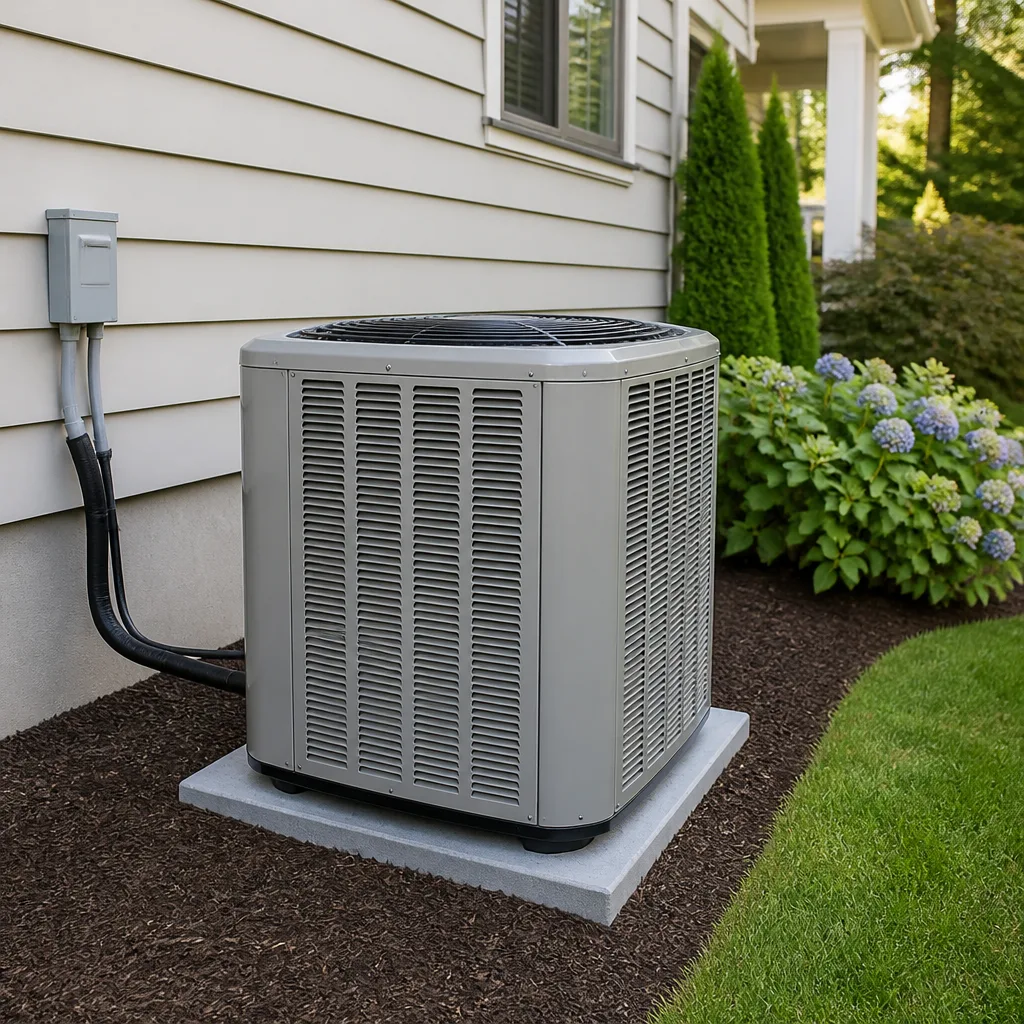
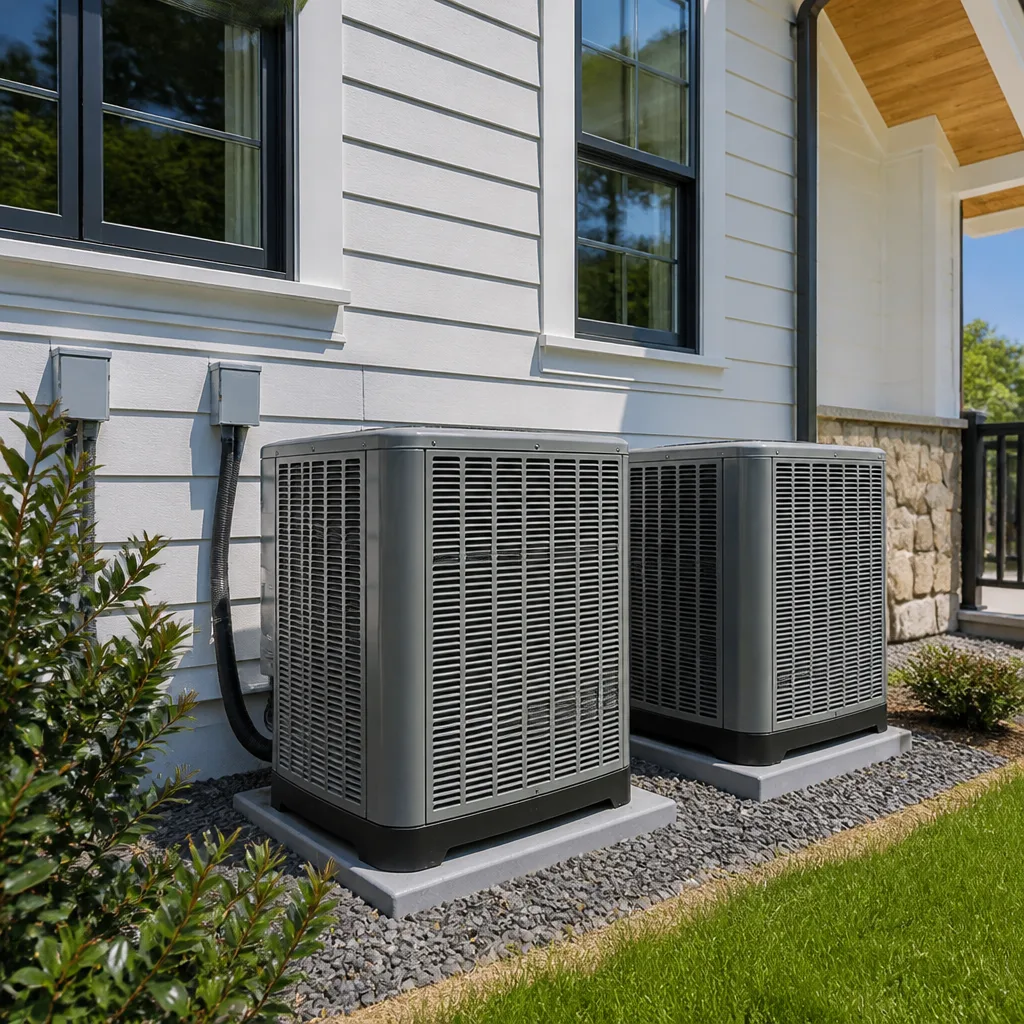
One more note: SEER2 ratings assume a specific set of test conditions that rarely match a Fort Worth August. On the hottest days, when the condensing unit is sitting in reflected heat off a west-facing wall, real efficiency drops below the label. If you can, site the condenser on the north or east side of the house, in shade if possible, with at least 18 inches of clearance on all sides. That one placement decision can recover a meaningful percentage of lost efficiency for free.
The Refrigerant Transition: What R-22 Phase-Out Means for Older Fort Worth Homes Right Now
If your Fort Worth home was built before about 2010 and the AC or heat pump is original, there is a real chance it runs on R-22 refrigerant, often sold under the brand name Freon. R-22 production and import into the U.S. have been completely phased out. The only R-22 available today is reclaimed and recycled, and its price has climbed sharply – $120 to $180 per pound at current rates, with most older systems holding 5 to 12 pounds. A full recharge on a low system can now cost more than $1,000, and that is before labor.
There are drop-in replacement refrigerants available, and some Fort Worth contractors will offer to retrofit an R-22 system with one. The retrofit can work, but it almost never restores full capacity, and the new blend does not mix well with residual mineral oil in the lines. The honest math most of the time: if an R-22 system needs more than a pound or two of refrigerant, the leak needs to be found and evaluated against the cost of replacement. Spending $1,200 to recharge a 17-year-old system that will leak again in six months is throwing good money after bad.
New residential systems are now being installed on R-454B, a mildly flammable A2L refrigerant that replaced R-410A in 2025. That matters for Fort Worth homeowners because it adds new code requirements for sensors in the indoor air handler and strategic placement of the refrigerant linesets. If you are comparing replacement quotes, ask whether the installer is quoting an R-410A unit (available while stocks last) or a new R-454B unit. Both are being installed locally right now, but their long-term refrigerant availability tells very different stories.
Oncor’s Demand-Response Programs and Which Thermostats Actually Pay Off in Fort Worth
Oncor, the transmission and distribution utility that serves most of Fort Worth, runs demand-response programs that pay residential customers for allowing the utility to briefly adjust their thermostat or cycle their AC during peak grid stress. The most common is the “Take a Load Off, Texas” thermostat program, which will provide a free or subsidized smart thermostat in exchange for enrollment, plus small bill credits during summer events. There is also a recurring “Smart Energy Plan” credit path through some retail electric providers who contract with Oncor.
These programs are genuinely worth money – not life-changing money, but real. If you already plan to install a smart thermostat, enrolling through Oncor’s partner network will typically cover the hardware and then pay $25 – $50 per summer in bill credits. The catch from an HVAC performance perspective is that the thermostat setback the utility uses is aggressive, and the automatic temperature adjustment can clash with the heat pump shallow-setback strategy mentioned earlier. If you have a heat pump, make sure the thermostat’s event override does not trigger the electric heat strips during recovery. That is a setting buried in most smart thermostats’ advanced menu, and it is one of the things we check on AC repair calls in Fort Worth when a heat pump’s electric bill looks worse after thermostat replacement.
The thermostat hardware itself matters. Fort Worth homes do best with thermostats that offer remote temperature sensing via wireless sensors, which helps fight the slab heat-gain problem described above. If your thermostat is in a hallway near a return that reads warmer than the bedrooms, remote sensors can balance the average. That is a genuinely useful upgrade for Fort Worth’s inverted afternoon heat pattern.
A Month-by-Month Maintenance Calendar for Fort Worth, Not Generic National Advice
National HVAC maintenance advice usually says “spring and fall.” That is not wrong, but it misses Fort Worth’s boundary conditions. Here is the calendar that actually fits this market:
March: Pre-Season AC Check
Temperatures have not yet settled into the 80s, but humidity is climbing. This is the window to schedule a cooling check before demand spikes. The technician verifies refrigerant charge, coil cleanliness, capacitor health, and condensate line function. When the first 90-degree day hits in April, you want the equipment already tested.
April: Duct Inspection and Filter Baseline
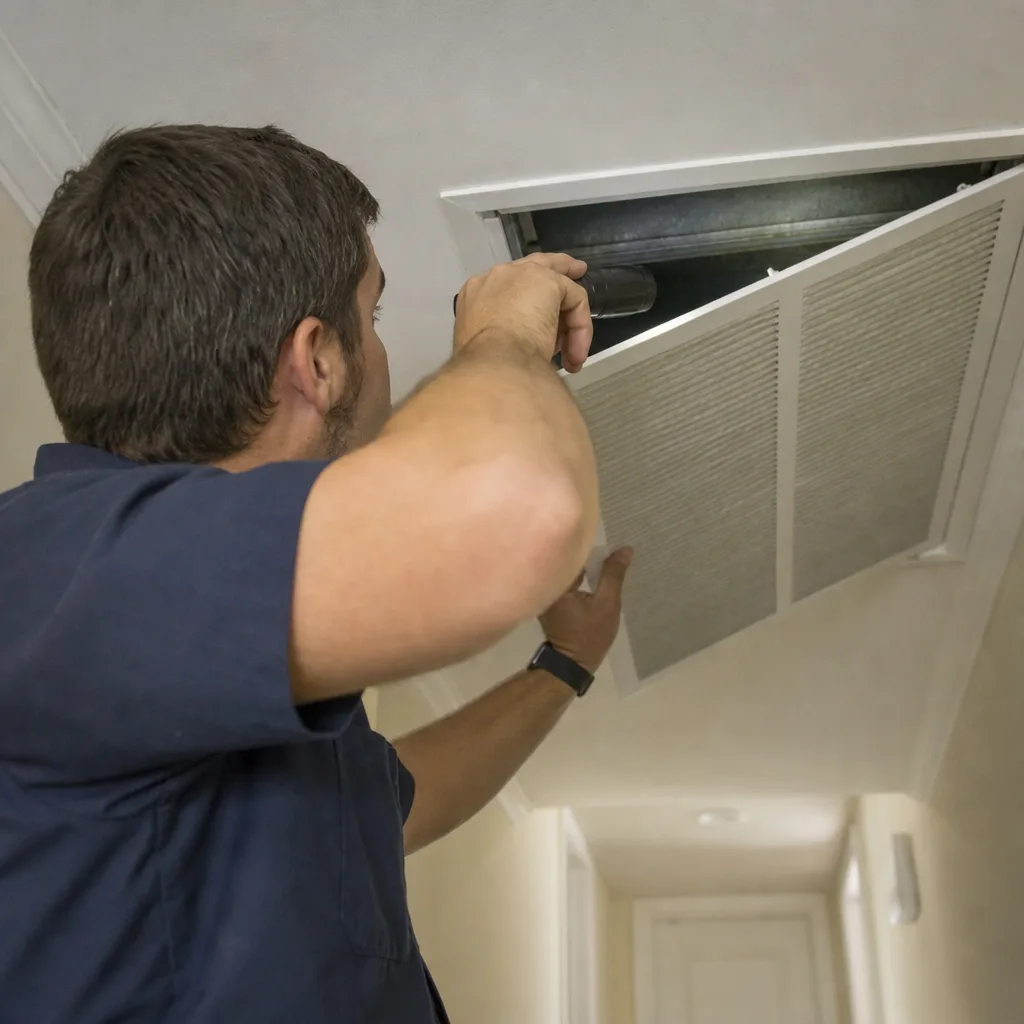
This is the month to walk the attic. Look for disconnected flex duct, crushed runs, and daylight at collar seams. Also replace the filter and write the install date on it. Fort Worth’s tree pollen season is running hard by now, and a filter loaded in April will choke airflow by May.
May: Condensate Line Treatment
Fort Worth’s humidity blooms in May, and the condensate drain is now moving real water. Algae forms fast. Pour a cup of vinegar through the line, and verify the safety float switch trips. A clogged line in an attic air handler is how ceilings get ruined.
June through September: Monthly Filter Checks, No Exceptions
Do not run a paper-thin fiberglass filter for three months through a Fort Worth summer. Check it monthly. A clean pleated filter is cheaper than the energy bill from a restricted system. If you have pets, check more often.
October: Heating Check and Heat Strip Verification
Yes, October is still warm. That is why it is the right time for furnace or heat pump heat strip work: demand is nonexistent and scheduling is wide open. Verify the heat strips actually energize, check the burners and heat exchanger on gas units, and clean the flame sensor if needed.
November: Thermostat Transition
Switch the thermostat from cooling to heating with a shallow setback. For heat pumps, set the changeover properly and do not crank the overnight setback more than 4 degrees. For gas furnaces, this is the month to log the last filter replacement before the holiday stretch.
December through February: Winter Cycle Checks
Check for frost buildup on heat pump outdoor coils after cold nights. A frosted coil is normal in winter; a coil coated in thick ice is not. Clear leaves and debris from the condenser, and keep the drain pan clear. Fort Worth’s cold snaps are short, but they are hard on equipment that has not cycled into heating mode in ten months.
What HVAC Work Actually Costs in Fort Worth: Repair, Maintenance, and Replacement Ranges
Here are the dollar ranges we quote across Fort Worth on a regular basis. These are real market numbers, not national averages pulled from a database.
Repair costs in Fort Worth:
- Capacitor replacement: $120 – $250 including parts and labor
- Contactor replacement: $140 – $280
- Condensate line clearing: $90 – $180
- Thermostat replacement (non-smart): $150 – $300 installed
- Smart thermostat installation with wiring check: $250 – $450
- Refrigerant leak search and recharge (R-410A): $300 – $650 depending on pounds needed
- Furnace ignitor replacement: $200 – $350
- Furnace pressure switch: $200 – $400
- Blower motor replacement: $400 – $900 depending on ECM vs. PSC
- Compressor replacement (under warranty): $900 – $1,800 including labor, refrigerant, and filter drier
Maintenance plan costs in Fort Worth:
- Single AC tune-up: $90 – $180
- Single furnace tune-up: $90 – $160
- Annual contract covering two visits (cooling + heating): $160 – $300 depending on tier and add-ons
Full system replacement in Fort Worth:
- AC only (3-ton, 14.3 SEER2, standard install): $5,500 – $8,000
- Furnace only (80% AFUE, standard install): $3,500 – $5,500
- Furnace only (96% AFUE, high-efficiency): $5,000 – $8,000
- Full system, gas furnace + AC (14.3 SEER2 / 80% AFUE): $8,000 – $12,000
- Full system, gas furnace + AC (16 SEER2+ / 96% AFUE): $11,000 – $16,000
- Heat pump system, no backup furnace: $8,500 – $14,000 depending on efficiency and heat strip size
Those numbers move based on the house. A two-story Fort Worth home with ducts in a low attic and a long line set will land higher than a single-story with the condenser right outside the air handler closet. A home in Fairmount with older wiring may need an electrical upgrade, which adds $500 – $1,500. Always get the price in writing before work starts – that is a requirement under The Garrison Standard we operate under at Dalton Heating & Air Fort Worth, and it should be a non-negotiable in any Fort Worth bid you review.
Why Upfront Written Pricing Matters More Than the Bottom Line
The final number on an HVAC quote matters less than whether the number holds. Fort Worth homeowners routinely tell us about bids that shifted $800 or $2,000 once the crew arrived: a line item for “plenum modification” here, a surprise “electrical disconnect upgrade” there. Written pricing before work starts eliminates that conversation entirely. Ask any contractor in Fort Worth to put the total in writing before the first tool comes off the truck. If they hesitate, that is the end of the conversation.
Common Mistakes to Avoid
- Oversizing cooling equipment in the name of safety margin. A 5-ton unit on a 3,200-square-foot home that actually loads at 3.5 tons will short-cycle, fail to remove humidity, and die early. In Fort Worth’s humidity, oversizing is actively harmful, not just wasteful.
- Ignoring the attic ducts because “the AC is new.” A new high-efficiency system connected to leaky attic ducts in a Fort Worth slab home will underperform, and the homeowner will blame the equipment. The ductwork is the system; the box is just the motor.
- Setting a heat pump thermostat like a gas furnace. Deep overnight setbacks on a Fort Worth heat pump force electric heat strips to recover every morning, erasing the efficiency advantage and spiking the electric bill.
- Waiting until the first 95-degree week to schedule maintenance. Capacity fills fast in Fort Worth in April and May. The homeowner who schedules in March gets the work done; the one who waits until the first heat wave waits two weeks for a slot.
- Going with a small shop that does not document the repair. A written guarantee is worthless if the company is gone. Furnace repair in Fort Worth should always come with a written guarantee covering the specific part and labor, not a verbal promise.
- Replacing an R-22 system one part at a time. By the third repair on a 15-year-old R-22 system, the homeowner has usually spent 40 – 50% of a new system’s cost and still owns the same aging coil. The math rarely works out.
- Treating the filter as an afterthought. Fort Worth’s combination of dust, pollen, and construction runoff loads filters faster than most markets. A choked filter raises head pressure, shortens capacitor life, and drives the electric bill up. Check it monthly in summer.
When to Call a Professional
Call a professional when the system is not producing conditioned air, when the thermostat is on but the compressor never engages, when the furnace runs but smells like burned dust or gas, when ice forms on the indoor or outdoor coil, when water appears around the air handler, or when you hear a buzzing from the condenser that you have not heard before. For more guides & resources, see our blog. Electrical diagnostics, refrigerant handling, and gas combustion tuning are not DIY territory – these are tasks that require gauges, recovery equipment, and training. High-voltage capacitors can hold a charge after the power has been switched off, and refrigerant chemical burns are serious. Do not open a unit and start probing.
Dalton Heating & Air Fort Worth offers free estimates in Fort Worth – call (817) 730-5369 for an exact quote before any work is scheduled. Every job includes a written price before the work starts, a written guarantee on the repair, and a full-year Done Right Promise covering the work if anything goes wrong in that window.
Frequently Asked Questions
Most AC repairs in Fort Worth run $150 – $500, most furnace repairs run $150 – $450, and a full system replacement runs $7,000 – $16,000 depending on equipment size, fuel type, and installation complexity. The price depends far more on the specific house than on the brand badge on the equipment. Call (817) 730-5369 for a written quote – estimates are free.
Repair is the right call when the system is under 10 years old, the repair is under $500, and the system is not leaking refrigerant. Replacement is the right call when the system is over 12 years old and needs a compressor, when the repair approaches 40% of replacement cost, or when the system runs on R-22 that needs more than a pound or two of refrigerant. The answer is always a math problem, not a preference.
Yes, provided it is sized correctly for the house’s actual heating load and the electric heat strips are rated for true cold-snap duty, not the minimum code requirement. At 25°F, a standard heat pump loses 30% of its rated heat output – which is fine when the system was designed for that, and cold when it was not. Proper thermostat setup matters as much as the equipment itself.
Monthly during the summer months (May through September), and every 60 days during the cooler months. Fort Worth’s combination of dust, cottonwood, and late-season pollen loads filters faster than most national guides assume. Use a pleated filter with a MERV rating between 8 and 11, and be careful – a MERV 13 filter on an older system can restrict airflow enough to cause freezing.
Expect 12 to 15 years for a central AC unit and 15 to 20 years for a gas furnace in Fort Worth, with the caveat that systems run harder here than in cooler climates. The limiting factor is usually the compressor, and the compressors that die early are usually the ones installed on undersized ductwork or oversized equipment. Proper sizing and sealed ducts add years to the equipment.
You do not need one, but it is the single most practical control upgrade for the Oncor demand-response credits, remote sensing, and the ability to hold the shallow setbacks that heat pumps in Fort Worth require. If you have a gas furnace and a standard thermostat, a smart thermostat is a convenience upgrade. If you have a heat pump, it is nearly essential to keep the electric heat strips from eating your efficiency gains.
Because the system is short-cycling, which means the compressor is shutting off before the coil has run long enough to pull moisture from the air. This is usually caused by an oversized AC unit or a thermostat set to hold an artificially aggressive temperature differential. Both issues are common in Fort Worth homes, and both are fixable with a load calculation and a thermostat adjustment.
The Bottom Line
Fort Worth HVAC is not a set-and-forget problem. The city’s climate demands equipment that cools hard without oversizing, heats on the coldest nights without collapsing, and moves air through ductwork that actually survives a 140°F attic in August. The right equipment for one home here is wrong for another, and the only reliable way to know is a Manual J load calculation on the specific house, not a rule of thumb. Above everything else, get the price in writing, get the guarantee in writing, and work with someone who shows up when they said they would. The equipment is half the equation. The discipline of the standard behind the work is the other half.
Written by Marco Benitez, Owner at Dalton Heating & Air Fort Worth, serving Fort Worth since 2003.
See the difference
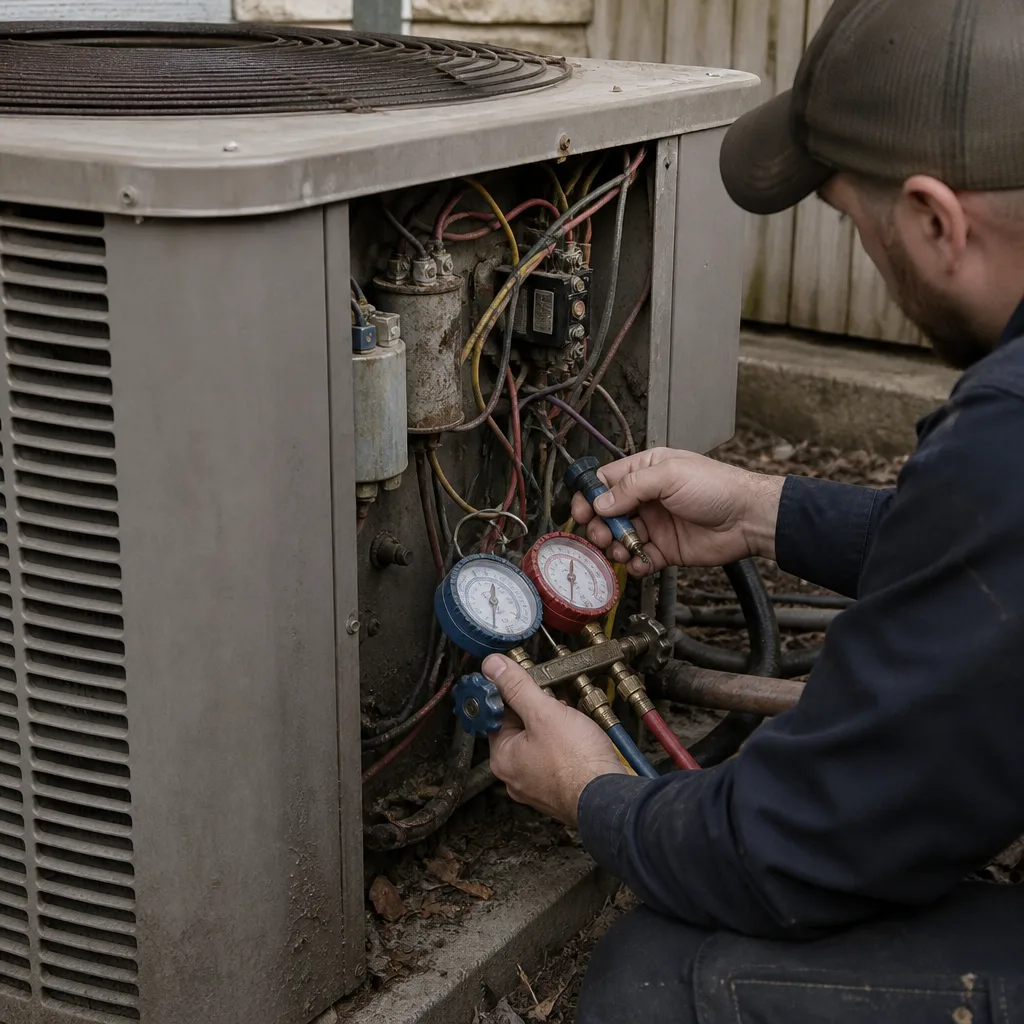 Before
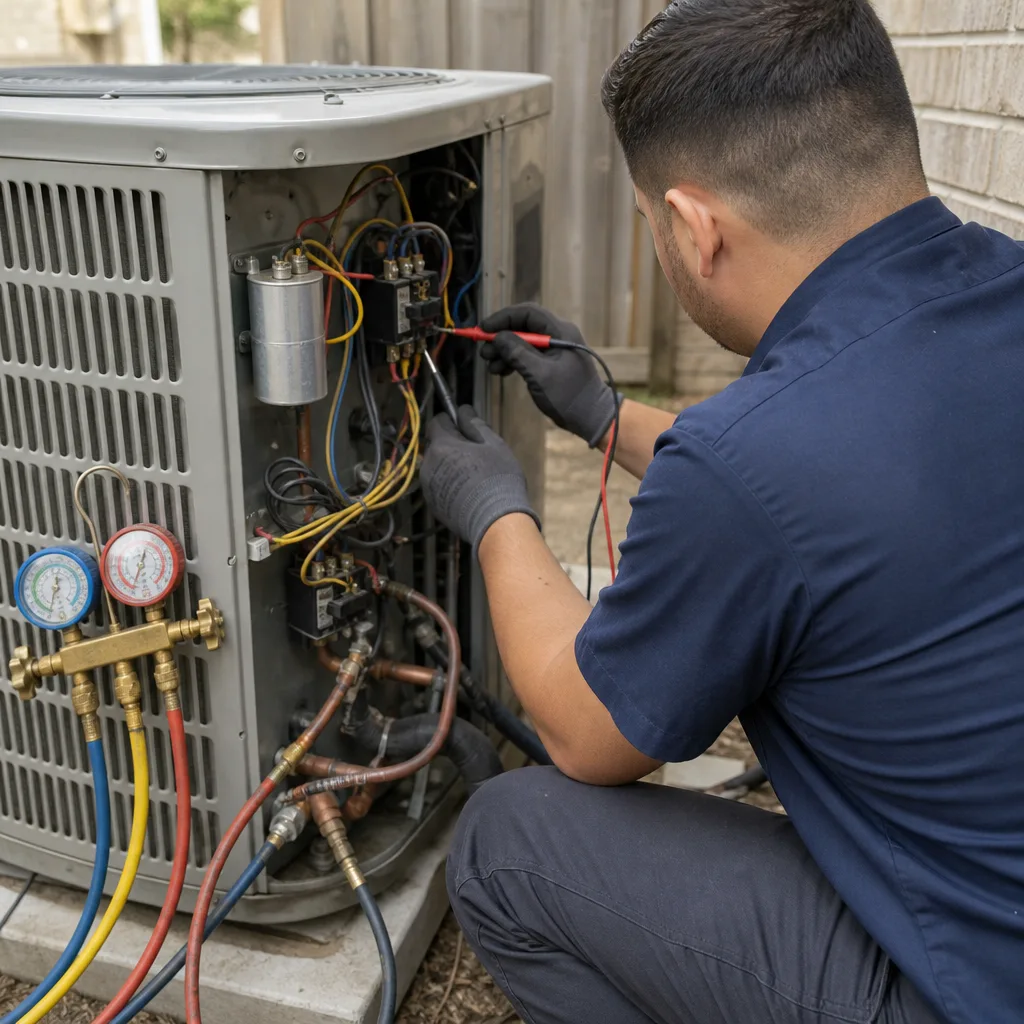 After
After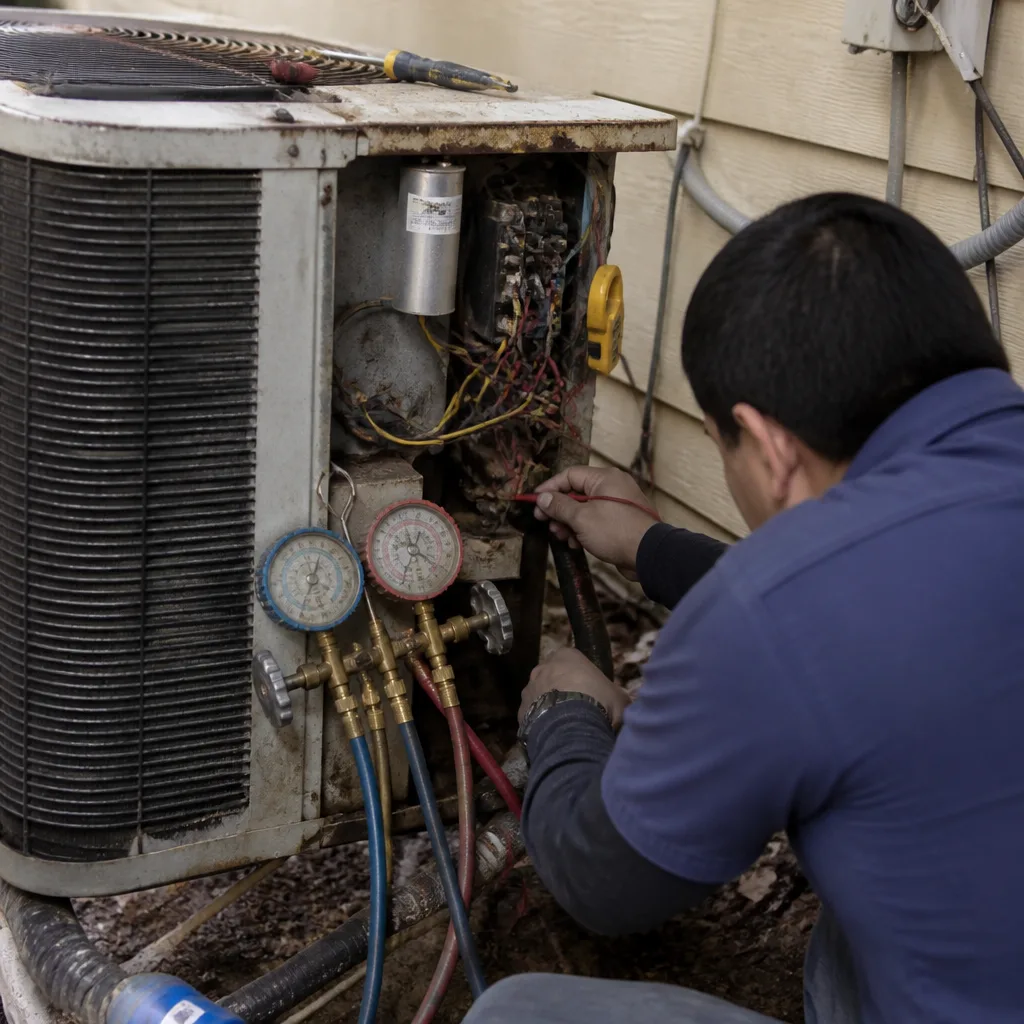 Before
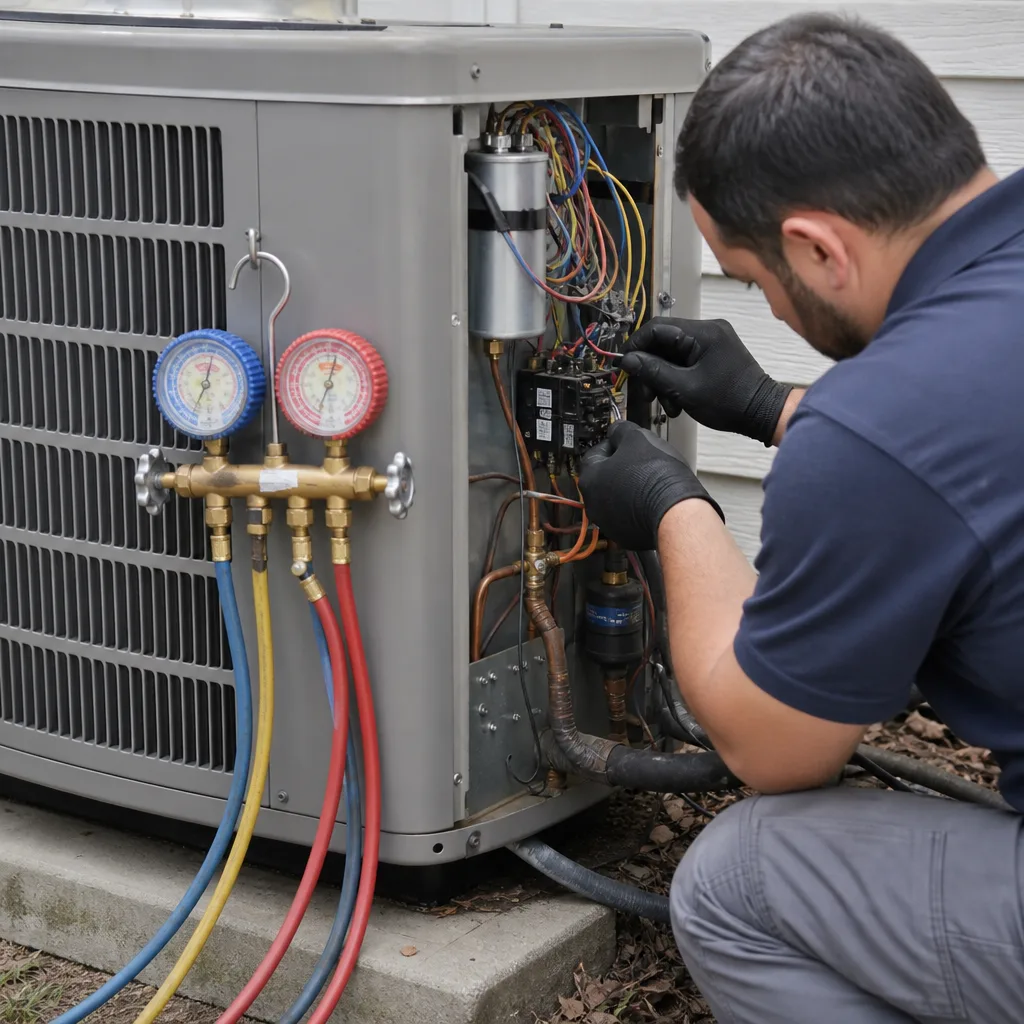 After
After Before
 After
After