
Last updated October 16, 2026
 AC repair
 Furnace & heating
 Heat pumps
 Ductless mini splits
 Carrier
 Trane
Trane Goodman
Seasonal tune-up and full diagnostic on your Carrier, Trane, or Goodman system - readings shown to you before any repair is proposed
Diagnosis first, numbers second - you approve the repair price before a single part goes in.
Get your free estimateHVAC Cost Breakdown: The Fort Worth Homeowner’s Reference for 2026
The equipment on a Fort Worth HVAC replacement quote is priced off a distributor sheet any contractor can pull. The real cost variation between a $7,400 quote and an $11,200 quote for the same Carrier unit is almost entirely in labor, refrigerant charges, and disposal fees, which most homeowners never ask to see itemized. This guide breaks the math open so you can evaluate any quote on its components, not just its bottom line. We’ll show you what each line item should cost in the Fort Worth market in 2026, which fees are legitimate, which ones signal padding, and how financing actually changes the total price you pay.
Quick Answer
A full HVAC system replacement in Fort Worth, TX in 2026 typically costs $7,200 to $12,800 for a standard 2,500 to 3,000 square foot home, with equipment accounting for roughly 45-55% of that total and labor, refrigerant, permits, and disposal making up the rest. A new 3-ton system with a mid-tier brand like Carrier or Lennox averages about $8,900 installed, while a furnace repair in Fort Worth runs $150 to $450 for most part replacements. The single most effective way to avoid overpaying is to require an itemized quote that separates equipment, labor hours, refrigerant, and fees before you sign anything.
Styles & brands we work with
Table of Contents
- What Equipment Actually Costs in 2026
- Installation Labor Rates in the DFW Market
- The Refrigerant Line Item Exposed
- Permit, Disconnect, and Haul-Away Fees in Tarrant County
- Financing Math: What a Payment Plan Really Costs
- Repair vs. Replace: How to Decide Without Bias
- How to Read a Quote Line by Line
- Common Mistakes to Avoid
- When to Call a Professional
- Frequently Asked Questions
What Equipment Actually Costs in 2026
Before we get into labor and fees, you need to know what the equipment itself costs. This is the fixed part of your quote, and it’s the same regardless of which contractor you hire. Any HVAC company in Fort Worth pulls from the same regional distributor sheets. What changes is the markup they apply, and how much they bury in the labor line.
Here are the 2026 equipment price ranges for the most common residential system sizes in Fort Worth, with brand tiers named. These are the prices a contractor pays at the distributor, not what you pay installed.
2-Ton Systems
- Goodman: $1,900 to $2,400 (condenser + evaporator coil + furnace or air handler)
- Lennox: $2,600 to $3,200
- Carrier: $2,700 to $3,300
- Rheem: $2,400 to $2,900
3-Ton Systems
- Goodman: $2,200 to $2,700
- Lennox: $3,000 to $3,700
- Carrier: $3,100 to $3,800
- Rheem: $2,700 to $3,300
4-Ton Systems
- Goodman: $2,500 to $3,100
- Lennox: $3,400 to $4,200
- Carrier: $3,500 to $4,300
- Rheem: $3,000 to $3,700
5-Ton Systems
- Goodman: $2,900 to $3,600
- Lennox: $3,900 to $4,900
- Carrier: $4,000 to $5,000
- Rheem: $3,500 to $4,400
Those numbers tell you something important: the brand spread on equipment is real, but it’s not enormous. A Carrier 3-ton package runs about $1,000 more than a comparable Goodman at the distributor. That’s a legitimate difference in build quality, warranty terms, and parts availability. What’s not legitimate is a $4,000 spread between two quotes for the same brand and tonnage. When you see that, the difference is in labor and fees, not equipment.
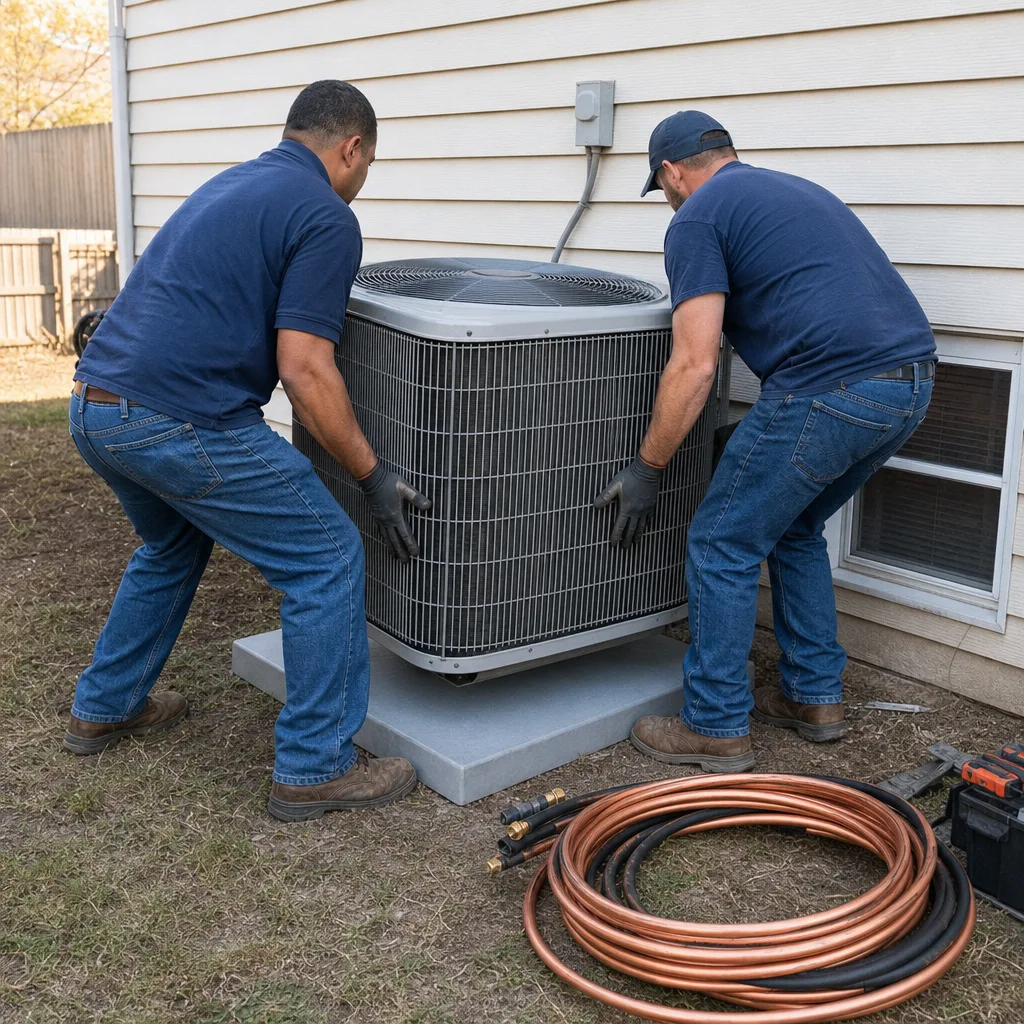
Fort Worth summers run hot from May through September, and a system that’s sized wrong will struggle. We’ve replaced units in Wedgwood and Ridglea Hills where a previous contractor installed a 4-ton system in a house that needed a 3-ton, or vice versa, usually because the contractor wanted to move a bigger ticket. A proper load calculation (Manual J) accounts for square footage, window orientation, insulation, and the specific heat load of a North Texas attic. Any contractor who quotes a system size without doing that calculation is guessing, and you’ll pay for the guess in utility bills and premature wear.
One more thing on equipment: the 2026 refrigerant transition. New residential systems are being manufactured for R-454B, and that’s what you want. More on that in the refrigerant section below.
Installation Labor Rates in the DFW Market
Labor is where quotes diverge, and it’s the line item most contractors prefer you never see. In the DFW market in 2026, installation labor for a full system replacement runs $85 to $125 per hour per technician. A two-person crew installing a standard changeout (condenser, coil, furnace or air handler) typically takes 6 to 10 hours. That puts labor at roughly $1,020 to $2,500 for a typical replacement.
Here’s how to spot labor padding in a bundled quote:
- Ask for the labor hours. A full system swap should list the number of techs and the hours. If the contractor refuses to break out labor from equipment, that’s a red flag.
- Do the math yourself. Take the quote total, subtract the equipment price from the section above, subtract refrigerant, permit, and haul-away. What’s left is labor. If that number exceeds $2,500 for a standard changeout, ask why.
- Watch for “flat-rate” labor on simple jobs. Flat-rate pricing is fine, but a flat rate that’s double market rate is not. A standard changeout is not a complex job for a trained crew.
- Compare the same system size and brand. Labor can’t be compared across different equipment. Same brand, same tonnage, same scope. Only then compare labor.
We run into a lot of homeowners in Fort Worth who got three quotes and picked the middle one without checking the labor. Then they later discovered the middle quote had $3,800 in labor buried in a “package price” while the other two had $1,800 and $2,000. The equipment was identical. That’s a $1,800 to $2,000 overcharge on labor alone.
The Garrison Standard, which Dalton Heating & Air has operated under since 2003, requires written pricing before any work starts, with labor, equipment, and fees listed separately. That’s not a sales tactic. It’s the only way a homeowner can actually verify they’re not getting padded.
The Refrigerant Line Item Exposed
Refrigerant is the most misunderstood line on any HVAC quote in Fort Worth right now, and it’s where some contractors quietly add $400 to $800.
Here’s the situation. The HVAC industry is mid-transition. R-410A, the refrigerant used in residential systems for the past 15-plus years, is being phased down under EPA rules. The replacement is R-454B, which has a much lower global warming potential. New equipment manufactured in 2025 and 2026 is designed for R-454B.
What does this mean for your quote?
- New R-454B systems include a factory refrigerant charge. The unit ships with the refrigerant already inside. Installation should not add a separate refrigerant line item for a new system, except possibly a small charge for line set length beyond the factory assumption (roughly 15 feet). For line sets longer than that, expect $40 to $60 per additional pound.
- R-410A equipment is still being sold. Contractors with older inventory may quote R-410A systems at a discount to clear them out. That’s not automatically a bad deal, but understand what you’re buying: R-410A will get more expensive and harder to find every year. A recharge in 2028 or 2030 could cost $200 to $400 more than it does today.
- A full R-410A recharge on an existing system runs $120 to $200 per pound in Fort Worth in 2026, including leak detection and the refrigerant itself. A typical 3-ton system holds 6 to 10 pounds. That’s $720 to $2,000 for a full recharge, which is why a leak often tips the scale toward replacement.
If a contractor quotes R-410A on a new system without explaining the phase-down, that signals one of two things: they’re clearing old inventory and not telling you the long-term implication, or they’re not tracking the regulatory timeline. Either way, ask the direct question: “Is this R-410A or R-454B, and what does that mean for my refrigerant costs five years from now?” A good contractor gives you the straight answer. Our Heat Pump Installation in Fort Worth page covers the refrigerant transition in more detail for heat pump buyers.
Permit, Disconnect, and Haul-Away Fees in Tarrant County
This is the section where homeowners in Fort Worth get nickel-and-dimed, and it’s usually because they don’t know what these fees should cost. Here’s the straight breakdown for Tarrant County in 2026.
Permit Fee
A mechanical permit for an HVAC replacement in Fort Worth runs $75 to $150 depending on the scope of work and whether it’s a simple changeout or includes ductwork modification. The permit is pulled by the contractor, and the fee is a pass-through cost. Some contractors mark this up. It should not be marked up. If you see a $300 or $400 permit line on a quote for a standard replacement, that’s padding.
Electrical Disconnect Fee
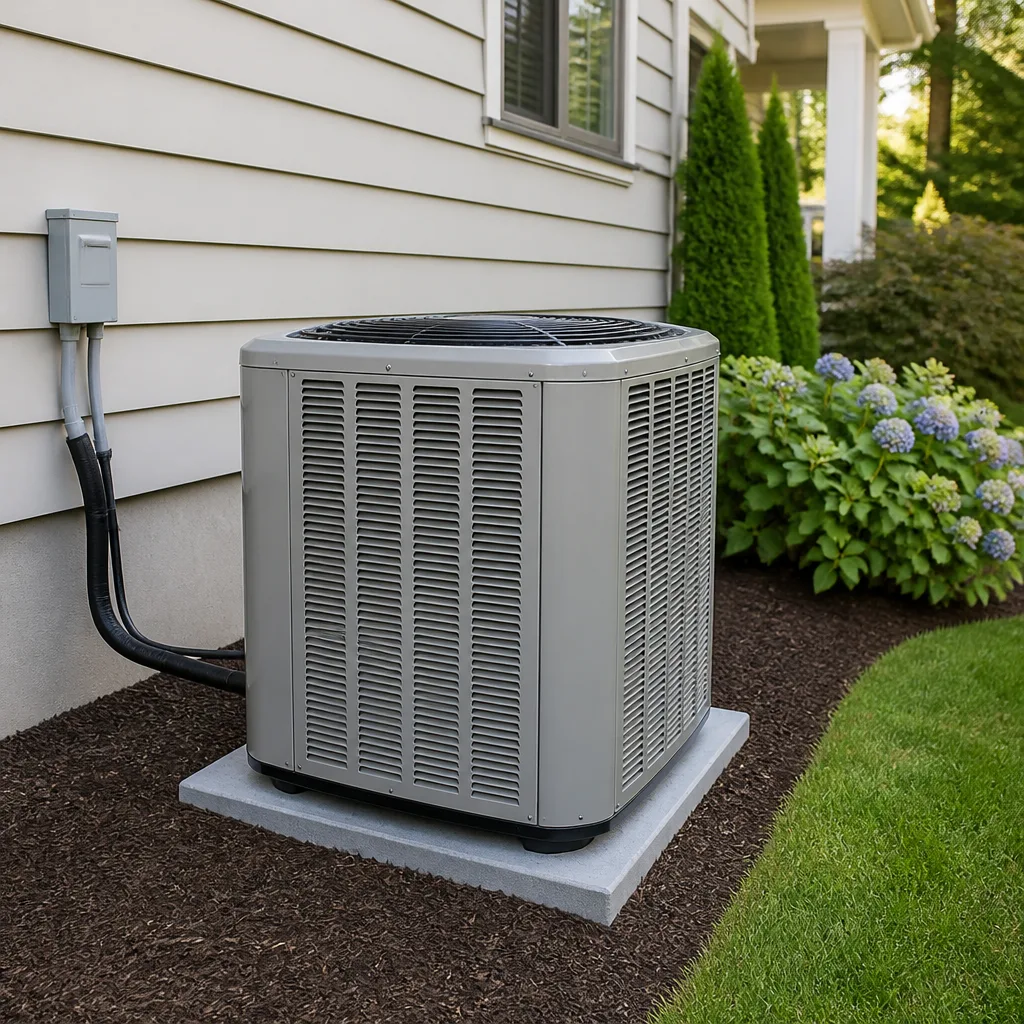
The disconnect is the electrical box mounted next to your outdoor unit that lets a technician cut power to the condenser. On a full system replacement, the disconnect should be replaced as standard practice. The disconnect itself costs $30 to $60 at supply houses. Including it in the job should add no more than $80 to $120 total for the part and the labor to wire it. On a competitive quote, this line item should be $0 because it’s already bundled into the labor. If a contractor is charging a separate $200 “electrical disconnect fee,” that’s a profit line, not a cost line.
Haul-Away Fee
Removing the old condenser, coil, and furnace or air handler and taking them for recycling costs the contractor about $40 to $80 in disposal fees and fuel. Some charge $150 to $300 for haul-away. On a competitive quote, haul-away should be $0 to $100. Any contractor charging more is making margin on your trash.
What Should Be $0
- Estimates. A written estimate should be free. We don’t charge for them at Dalton Heating & Air Fort Worth, and any contractor who does in Fort Worth is unusual.
- Load calculations. The Manual J sizing calculation should be included with the estimate. It’s part of doing the job correctly, not an add-on.
- Basic permits. On many Tarrant County changeouts, the permit fee is part of the standard job cost, not a separate surprise.
The lesson here: every fee on your quote should be named, priced, and justifiable. “Miscellaneous fees” or “admin fee” or “processing fee” on an HVAC quote in Fort Worth are not justifiable. They’re margin dressed up as costs.
Financing Math: What a Payment Plan Really Costs
Financing is not free money, and the math is easier to see than most homeowners realize. Here’s the breakdown on a $9,000 system replacement in Fort Worth.
Cash Purchase
You pay $9,000 today. Total cost: $9,000. You’re done.
60-Month Payment Plan
A typical HVAC financing offer in 2026 carries an APR between 7.99% and 9.99% for qualified buyers, or a promotional 0% for 12 to 18 months with a deferred interest clause. Let’s do the math on the standard 60-month plan at 8.99% APR.
- Monthly payment: approximately $187
- Total paid over 60 months: approximately $11,220
- Total interest paid: approximately $2,220
That $2,220 is the real cost of financing. No one calls it that on the sales sheet, but it’s there.
When Financing Actually Makes Financial Sense
- Your system has failed in July and you don’t have $9,000 in cash. A Fort Worth summer without air conditioning is not a comfort issue, it’s a health risk for elderly residents, infants, and anyone with respiratory conditions. Financing a replacement you can’t otherwise afford is the correct call.
- The promotional 0% period is real and you’re disciplined. If you can pay the full balance inside the 12 or 18 month window, you pay $0 in interest. The risk is deferred interest: miss the payoff deadline and you owe all the back interest from day one. Read that clause carefully.
- You’re installing a high-efficiency system that qualifies for a utility rebate. If the rebate covers most of the interest, financing is close to neutral.
If you have the cash and you’re choosing financing anyway, you’re paying $2,000-plus for the convenience of spreading out the cost. Sometimes that’s worth it. But it should be a decision, not a default.
Repair vs. Replace: How to Decide Without Bias
This is the question every Fort Worth homeowner eventually faces, and it’s the one where contractor bias shows up most clearly. A contractor who makes more money on replacements will tell you to replace. A contractor who makes solid margins on repairs will tell you to repair. Here’s the neutral framework.
Use the $5,000 Rule
Multiply the system’s age by the repair cost. If that number exceeds $5,000, replacement is usually the better financial decision. A 10-year-old system needing a $600 compressor repair: 10 × 600 = $6,000. Replace. A 6-year-old system needing a $400 blower motor: 6 × 400 = $2,400. Repair.
Consider the Refrigerant
If your system is R-410A and it’s leaking, you’re looking at a recharge cost that will only climb. A leak repair plus recharge on a 12-year-old system in Fort Worth can run $1,500 to $2,500. That money goes into a system with a compressor that has already seen a decade of Texas heat. Often the smarter move is putting that same money toward a new R-454B system with a 10-year parts warranty.
Look at the Total, Not the Single Repair
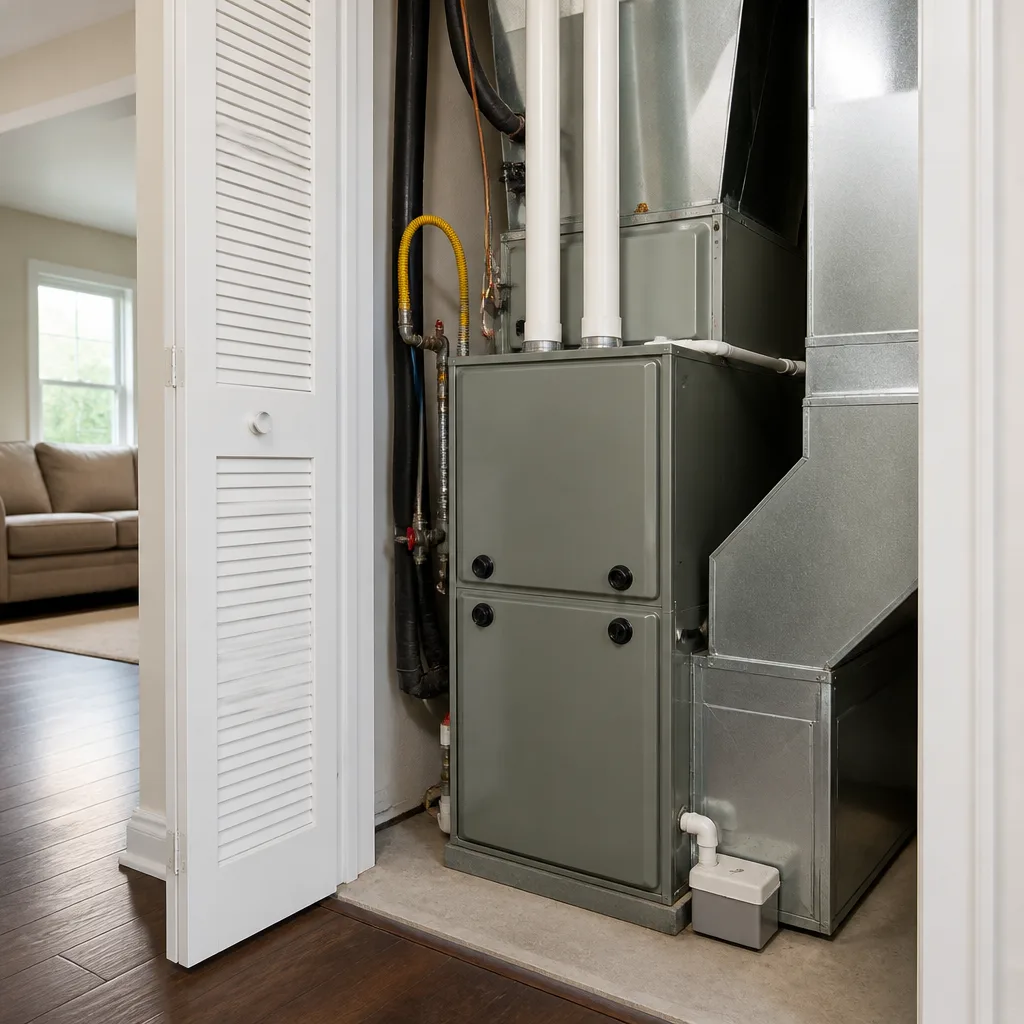
When we get called out for a Furnace Repair in Fort Worth, we’ll tell the homeowner the truth: if the furnace is 15 years old and the heat exchanger is cracked, that $800 repair buys maybe two more winters. A new furnace is $3,800 to $5,500 installed. The repair isn’t wrong, but it’s not a long-term solution.
Ask About the Warranty Stakes
Most manufacturers require the system to be registered within 60 or 90 days of installation to get the full 10-year parts warranty. If your system wasn’t registered, you may have only a 5-year base warranty. If it’s 6 years old and unregistered, you have no parts coverage. That tips the math toward replacement.
Our AC Repair in Fort Worth page walks through the repair decision in more detail, including what diagnostics should be included in a service call.
How to Read a Quote Line by Line
Here’s the exact process we recommend to every Fort Worth homeowner who calls us with three quotes and no idea how to compare them.
- Confirm the equipment matches. Same brand, same model family, same tonnage, same SEER2 rating. If one quote is for a 14 SEER2 Goodman and another is for a 17 SEER2 Carrier, you’re not comparing the same thing. Ask each contractor to quote the same spec.
- Pull the equipment price out. Use the ranges in the section above. Mark up the equipment 15-25% to account for the contractor’s overhead and warranty exposure. That’s fair.
- Check the labor line. Does it list hours and rate? If not, ask. If the contractor won’t tell you, walk away.
- Review every fee. Permit, disconnect, haul-away, miscellaneous. Each one should have a name and a price you can justify. “Miscellaneous” is not a name.
- Check the warranty terms. The equipment warranty (10-year parts with registration is standard) and the labor warranty are separate things. A contractor who offers a 1-year labor warranty in writing is standing behind the install. A contractor who offers 30 days is hoping it works.
- Confirm what’s included. Does the quote include a new thermostat? New line set? A pad for the condenser? Duct sealing? Two quotes can look $800 apart and actually be $800 apart in scope, not price.
If you want a quote you can actually verify at the component level, call us at Dalton Heating & Air Fort Worth home. Written price before any work starts is The Garrison Standard, and it’s been that way since 2003.
Common Mistakes to Avoid
- Comparing total quotes without checking the equipment. A $7,900 quote with a 14 SEER2 Goodman is not a better deal than a $9,200 quote with a 16 SEER2 Carrier. You’re comparing a Honda Civic to a Honda Accord. Match the specs first.
- Accepting a quote that doesn’t separate labor from equipment. A bundled quote is a bundled margin. If you can’t see what the labor costs, you can’t evaluate whether it’s fair. In our experience in Fort Worth, the contractors who bundle are the ones who overcharge.
- Paying for a permit that was never pulled. Some homeowners pay the permit fee and the contractor never files the paperwork. Ask for the permit number after installation. In Tarrant County, you can verify a mechanical permit with the city or county records office.
- Financing at a high APR without doing the math. The difference between cash and a 60-month plan at 9% APR is over $2,000 on a $9,000 system. That’s real money. Run the numbers before you sign the financing agreement.
- Skipping the load calculation. If a Fort Worth contractor sizes your system by “rule of thumb” (typically 500 square feet per ton), they’re not accounting for your home’s insulation, window exposure, or the specific heat load of a North Texas attic in August. That’s how you end up with a system that short-cycles or never keeps up.
- Buying R-410A equipment without knowing the phase-down plan. New R-410A systems are still being sold to clear inventory. They work fine today, but refrigerant costs will rise every year. Know what you’re buying and why.
- Replacing a system when a repair would do. If the $5,000 rule says repair, repair. A good contractor in Fort Worth will tell you when replacement isn’t necessary, because they value the long-term relationship over the one-time ticket.
When to Call a Professional
An HVAC system involves high-voltage electrical work, pressurized refrigerant, and natural gas lines on the furnace side. None of those are DIY territory. If you’re seeing ice on the refrigerant lines, hearing grinding from the condenser fan, smelling gas near the furnace, or your system is short-cycling in a Fort Worth July, shut it down and call a pro. Electrical and gas components carry real risk of fire, shock, or injury when handled by someone without training. The best thing a homeowner can do is know what the repair should cost, what the quote should include, and when to walk away. Dalton Heating & Air Fort Worth offers free estimates in Fort Worth, call (817) 730-5369.
Frequently Asked Questions
A new HVAC system in Fort Worth, TX in 2026 typically costs $7,200 to $12,800 installed, depending on system size, brand, and efficiency rating. A mid-tier 3-ton system from Carrier or Lennox averages about $8,900, while a 5-ton high-efficiency system can exceed $13,000. The price spread is mostly in labor and fees, not equipment. Call (817) 730-5369 for an itemized quote on your specific home.
Use the $5,000 rule: multiply your system’s age by the repair cost. If the result exceeds $5,000, replacement usually makes more sense. For example, a 10-year-old system needing a $600 repair scores 6,000, which tilts toward replacement. A 6-year-old system needing a $400 repair scores 2,400, which tilts toward repair. Ask the contractor to show you the math on both options.
Fort Worth HVAC quotes vary because labor rates, refrigerant charges, permit fees, and haul-away costs are not standardized across contractors. The equipment price from the distributor is roughly the same for everyone, so a $3,000 to $4,000 spread on the same brand and tonnage is almost entirely in the labor and fee lines. Request an itemized breakdown to see where the difference is.
A fair labor rate for HVAC installation in the Fort Worth and DFW market in 2026 is $85 to $125 per hour per technician. A standard system changeout takes 6 to 10 hours for a two-person crew, putting total labor at roughly $1,020 to $2,500. If your quote implies labor above $2,500 for a standard changeout, ask for a detailed labor breakdown.
Yes, HVAC replacements in Fort Worth require a mechanical permit, which costs $75 to $150 in Tarrant County. The contractor pulls the permit, and the fee is typically a pass-through cost. Ask for the permit number after installation to confirm it was actually filed. Some contractors charge the fee without pulling the permit, which leaves you liable.
Financing an HVAC system makes sense if your system has failed and you don’t have cash reserves, because a Fort Worth summer without air conditioning is a health risk. On a 60-month plan at 8.99% APR, a $9,000 system costs about $11,220 total, meaning you pay $2,220 in interest. A 0% promotional period can work if you pay the full balance before the promo ends and avoid deferred interest penalties.
The Bottom Line
The difference between a $7,400 quote and an $11,200 quote for the same HVAC system in Fort Worth is rarely about the equipment. It’s about labor hours, refrigerant charges, permit markups, haul-away padding, and fees with vague names. The homeowner who asks for an itemized breakdown, knows what each line should cost, and refuses to sign a quote that won’t separate labels from labor is the homeowner who doesn’t overpay. This guide gives you the numbers.
If you want a quote that comes with the line items already separated, the price in writing before any work starts, and a full-year guarantee on every repair, call Dalton Heating & Air Fort Worth at (817) 730-5369. We’ve been doing it that way since 2003 under The Garrison Standard, and we’re not changing. For more guides & resources, visit our blog.
Written by Marco Benitez, Owner at Dalton Heating & Air Fort Worth, serving Fort Worth since 2003.
See the difference
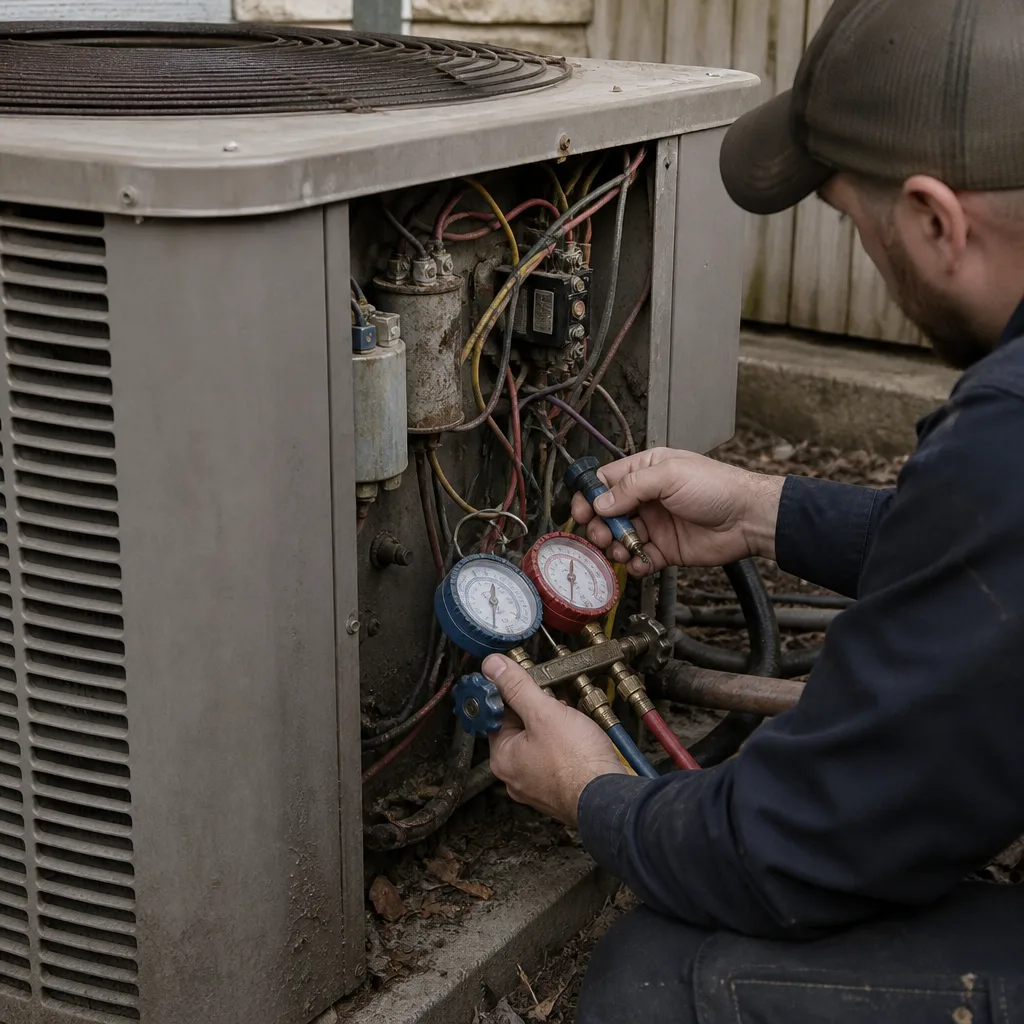 Before
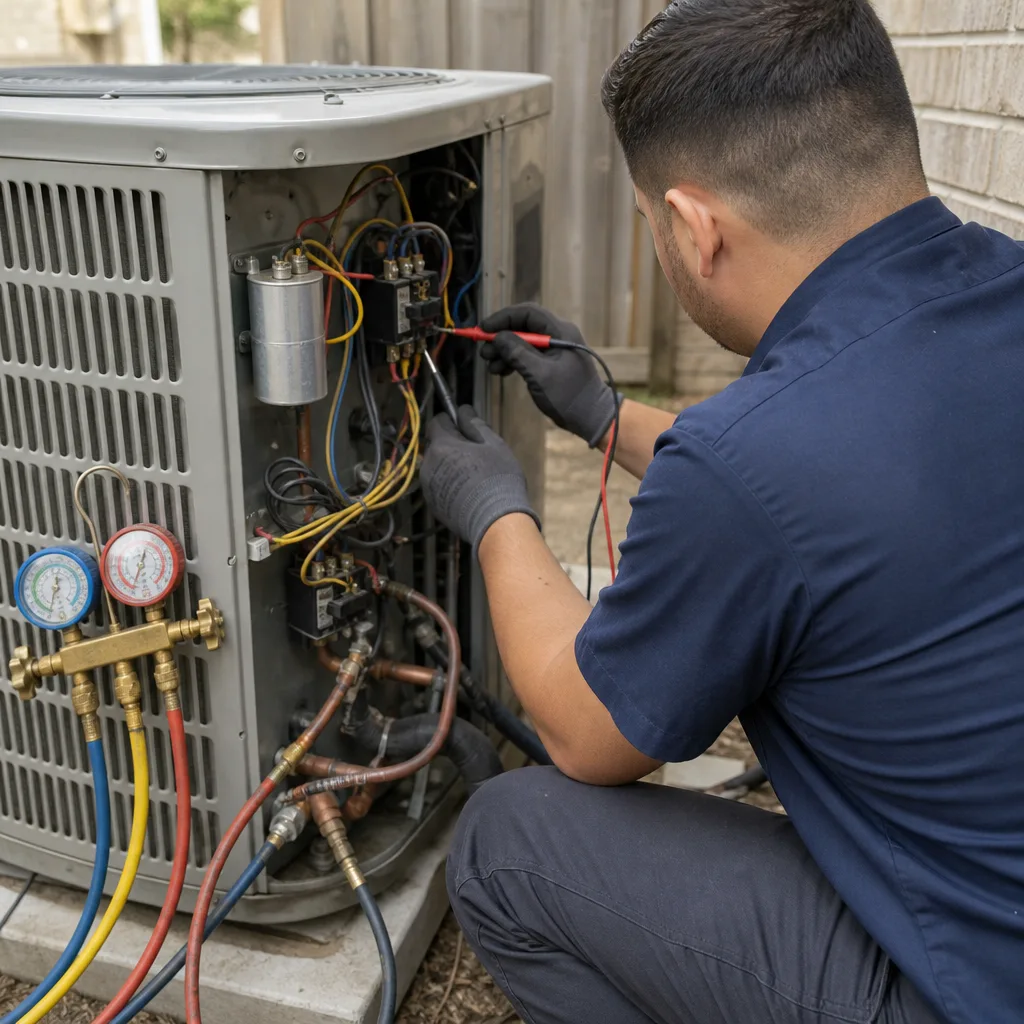 After
After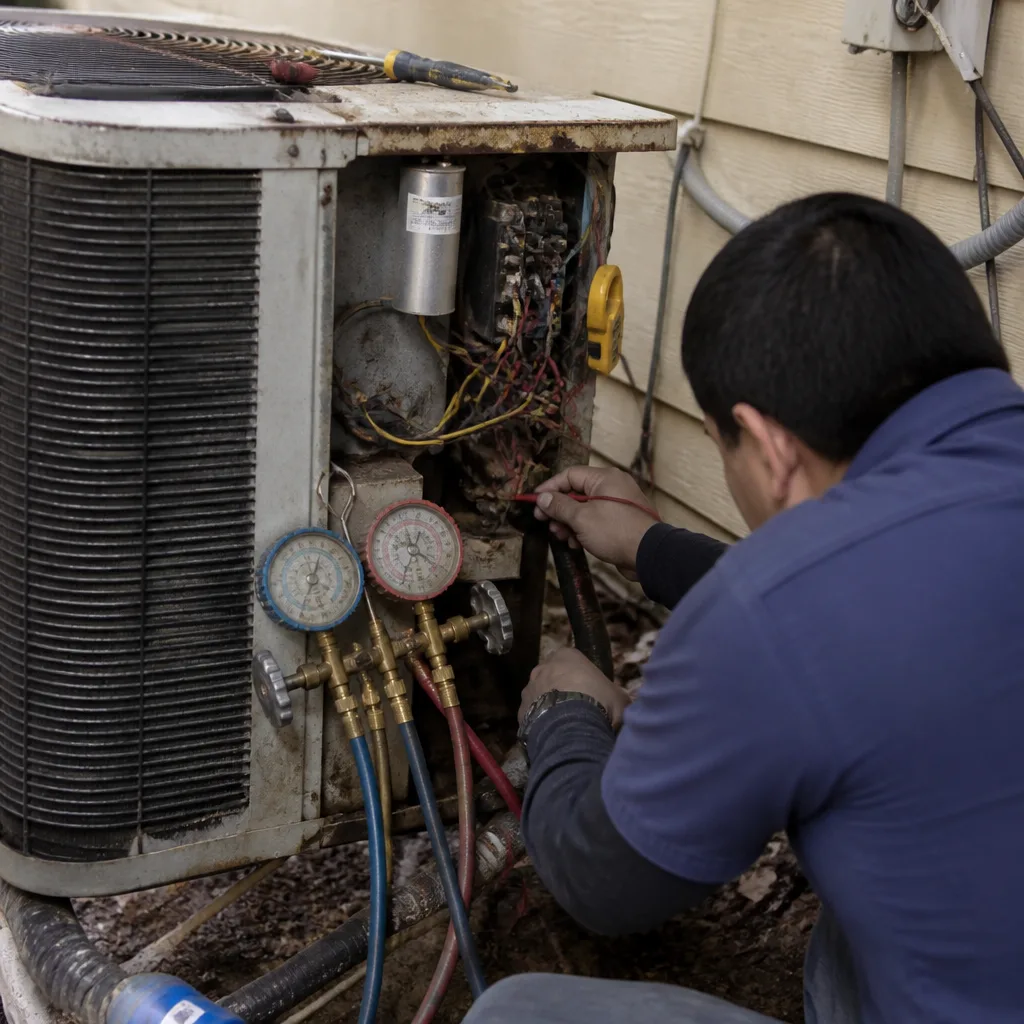 Before
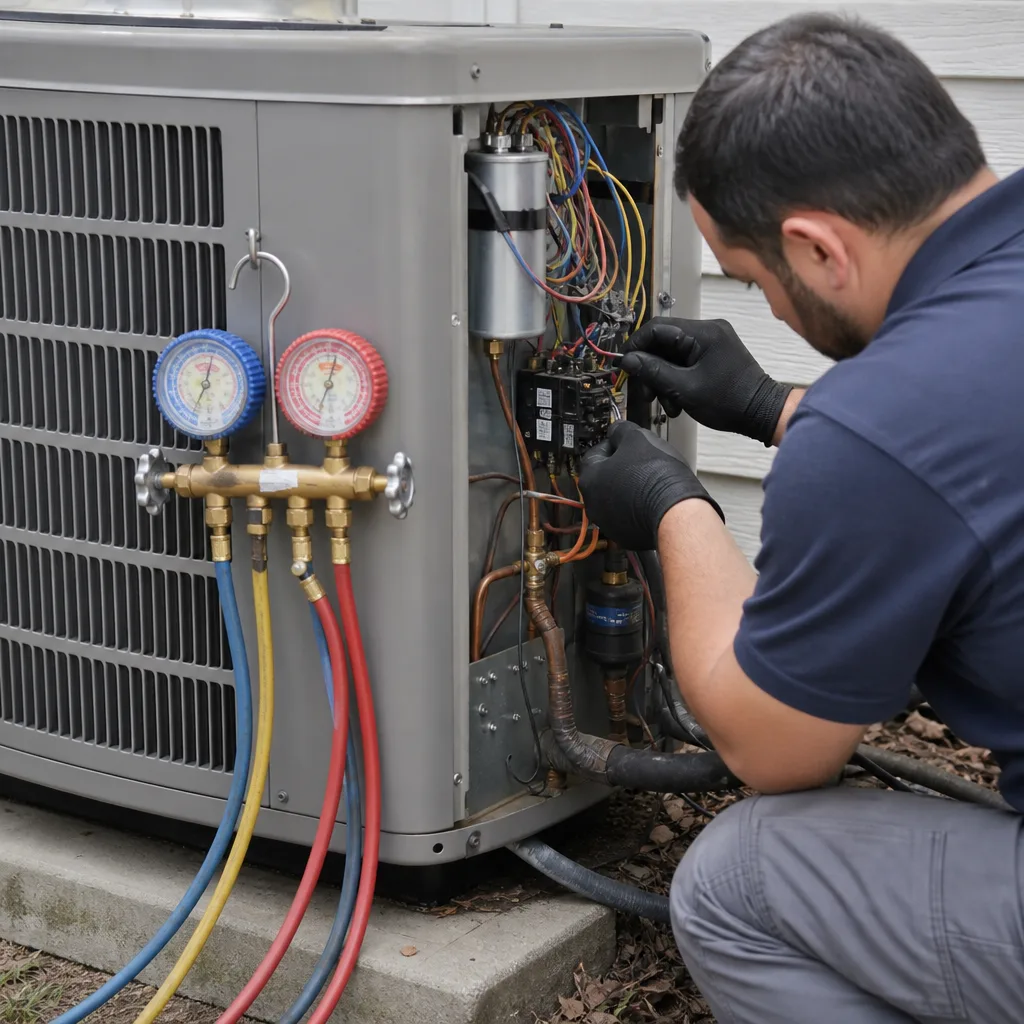 After
After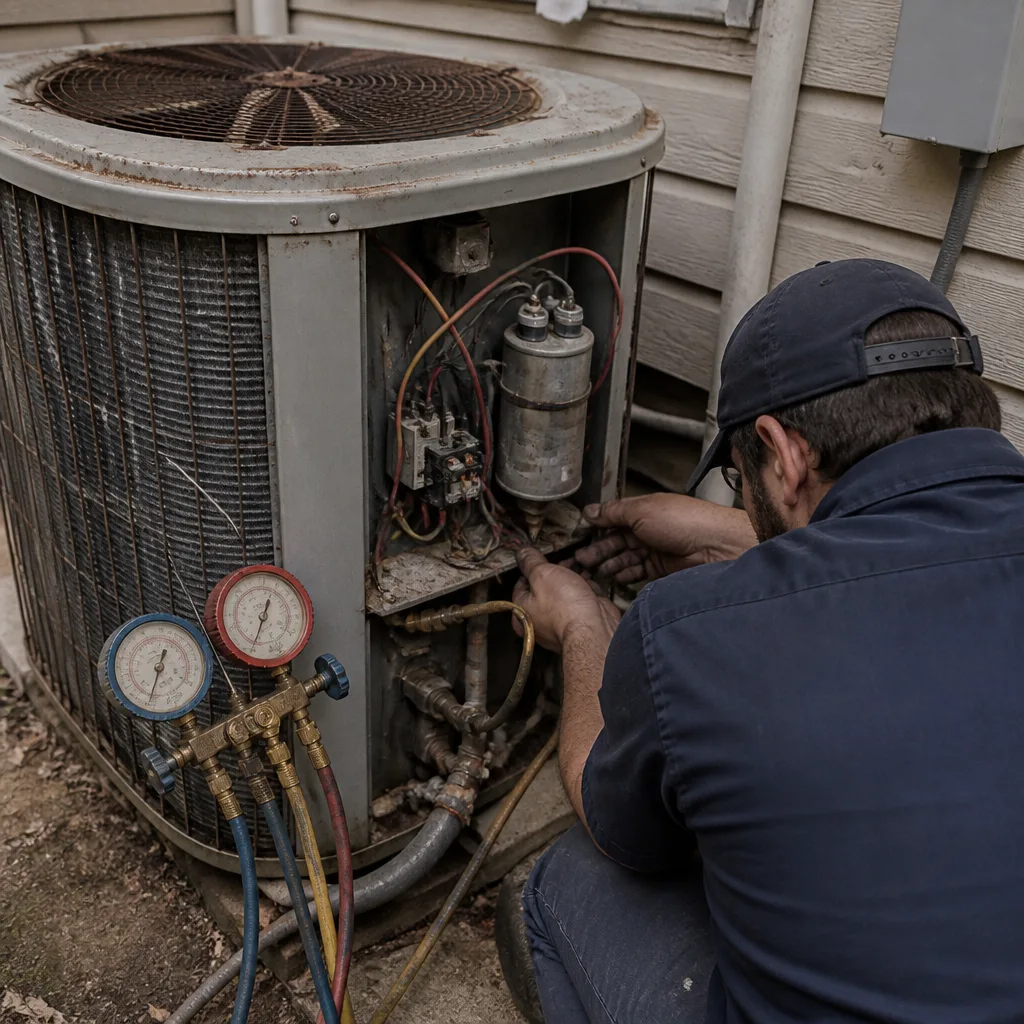 Before
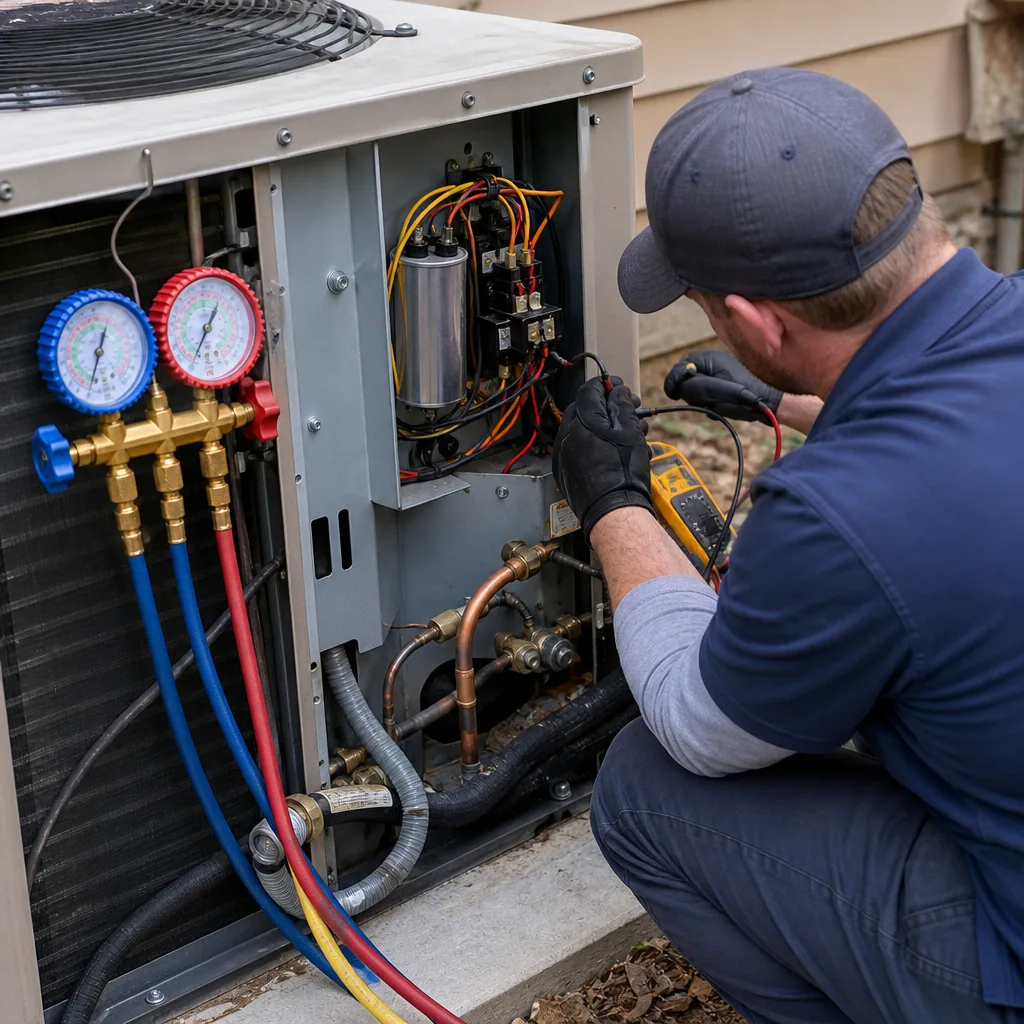 After
After