
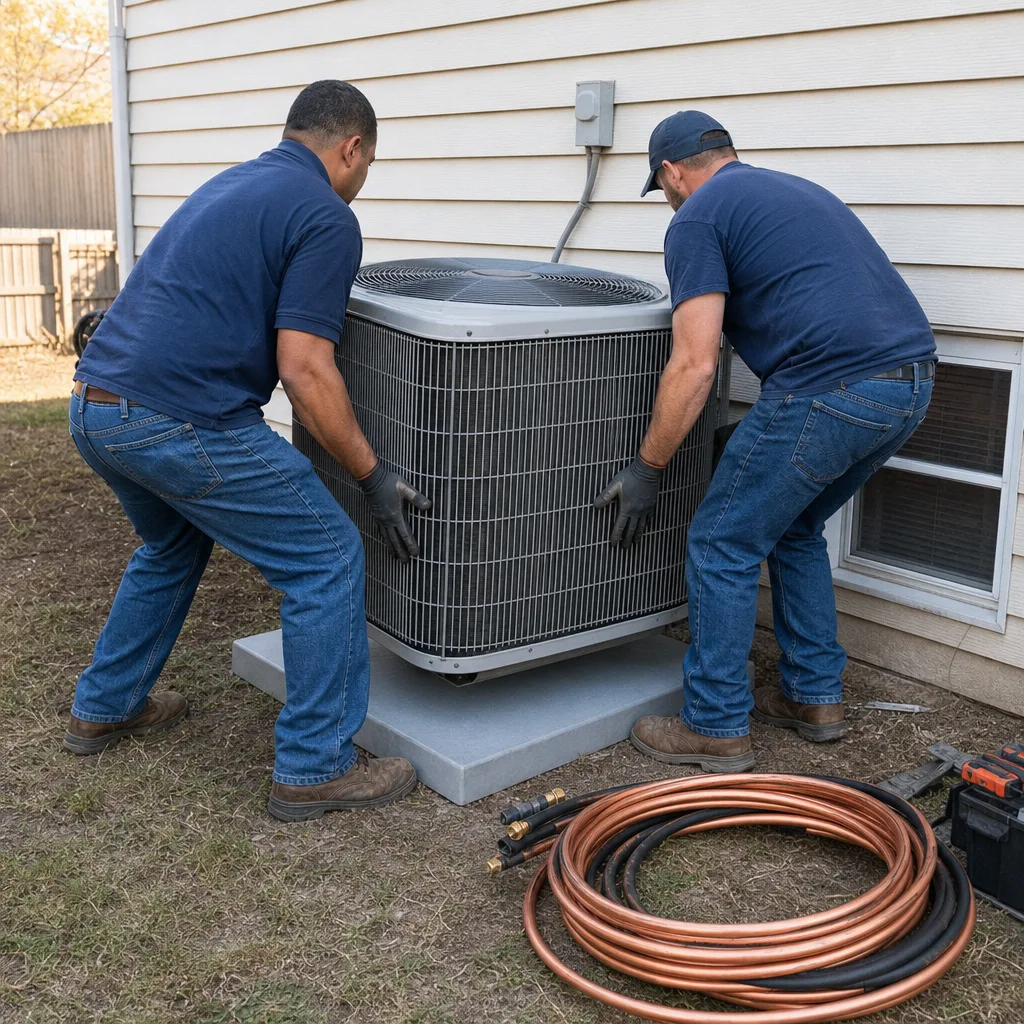
Last updated October 16, 2026
 AC repair
 Furnace & heating
 Heat pumps
 Ductless mini splits
 Carrier
 Trane
Trane Goodman
Seasonal tune-up and full diagnostic on your Carrier, Trane, or Goodman system - readings shown to you before any repair is proposed
Diagnosis first, numbers second - you approve the repair price before a single part goes in.
Get your free estimateHow to Hire a HVAC Contractor in Fort Worth: A Step-by-Step Guide
Texas is one of the few states that does not require an HVAC company itself to hold a contractor’s license. Only the technician who shows up at your door must carry a state-issued TACLB license. That means the company name printed on your invoice and the license that legally covers your repair can belong to two entirely different people. This guide gives Fort Worth homeowners a structured vetting process: exactly which questions to ask, which answers should make you walk away, and what a clean written quote must contain before you sign anything. For more guides & resources on protecting your home investment, see our blog. We’ll cover license verification, permit requirements in Tarrant County, warranty language that actually protects you, and a five-question call script that separates contractors who’ll hold their price from the ones who won’t.
Quick Answer
To hire an HVAC contractor in Fort Worth, verify the technician’s TACLB license number on the Texas Department of Licensing and Regulation website, require a written quote that itemizes equipment, labor, permits, and refrigerant separately, confirm the contractor will pull a permit for any equipment replacement, and get the warranty terms in writing including who pays labor on a failed part. A contractor who won’t put these specifics in writing before work starts is one you should not hire.
Styles & brands we work with
Table of Contents
- Verify the Technician’s TACLB License Before Anything Else
- What a Legally Clean Written Quote Must Include in Texas
- Why Permits Matter in Tarrant County and How to Confirm One Was Pulled
- How to Evaluate a Warranty Offer Without Getting Burned
- The Five-Question Call Script That Separates Serious Contractors
- Red Flags That Show Up Before the Tech Even Arrives
- What Fort Worth Homeowners Need to Know About HVAC Work
- The Step-by-Step Hiring Process, Start to Finish
Verify the Technician’s TACLB License Before Anything Else
Here’s the landscape in Fort Worth and across Texas: the company you call may have a nice website, a fleet of wrapped vans, and a polished invoice template. None of that means the person standing in your hallway is legally allowed to touch your system. Texas licenses technicians, not companies. The individual performing the work must hold a TACLB air conditioning and refrigeration contractor license or technician certification. This is not a formality. An unlicensed tech working on your system means you’re exposed on insurance liability, code compliance, and any warranty claim you might need to make later.
Verification takes under two minutes. Go to the Texas Department of Licensing and Regulation website, navigate to the license search tool, and enter the technician’s name or license number. The TACLB number should be printed on the side of the service vehicle or on the technician’s badge. If it isn’t, ask for it. A legitimate technician will have no hesitation providing a license number. If the response is a vague explanation, a redirected answer, or a claim that “the company is licensed so I don’t need my own,” you’ve found a red flag.
Once you have the number, confirm three things on the TDLR database: the license is active, it belongs to the person who will actually perform the work, and there are no disciplinary actions listed. A license with sanctions isn’t necessarily disqualifying, but you want to know what happened and whether the issue is resolved. We’ve seen Fort Worth homeowners accept a repair quote only to discover later that the technician on site was working under someone else’s license number. That’s illegal in Texas, and it voids any protection you thought you had.
Here’s the process in order:
- Ask the company who will arrive at your home, and get that person’s full name and TACLB license number over the phone or by email before the appointment.
- Search the TDLR database at the time of the call. Don’t wait until after the work is done.
- When the tech arrives, check their badge and the number on their vehicle against the information you verified. If the names or numbers do not match, do not let the work begin.
- If you’re hiring for a significant job like a full system replacement or a heat pump installation in Fort Worth, confirm in writing that the technician whose license you verified will be on site for the duration of the project.
The licensing asymmetry is a structural feature of the Texas HVAC market. Contractors who exploit it count on you not knowing it exists. The moment you ask for a TACLB number by name, you’ve signaled that you understand the rules. Good contractors respect that. The rest usually hang up.
What a Legally Clean Written Quote Must Include in Texas
In Texas, an enforceable written quote for HVAC work should itemize the major cost components separately. When you receive a quote that lumps everything into one number with a phrase like “materials as needed” or “labor included where applicable,” you’re looking at a document that leaves room for the final bill to grow at the contractor’s discretion. The line items matter because they’re what you’ll compare when you get a second or third quote. They’re also what you’ll point to if the final invoice doesn’t match what you approved.
Here’s what a clean written quote for a Fort Worth HVAC job should list:
- Equipment model numbers. Not just “16 SEER AC unit.” The exact make and model, like a Carrier 24SCA5 or a Daikin DX16TC. Model numbers are how you verify efficiency ratings, check manufacturer rebates, and confirm the unit delivered matches the unit quoted.
- Labor hours and rate. Or a flat labor price for the job. What you don’t want is “labor: TBD based on conditions.” That’s the door someone walks your price increase through.
- Refrigerant quantity and price per pound. If the job involves refrigerant recharge (topping off the cooling fluid your system needs to reach set temperature), the quote should state how many pounds are included at what price. Any additional pounds should be priced out in advance.
- Permit fees. Whether the contractor is pulling the permit and what it costs. If the quote says “permit as needed,” ask for a definitive answer before signing.
- Materials and supplies. Duct tape, refrigerant line insulation, condenser pad, electrical disconnect, thermostat wire. These should have a fixed price, not an open-ended “materials as needed” clause.
- Start and completion dates. Not just “as soon as possible.” A date range in writing.
- Payment schedule. Specifically, what percentage is due upfront and what is due upon completion. In Texas, a contractor asking for more than a reasonable down payment (typically 10 to 30 percent on larger jobs) before work begins deserves scrutiny.
Vague language like “materials as needed” is the single most common way Fort Worth homeowners see prices shift between quote and invoice. The phrase legally allows the contractor to add line items you never approved. Insist on a fixed quote. If a contractor tells you a fixed quote is impossible because “we won’t know what we’ll find until we get in there,” that’s a fair concern for a repair on an older system. The solution is not an open-ended quote. The solution is a written price before work starts, with any deviations requiring your written approval before the work happens.
At Dalton Heating & Air Fort Worth, the written price quote is not an option or an upgrade. It happens before any work begins, on every job, without exception. The reason is simple: if a contractor cannot put a price in writing, you cannot hold them to a number. A quote you can’t enforce isn’t a quote. It’s a suggestion.
Why Permits Matter in Tarrant County and How to Confirm One Was Pulled
Tarrant County requires permits for HVAC equipment replacements, not just new installations. When you replace a furnace, condenser, or full system in Fort Worth, the job must be permitted through the city or county authority, depending on your specific location. Pulling a permit triggers an inspection. The inspection verifies that the installation meets current building code, electrical code, and mechanical code requirements. See our guide to HVAC Permits, Codes & Inspections in TX: What You Need to Know for full details on the process. That inspection is your protection. Without it, you’re relying entirely on the contractor’s word that the job was done correctly.
A contractor who tells you a permit isn’t necessary for a full equipment swap is telling you they don’t want an inspector looking at their work. That’s not a contractor you want on your property. The permit fee is modest, usually under $100 for a residential HVAC replacement, and it’s a line item that belongs in your written quote. A reputable Fort Worth contractor pulls the permit, schedules the inspection, and includes both in the job price.
Here’s how to confirm a permit was actually pulled and not just promised:
- Ask for the permit number before work begins. The contractor should be able to provide it once they’ve filed with the city of Fort Worth or Tarrant County.
- Verify the permit number through the Fort Worth Development Services Department’s online permit lookup or by calling their office. You need an address and the permit number.
- Check that the permit type matches the work being done. A mechanical permit covers HVAC equipment. An electrical permit covers the disconnect. Don’t accept a permit for the wrong scope of work.
- Confirm the inspection has been scheduled and happened. The inspection should be completed within a few days of installation. Ask for the inspection result. A passed inspection is a document worth keeping.
- If the contractor says they’ll “handle it later,” ask what date they will file. Get it in writing. If they don’t file, you’re out of luck on the code-compliance front, and your homeowner’s insurance may have opinions if something goes wrong later.
We’ve seen Fort Worth homes where a full AC replacement was done with no permit and no inspection. The homeowner discovered this only when they tried to sell the house and the buyer’s inspector flagged the unpermitted work. It cost them thousands to remediate. The permit is not bureaucracy. It’s your leverage.
How to Evaluate a Warranty Offer Without Getting Burned
Every contractor will tell you they offer a warranty. Most homeowners never read what the warranty actually says. In the Fort Worth market, here’s what separates a warranty that protects you from one that evaporates on first contact: the warranty must specify what happens to the labor cost when a part fails. Manufacturer warranties typically cover the part only. The labor to remove the failed part and install the replacement can be $150 to $400 or more, and that’s your bill unless the contractor has committed in writing to covering labor.
Here’s what to ask, word for word: “If a part fails inside the warranty period, who pays for the labor to replace it?” A meaningful warranty answer sounds like this: “We cover labor for the full warranty period at no charge to you.” A hollow warranty answer sounds like this: “The manufacturer covers the part, so you’re protected.” Those are not the same sentence. One protects you. The other protects the contractor.
Specific warranty components to evaluate:
- Parts and labor term. A “one-year parts and labor warranty” means the contractor covers both the replacement part and the technician’s time for one year. A “one-year parts warranty with manufacturer labor allowance” means the manufacturer contributes a fixed dollar amount toward labor, which may not cover the actual cost.
- Manufacturer registration requirement. Most major brands, including Carrier, Bryant, Daikin, and American Standard, offer extended parts warranties (often 10 years) if the equipment is registered with the manufacturer within 60 to 90 days of installation. If the contractor does not register the equipment and the registration window closes, you lose the extended coverage. Ask: “Who registers the equipment and can you confirm in writing that it was done?”
- Secondary heat exchanger and compressor coverage. These are the two most expensive components on a furnace and an air conditioner. Ask whether the warranty has separate terms for these parts and what those terms are.
- Transferability. If you sell your Fort Worth home, does the warranty transfer to the new owner? Some do, some don’t. If you’re likely to sell within the coverage period, this matters.
- What voids the warranty. Skipping annual maintenance, using unauthorized repair parts, or having another contractor work on the system can void coverage. Know the exclusions before you sign.
The Garrison Standard at Dalton Heating & Air Fort Worth includes this commitment: every repair carries a written guarantee for a full year. If the repair fails during that year, we return at no charge. That’s not a 30-day window or a “parts only” promise. It’s 365 days of written coverage on every repair call. The manufacturer’s warranty on new equipment is separate and is registered on your behalf. We recommend asking every contractor you interview to match those specific terms in writing. You’ll learn a lot from who says yes and who starts explaining why they can’t.
The Five-Question Call Script That Separates Serious Contractors
Before you invite a contractor into your home, run them through five questions on the phone. The answers will tell you more than any online review. These questions are designed to expose the specific failure patterns in the Fort Worth HVAC market: quote low on equipment, recoup on labor at the door, no permit, vague warranty, no fixed price.
Write down the answers as you hear them. Compare them across the contractors you call. The contractor who answers clearly and in writing is the contractor you want on the job.
- “Can you confirm in writing that the quoted price is fixed and will not change unless I approve a change order in writing?” The correct answer is yes. The wrong answer is any version of “it depends on what we find.” If they won’t commit to a fixed written price, do not hire them.
- “Will the technician who arrives hold his own TACLB license, and will you provide that license number before the appointment?” The correct answer is yes, immediately. The wrong answer is “we’re a licensed company” or any delay. Remember: Texas licenses technicians, not companies.
- “Do you pull a permit for equipment replacements in Fort Worth, and is the permit fee included in your quote?” The correct answer is yes, always, and the permit fee is line-itemed. The wrong answer is “we can if you want to pay extra” or “permits aren’t usually needed for a swap.”
- “If a repaired part fails within your warranty period, do you cover both the part and the labor at no charge to me?” The correct answer is yes, in writing. The wrong answer is “the manufacturer covers the part” with no mention of labor. Push for the labor answer.
- “Will you provide the equipment model numbers in the quote before I sign, and will you register the equipment with the manufacturer for the extended warranty?” The correct answer is yes to both. The wrong answer is “we’ll take care of it later” on registration or a quote that says “16 SEER unit” with no model number.
Five questions. Five minutes of your time. The contractor who can answer all five cleanly has probably done this thousands of times and has nothing to hide. The contractor who stumbles, hedges, or gets defensive on two or more of these questions is telling you everything you need to know.
Red Flags That Show Up Before the Tech Even Arrives
Most failing contractor relationships in Fort Worth are predictable. The warning signs appear early, often in the first phone call or the first email. Learn the full list in our guide to HVAC Warning Signs: A Fort Worth Homeowner’s Reference Guide. Here’s what to watch for:
- No company address or local phone number. A contractor who only lists a cell number and a PO box may be operating out of a truck with no storefront, no dispatcher, and no way for you to find them when a warranty claim comes due. Ask for a physical address. If they don’t have one, keep looking.
- Unmarked or mismatched service vehicles. This matters less than the license, but a properly run HVAC company in Fort Worth sends a branded, marked van. An unmarked personal pickup truck with a ladder rack isn’t automatically disqualifying, but combined with any other red flag, it should factor in.
- “We’ll give you a quote when we see the job.” This is how the door-price increase starts. Some jobs do require a site visit to quote accurately, especially full system replacements with ductwork. But a repair on a diagnosed problem should have a written price before the tech touches anything. Dalton Heating & Air Fort Worth provides a written price before any work begins, on every job, without exception. That’s how you know the number won’t move.
- High-pressure “today only” pricing. Legitimate contractors don’t need to pressure you. If a price is only good for the next three hours, what they’re really saying is they don’t want you to get a second quote. Fort Worth has too many qualified HVAC companies for you to accept artificial deadlines.
- Refusal to provide references from recent jobs in your area. Ask for a reference from a job within the last 30 days in or near Fort Worth. A contractor who can’t produce one is either too new or too inconsistent. Either way, not your problem.
- Large deposits demanded before work is scheduled. A down payment of 10 to 30 percent on a full system job is standard in the Fort Worth market. A demand for 50 percent or full payment upfront is not. Walk away.
The purpose of a vetting process is not to find a perfect contractor. It’s to eliminate the predictable failures before they reach your property. Each of these red flags correlates with the specific ways Fort Worth homeowners lose money on HVAC work.
What Fort Worth Homeowners Need to Know About HVAC Work
Fort Worth has a climate that punishes HVAC equipment. Triple-digit summer days are routine in July and August. Winter nights regularly dip below freezing, with occasional hard freezes like the February 2021 event that pushed thousands of local systems past their limits. The result is that equipment in Fort Worth runs harder and fails faster than the national average. A system that would coast through a mild climate gets pushed to its operating ceiling here, and the stress finds the weak points.
This climate reality affects how you should approach hiring. Here’s what we see in Fort Worth specifically:
Heat loads are not a guess. A proper system sizing in Fort Worth requires a Manual J load calculation, which measures your home’s square footage, insulation, window orientation, and the local climate data for Tarrant County. A contractor who quotes equipment based on “square footage rules of thumb” is likely oversizing or undersizing your system. Oversized equipment short-cycles, meaning it turns on and off too frequently, which drives up your electric bill and shortens the equipment life. Undersized equipment can’t keep up on a 105-degree day and runs constantly. Ask whether a load calculation was performed and ask to see it.
Attic installations run hotter than the spec sheet assumes. If your air handler or furnace is in the attic, the ambient temperature up there in summer can exceed 140 degrees. That heat puts extra stress on electrical components and reduces efficiency. A contractor who works regularly in Fort Worth will account for this in their installation practices. One who just moved to the market might not. Ask how many attic installations your contractor has done in Tarrant County specifically.
Refrigerant and the R-410A transition. The HVAC industry is transitioning from R-410A refrigerant to lower-global-warming A2L refrigerants. New equipment in 2025 and beyond increasingly uses the new refrigerant. If you have an older R-410A system and need a refrigerant recharge, that’s still possible, but the cost per pound has risen over the last several years. A written quote should specify the refrigerant type and price per pound. If the quote just says “refrigerant included,” ask for the specifics.
Ductwork in older Fort Worth homes is often undersized or leaking. We regularly see homes in established neighborhoods like TCU-Westcliff, Ridglea Hills, and Bluebonnet Hills where the original ductwork was sized for systems installed in the 1980s or 1990s. When a new high-efficiency system is installed on old, leaking ductwork, the efficiency rating on the equipment means little. Ask your contractor to inspect the ductwork and to include a duct leakage test or a duct sealing recommendation in the quote if your home is older. A reputable contractor will check. A contractor focused only on swapping the box won’t mention it.
Your energy provider matters. Fort Worth homes are served primarily by Oncor for electricity delivery, but you choose your retail electricity provider in the deregulated market. Some providers offer rebates or incentives for high-efficiency HVAC equipment. Ask your contractor whether they handle the rebate paperwork and whether the equipment you’re considering qualifies. A useful answer includes specific rebate amounts and deadlines.
We’ve worked on Fort Worth systems for years, and the pattern is consistent: the homes that get the most reliable HVAC service are the ones where the homeowner asked the right questions before work started. The equipment brand matters less than the sizing, installation quality, and written guarantee. A properly installed mid-tier unit will outperform a poorly installed premium unit, every time, and in the Fort Worth summer, the difference shows up within the first month.
The Step-by-Step Hiring Process, Start to Finish
Here’s the complete process in order, from first call to final inspection. Follow these steps and you’ll end up with a contractor who does what they say they’ll do and stands behind the work.
Step 1: Identify what you actually need
Before you call anyone, know what’s wrong. Is the system not cooling, making noise, short-cycling, or completely dead? Have your model number and approximate system age ready. If you know the symptoms, you can evaluate whether a contractor’s diagnosis makes sense. If you don’t know whether you need AC repair in Fort Worth, a full replacement, or something in between, tell the contractor what you’re experiencing and ask for a diagnostic visit with a written quote before any work.
Step 2: Build a shortlist of three contractors
Don’t call fifteen companies. Call three. Look for local Fort Worth operations with a physical address, a long operating history, and online reviews that mention specific technicians by name. Reviews that say “great service” tell you little. Reviews that say “the technician verified his license, gave me a written price, and came back in February when the heat pump stopped working” tell you a lot.
Step 3: Run the five-question call script
From the section above. Every contractor gets the same five questions. Write down the answers.
Step 4: Schedule diagnostics with the two contractors who answered best
Two is enough. More than two and you’ll spend a week managing appointments. The contractor who answered the five questions cleanly gets first chance. If they show up inside the stated window and provide a specific diagnostic and a written price, you may not need the second call at all.
Step 5: Get the written quote and check it line by line
Check for model numbers, labor terms, refrigerant pricing, permit fees, materials, start and completion dates, and payment schedule. If the quote says “materials as needed,” send it back and ask for a fixed number. If the contractor balks, you’re done with them.
Step 6: Verify the permit and license before work starts
TACLB license verified on TDLR. Permit number provided and confirmed with the city or county. Inspection scheduled. All in writing before the first piece of equipment arrives.
Step 7: Approve the work and confirm the warranty in writing
You’ve already asked about parts and labor. Now get the final confirmation: a written warranty that states the term, what’s covered, who pays labor, and what voids it. At Dalton Heating & Air Fort Worth, this is standard on every repair: a 365-Day Done Right Promise that covers the work for a full year. If the repair fails during that year, we return at no charge. That’s not a sales pitch. It’s the minimum useful warranty, and you should expect it from every contractor you consider.
Step 8: Be home for the installation or repair and inspect the work
Walk the site before the crew leaves. Check that the equipment model numbers match the quote, the work area is clean, and the system is operating. Ask to see the before-and-after readings on refrigerant pressures or static pressure if applicable. A good crew will show you without being asked. The Garrison Code requires our technicians to leave the site clean and to walk the homeowner through the work before leaving.
Step 9: Confirm the inspection has passed and the warranty is registered
For equipment replacements, the inspection should happen within a few days. You should receive a passed inspection confirmation. The manufacturer registration should be complete. Ask for written confirmation of both. A contractor who won’t provide this documentation after the job has not finished the job.
Common Mistakes to Avoid
- Hiring the cheapest quote without reading the line items. The low-bid contractor in Fort Worth often plans to recoup margin on labor add-ons at the door. Compare quotes line by line, not by the bottom number.
- Accepting a quote with vague material language. “Materials as needed” is a blank check. Insist on a fixed materials price before signing.
- Assuming the company is licensed because the technician showed up in a nice truck. Texas licenses the technician, not the company. Verify the individual’s TACLB number on TDLR before work starts.
- Not confirming a permit for an equipment replacement. Unpermitted HVAC work in Fort Worth creates liability when you sell the home and can void your homeowner’s insurance coverage for related damage. Confirm the permit number and the inspection.
- Focusing on equipment brand over installation quality. The best equipment installed poorly will fail. The mid-tier equipment installed correctly will run for a decade. Vet the contractor, not the brand name on the condenser.
- Waiting until the system fails to find a contractor. The worst time to hire an HVAC contractor is during the first triple-digit heat wave of July or the first hard freeze of January. Establish a relationship with a contractor before you need emergency work. Companies like Dalton Heating & Air for furnace repair in Fort Worth serve regular maintenance customers year-round, and those customers get priority when the weather turns extreme.
- Not asking who will actually do the work. The licensed technician you verified may not be the person who shows up. Confirm the name and license number of the actual tech assigned to your job and confirm again when they arrive.
See the difference
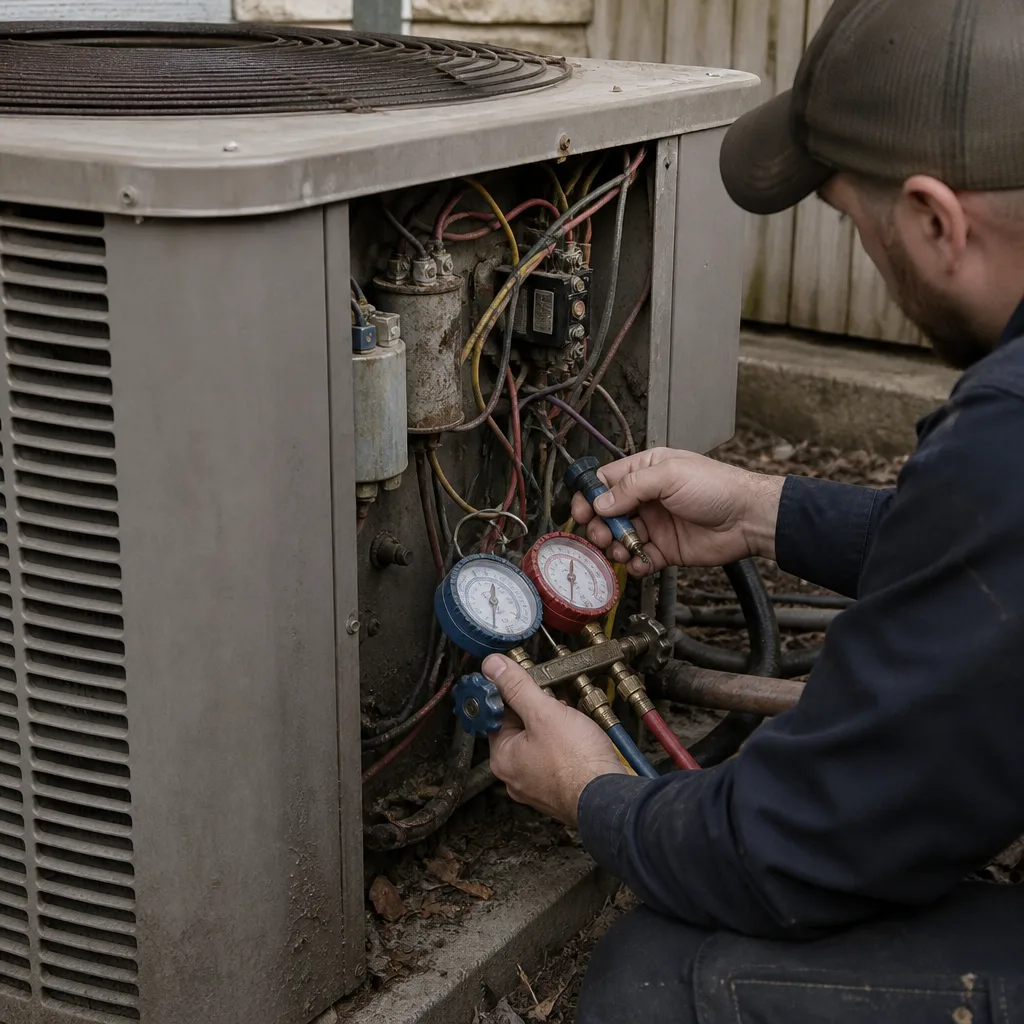 Before
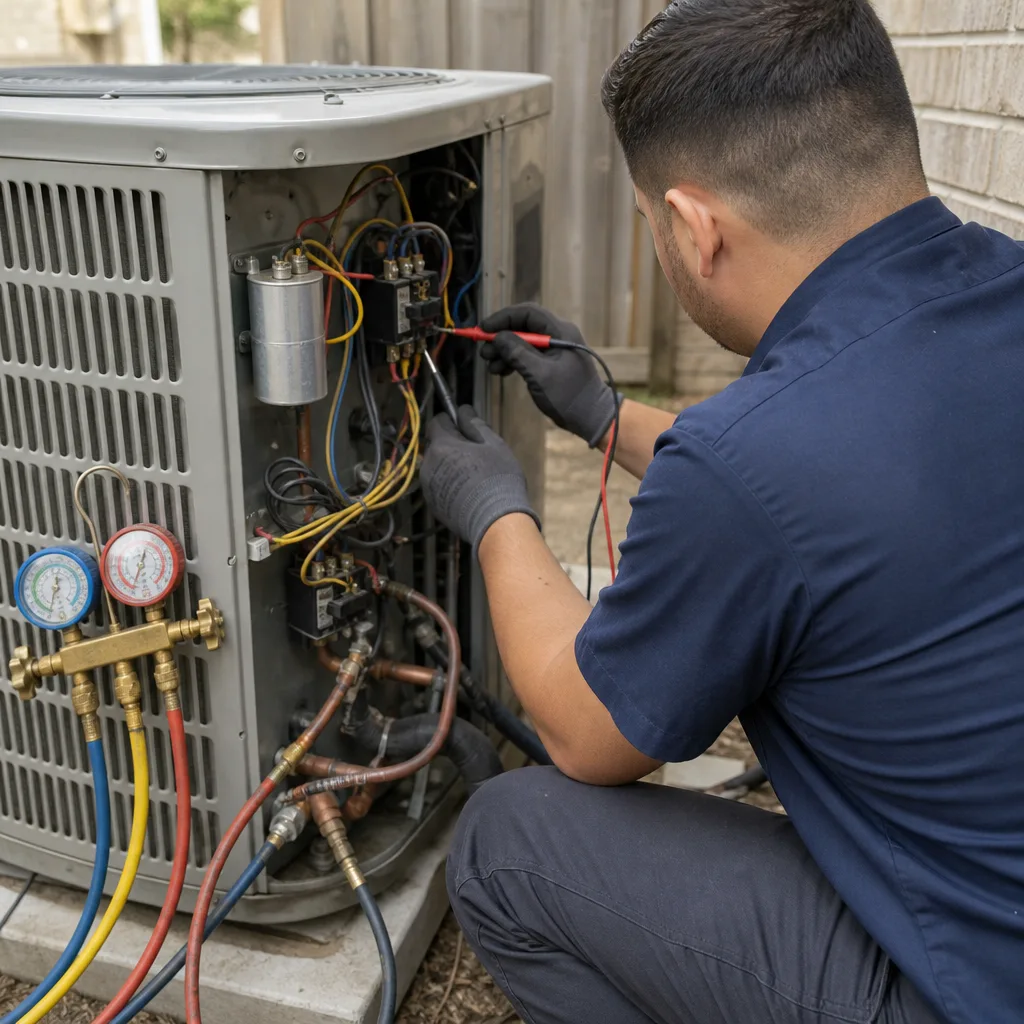 After
After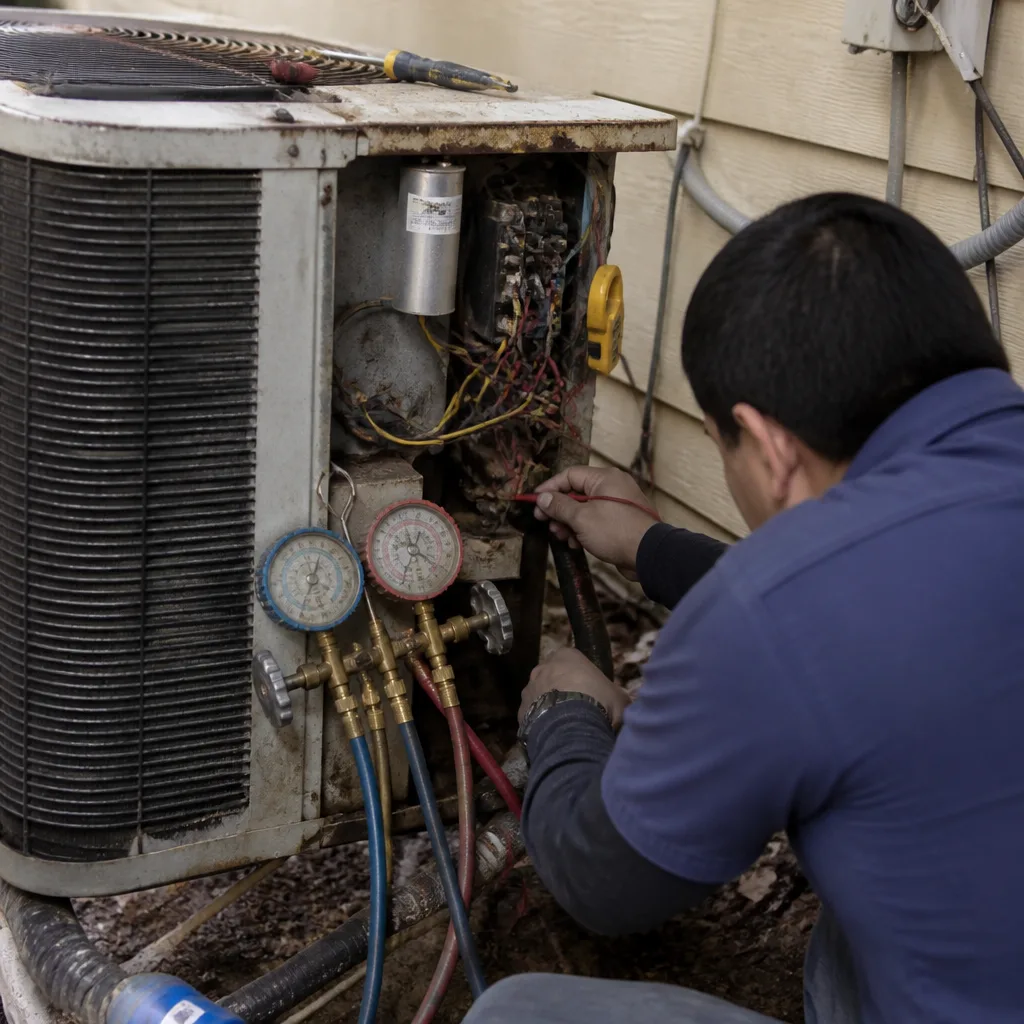 Before
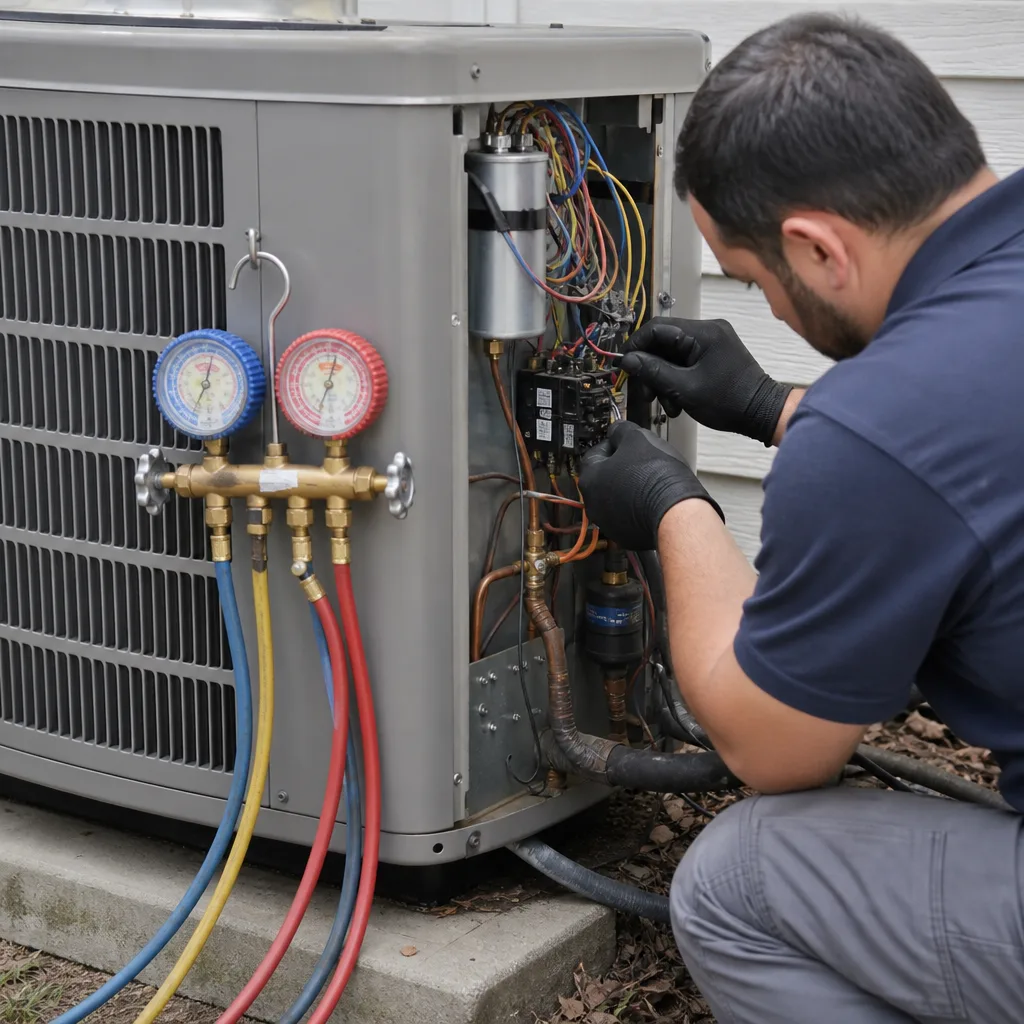 After
After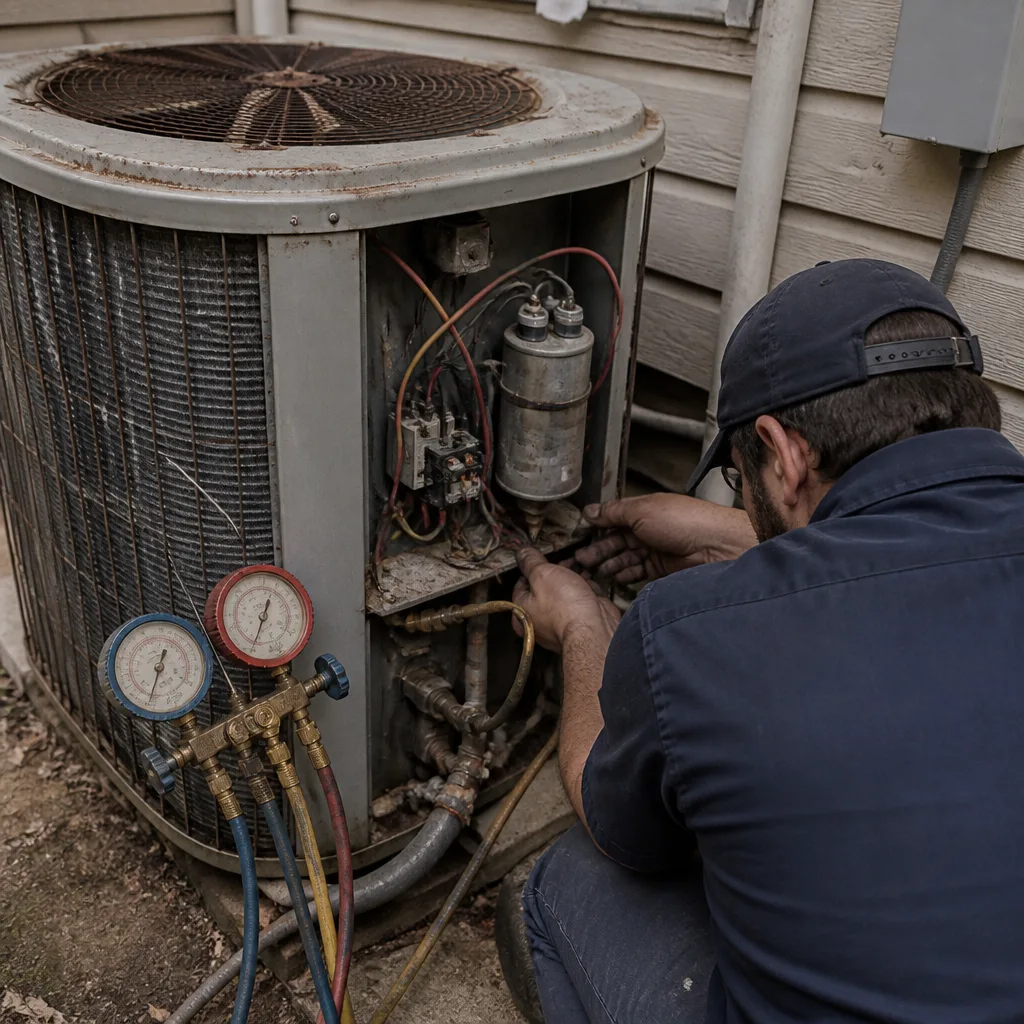 Before
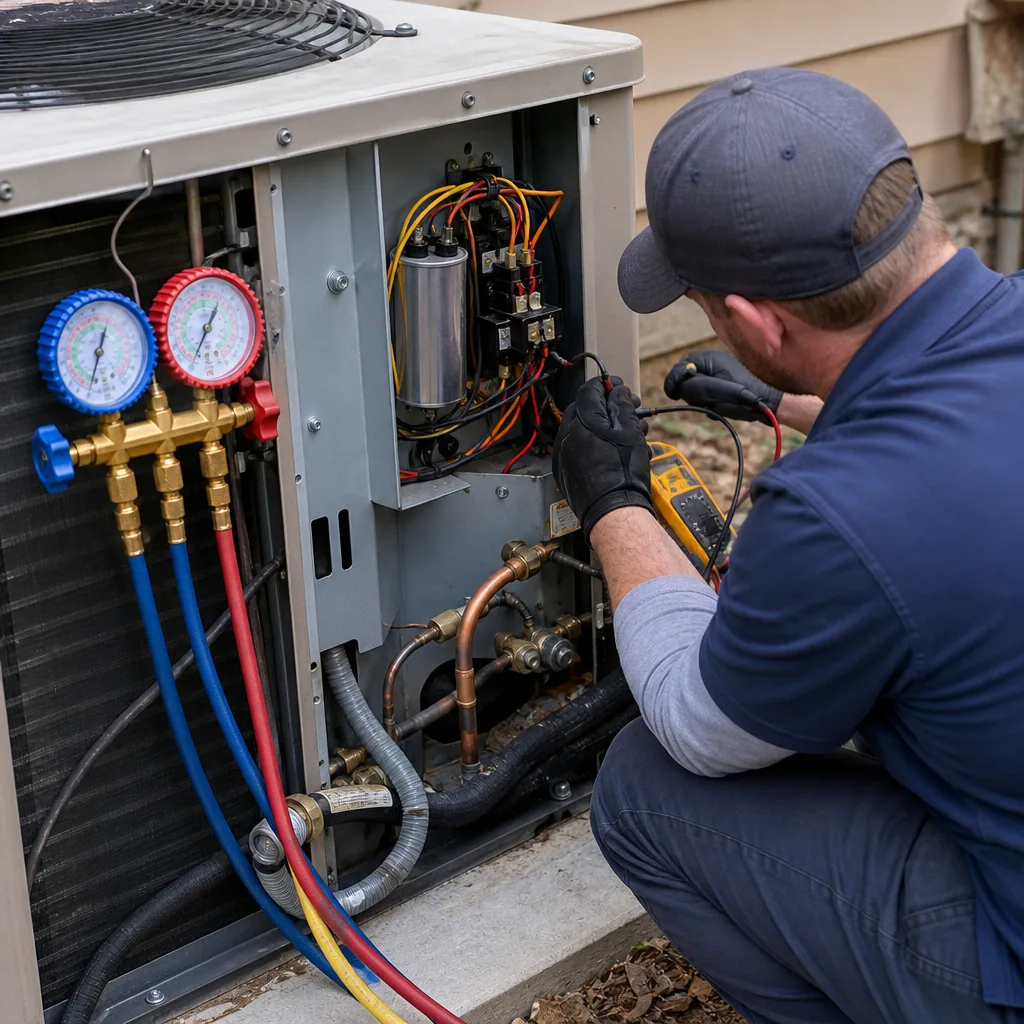 After
AfterWhen to Call a Professional
Call a professional when the system is blowing warm air in summer or cold air in winter, when the condenser or furnace is making sounds that don’t sound right, when your energy bill jumps with no change in usage, or when you smell burning or gas outside of normal operation. These are not DIY situations. HVAC systems carry high-voltage electrical connections, refrigerant under pressure, and in the case of gas furnaces, combustible fuel. A wrong move can cause serious injury or property damage. If you’re in the position of needing a repair and you’re in the Fort Worth area, Dalton Heating & Air Fort Worth offers free estimates and 24-7 live phone support at (817) 730-5369. You’ll get a written price before any work starts and a written guarantee on the repair.
Frequently Asked Questions
Texas requires the individual technician performing HVAC work to hold a TACLB air conditioning and refrigeration contractor license or technician certification issued by the Texas Department of Licensing and Regulation. The company itself is not licensed at the state level. Always verify the individual technician’s license number on the TDLR database before work begins.
A full HVAC system replacement in Fort Worth typically runs $7,500 to $14,000 for a mid-range to high-efficiency system, depending on the size of the home, the SEER2 rating, and whether ductwork modifications are needed. A heat pump installation or a standard AC and furnace replacement falls within this range. Get a written quote that itemizes equipment, labor, permit fees, and materials separately so you can compare apples to apples. Call (817) 730-5369 for an exact quote for your home.
No. Equipment replacements require a permit through the city of Fort Worth or Tarrant County, depending on your location. A contractor who says a permit isn’t needed for a full system swap is not following the rules. Ask for the permit number and confirm it before work begins.
At minimum, a fair labor warranty covers the labor to replace a failed part for one full year at no charge to you. Anything less, like a 30-day or 90-day labor window, is below the standard that most reputable Fort Worth contractors offer. The Dalton 365-Day Done Right Promise covers every repair for a full year, with a free return visit if the repair fails during that time.
The rule of thumb is this: if the repair cost is more than 50 percent of the value of the remaining life of the system, or if the system is more than 12 to 15 years old and requiring frequent repairs, replacement usually makes more financial sense. In the Fort Worth climate, a system that has survived 15 summers has done its job. Get a written quote for both options before you decide.
Yes, our technicians are factory-trained to service Carrier, Trane, Lennox, Goodman, Rheem, York, Daikin, Bryant, and American Standard equipment. We service all nine major residential HVAC brands regardless of where you bought the system. The written guarantee on every repair applies to every call, every time, not just to the brands we recommend.
The Bottom Line
Hiring an HVAC contractor in Fort Worth should be a vetting exercise, not a trust exercise. Verify the technician’s TACLB license on TDLR before work starts. Demand a written quote with fixed line items: equipment model numbers, labor, permits, refrigerant, materials, and a payment schedule. Confirm the permit is pulled and the inspection happens. Get the parts and labor warranty in writing, specifically addressing who pays labor when a part fails. Ask the five questions on your first call and compare the answers side by side. A good contractor answers all five without breaking stride. If you’re looking for a Fort Worth HVAC company that operates this way as standard practice, call Dalton Heating & Air Fort Worth at (817) 730-5369 for a written quote and a clear answer to every question in this guide.
Written by Marco Benitez, Owner at Dalton Heating & Air Fort Worth, serving Fort Worth since 2003.